A film breaks box office records across the country. Tier-2 cities from Tirunelveli to Pollachi to Tiruppur report sold-out shows. The Tamil-dubbed version earns ₹7.05 crore in four days without a single Tamil star attached. And from the sprawling, opinionated, ceaselessly self-promotional world of Kollywood, or rather Dravidianwood – not a word.
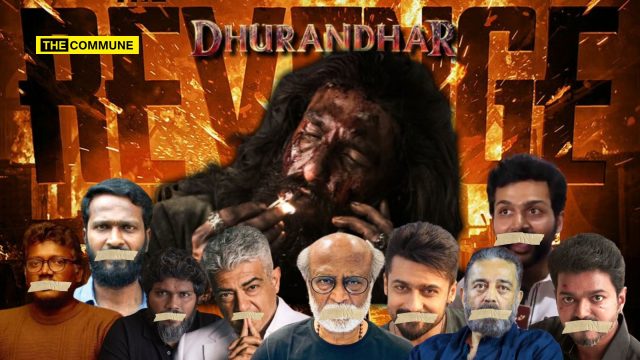
No congratulatory posts on X. No “What a film!” Instagram stories. No gracious acknowledgement from any of the so-called A-listers such as Suriya, Karthi, Vijay, Rajinikanth, Kamal Haasan, Siddharth, Pa Ranjith, Mari Selvaraj who would ordinarily bend over backwards to signal solidarity with any production that carries the right ideological passport.
The same people would otherwise virtue signal movie goers and whine about audiences not going to the theatre to watch movies. Is this not an opportune time to celebrate the return of audiences to theatres?
Tamil cinema, an industry that never misses an opportunity to celebrate itself, to moralise about cinema’s social responsibility, to lecture the country on what constitutes “meaningful” storytelling, has looked at Dhurandhar 2: The Revenge and chosen, with extraordinary discipline, to say absolutely nothing.
The contrast with Tollywood is brutal and telling. Mahesh Babu, Allu Arjun, Jr NTR, Vijay Deverakonda, Ram Charan, Telugu cinema’s biggest names, watched the film on opening day, first show, and immediately took to social media with effusive, unprompted praise.
#DhurandharTheRevenge is an explosion executed with perfect precision!!!! The finest version of Ranveer unleashed and how… 💥💥💥 The way Aditya Dhar has conceived and delivered this standing ovation worthy experience is remarkable 👏🏻👏🏻👏🏻 Special mention to Maddy’s performance…
— Mahesh Babu (@urstrulyMahesh) March 19, 2026
Just Watched #Dhurandhar2⁰Patriotism with swag 🇮🇳
A film that will make every patriot proud 🇮🇳⁰Many clap-trapping moments 👏🏽
BLAST! 💥
Congratulations to the entire team.⁰Fine performances by @ActorMadhavan garu & all actors . Technical brilliance .So proud to have a…
— Allu Arjun (@alluarjun) March 18, 2026
A big salute to the team of #DhurandharTheRevenge for delivering a storm to Indian audiences.
Ranveer sir @RanveerOfficial is not just breathtaking…. He delivered an absolute masterclass on screen.
It takes conviction and fearless vision to mount a film like this and Aditya…
— Jr NTR (@tarak9999) March 19, 2026
Tomorrow onwards – something big is going to happen in Indian cinema and culture.
4 words. “Bharat Maata ki JAI!”
Immense love and respect to the entire cast and crew. @AdityaDharFilms is a mad genius. @RanveerOfficial is all in explosive. @ActorMadhavan @rampalarjun Sara…
— Vijay Deverakonda (@TheDeverakonda) March 18, 2026
#DhurandharTheRevenge is raw, gripping and impactful 🔥@AdityaDharFilms brings scale and emotion together seamlessly. What he has done with this film is truly remarkable.@RanveerOfficial delivers a phenomenal performance – full of intensity and holds your attention…
— Ram Charan (@AlwaysRamCharan) March 20, 2026
SS Rajamouli, who has no personal stake in the film’s success, called it a triumph.
I loved Dhurandhar-1, but The Revenge surpassed the original in both scale and soul.
The writing, casting, technical execution, music, world design and direction are flawless…. But it’s the emotional stakes that really ground it.The writing manages to weave plot twists that…
— rajamouli ss (@ssrajamouli) March 21, 2026
The Telugu industry, knowing full well the ‘ideological controversy’ that surrounds a Kashmiri Pandit director making a film about intelligence operations and national security, chose courage over calculation.
Tamil cinema chose the opposite.
Rajinikanth is not a man who struggles to find his phone when a film moves him. In April 2017, he called Baahubali 2 “Indian cinema’s pride” and SS Rajamouli “God’s own child” within hours of watching it. In October 2022, he watched Kantara and immediately told the world: “You gave me goosebumps, Rishab. Hats off to you as a writer, director and actor.” In June 2024, he watched Kalki 2898 AD and typed “WOW! What an epic movie!” before the ink on his ticket stub could dry. This is a man with a proven, documented reflex for public celebration of Indian cinema when it achieves something extraordinary. That reflex has now mysteriously jammed. Dhurandhar 2: The Revenge, one of the biggest Indian films of 2026, is playing to packed houses including in his own base. The man who called a Telugu film “Indian cinema’s pride” cannot find it within himself to offer even a perfunctory acknowledgement. The Superstar, it turns out, only has a conscience when the film in question does not threaten his relationship with the Dravidian establishment.
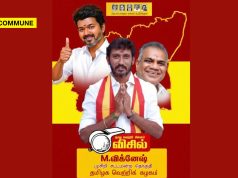
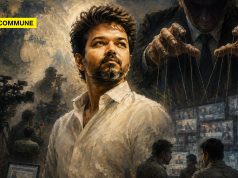
Vijay, now TVK chief and aspiring Chief Minister of Tamil Nadu, spent an entire film career playing the righteous common man standing against the corrupt establishment. He understood audience sentiment well enough to build an electoral movement on it. But Vijay has not found a single word to say about a film that his own presumed voters have turned out to watch in droves – can he not speak up for the industry he belongs to (or is it belonged to?) Vijay seems to want to “aura farm” with silence as his weapon. Sorry, not working. Well, he has been maintaining silence even for his own film Jana Nayagan after it faced hurdles with the censor board. A man who cannot speak for himself certainly will not speak for Dhurandhar 2. His silence on this film is, at minimum, consistent with his broader political cowardice and at maximum, a deliberate signal to the Dravidianist ideology that he knows which films Tamil Nadu is and is not permitted to celebrate.
Ajith Kumar is often positioned as Kollywood’s most apolitical superstar, the one man who stays out of the ecosystem’s virtue wars. His fans celebrate his studied indifference to industry politics as a form of integrity. And yet, when his own Good Bad Ugly released in April 2025, the industry closed ranks around it – screening it, promoting it, rallying for it. That solidarity flows one way. When a Hindi film, directed by a Kashmiri Pandit, starring Ranveer Singh, a Sindhi and R. Madhavan, fills Tamil Nadu’s single screens with paying audiences – Ajith’s studied silence is not aloofness. At the very least, he can support a fellow Sindhi after all, Sindhi blood flows through his veins. And in celebrating Dhurandhar, audiences are not doing hero worship – there is an awakening, a sense of patriotism and genuine love for well-made cinema. Can Ajith not support that?
This is not an accident or an oversight. These are people who tweet about everything under the sun while praising the Dravidian party at the helm while also posting for each other’s birthdays, foreign film awards, social causes, rainfall. The idea that Dhurandhar 2, one of the biggest Indian films of 2026, simply escaped their notice is laughable. The silence seems deliberate, coordinated, and cowardly. It reflects the iron grip that the Dravidian political-cultural ecosystem exercises over its artists – an unwritten code that says: you may celebrate anything except that which the party and its allied intelligentsia have not pre-approved.
And what has that ecosystem decided about Dhurandhar 2? The hostility was visible even before the film released. When Tamil Nadu theatres cancelled shows on opening day, ostensibly over technical delays, the online Dravidian ecosystem barely concealed its satisfaction. Prakash Raj, the ecosystem’s ever-reliable attack dog, took a “subtle dig” at the wave of Telugu stars praising the film, insinuating that their appreciation was motivated by “obligations.”
Signs of Obligations are spreading South too .. #justasking https://t.co/iB01E1sp7K
— Prakash Raj (@prakashraaj) March 19, 2026
The film’s content, its theme of intelligence and national security, its Kashmiri Pandit authorship – all of it makes it radioactive for a cultural establishment that has spent decades positioning Tamil identity as inherently sceptical of Indian nationalism.
But the audiences of Tamil Nadu never got that memo.
They turned up in Tirunelveli, in Pollachi, in Dindigul, in Tiruppur. They filled seats in interior towns. They watched a Hindi film in Tamil dubbing and they left satisfied. The disconnect between Tamil cinema’s English-social media-verified gatekeepers and the actual Tamil-speaking public has never been more starkly visible. Ordinary Tamils do not hate India. They are not reflexively suspicious of patriotism. They are not, as the Dravidianist echo chamber insists, ideologically quarantined from the rest of the country. They simply want good cinema, and when good cinema arrives, they recognise it, with or without their industry’s permission.
What Dravidianwood’s silence reveals is not sophistication. It is fear. Fear that acknowledging a film like Dhurandhar 2 would invite the wrath of the political establishment that funds, protects and validates their careers. Fear that a single tweet of appreciation might cost them their next government award, their next state-sponsored premiere, their next comfortable seat at a DMK cultural event.
Telugu stars were brave enough to tweet. Tamil film industry Dravidianwood’s members were not. That single fact says more about the state of creative freedom in Dravidianwood than any press conference ever could.
Subscribe to our channels on WhatsApp, Telegram, Instagram and YouTube to get the best stories of the day delivered to you personally.