For years, a coordinated narrative campaign has tried to cast Auroville — a township created by international goodwill and enshrined in Indian law — as something it was never meant to be: an eco-village retirement hub for foreigners, a political trophy for ideological factions, or a battleground in India’s culture wars.
Those narratives reached a climax with the recent Auroville Foundation v. Natasha Storey verdict on 17 March 2025, when the Supreme Court of India unequivocally rejected claims of mismanagement, environmental destruction, and political interference — describing a pattern of litigation by a tiny minority as “ill-motivated” obstruction of legally approved development.
Yet, even after the highest court in the land delivered clarity, the campaign against Auroville’s development continues — driven by a peculiar alliance of critics on both the left and the right, using contradictory rhetoric to achieve the same end: freeze Auroville in time.
1. Targeted Campaign Against Jayanti Ravi: A Smokescreen for Ideological Battles
At the centre of the latest controversy is an orchestrated attack on Jayanti Ravi, Secretary of the Auroville Foundation. Social media threads and political commentators from vastly different ideological corners have seized on her role, not for any lawful misconduct, but as a punching bag in a broader political culture war.
Figures from the left accuse her of pushing a “Hindutva agenda.” Right-leaning commentators decry her as an outsider. Neither faction grapples with the real legal question: she is executing her statutory duties under an Act of Parliament — a fact affirmed repeatedly by the Supreme Court.
The attacks are less about governance and more about vendettas: when you have no arguments left on law or facts, you attack the person.
2. Foreign Squatters On Indian Land
Auroville’s residents – Indian and foreign – live under Indian laws and visa regulations. Residency is governed by the Auroville Foundation Act, 1988 a legislation passed by the Indian Parliament – not by social media sentiment.
Foreign nationals in Auroville hold legal visas and residency status; those who violate norms can and have had visas cancelled. This is due process, not an arbitrary crackdown.
Auroville was never intended as an enclave insulated from Indian sovereignty — it is, by statute, under central governance and subject to Indian law. Suggesting otherwise undermines India’s constitutional framework and feeds xenophobic narratives that have no basis in legal reality.
3. Lost Every Court Case — Right Up To The Supreme Court
Opposition voices have trafficked in claims ranging from land scams and environmental catastrophe to ideological capture. But the judicial record tells a singular story:
The Madras High Court reaffirmed the Foundation’s legal authority.
The National Green Tribunal’s restrictions were struck down.
The Supreme Court dismissed multiple petitions and criticized the strategy of serial litigation.
In other words: those accusing the Auroville administration of illegality lost every single legal battle, up to the Supreme Court of India.
When legal arguments fail at every judicial level, what remains is narrative warfare — and that is precisely what we are witnessing.
4. Auroville Was Never A Retirement Eco-Village
Some still cling to the outdated idea of Auroville as a quaint, foreign-centric eco-village. Nothing could be further from the truth.
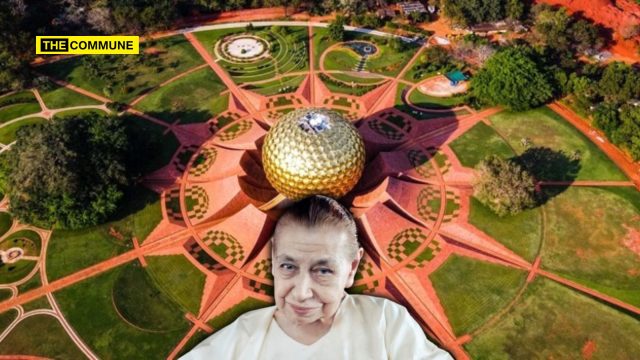
Auroville’s founding documents — the Galaxy Plan and subsequent Master Plans approved in 2001 and gazetted in 2010 — were conceived as a structured, sustainable township for 50,000 residents rooted in human unity.
It was never intended to be a retirement community for wealthy foreigners who choose to settle in India indefinitely. It was never intended to sideline Indian identity, culture or law. And it was certainly never meant to be stuck in litigation forever.
5. Environmental Restoration, Not Destruction
A core claim from detractors has been that development equals ecological destruction. This, too, collapses under scrutiny:
The land in question was not legally classified as forest under the Forest (Conservation) Act.
Any tree clearance was matched with compensatory afforestation.
Water-body and infrastructure works are part of a long-approved plan meant to enhance ecological resilience, not erode it.
Technical consultation from Indian institutions has informed environmental strategy.
Planning and implementing the envisioned plan is not plunder.
7. What’s Really At Stake?
The real tragedy is not ecological impact, nor foreign residency, nor political appointment — it’s a battle of narratives. A small activist faction — amplified by news outlets and social media influencers — continues to manufacture conflict where there is none. The usual suspects of the left have their own agenda and see Jayanti Ravi as Modi’s person. A section of the right has targeted because they’re suddenly upset with Modi.
But Auroville is not a political battleground to settle scores. It’s a peaceful haven for seekers who follow the vision of The Mother. A legal framework exists.
Auroville’s future should not be held hostage to social media campaigns, partisan activists, or contradictory political narratives opposed to development.
The Mother’s vision was never meant to be a retirement retreat or a media spectacle. It was meant to be built.
Subscribe to our channels on Telegram, WhatsApp, and Instagram and get the best stories of the day delivered to you personally.