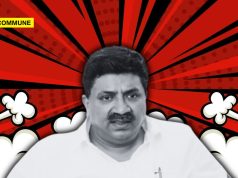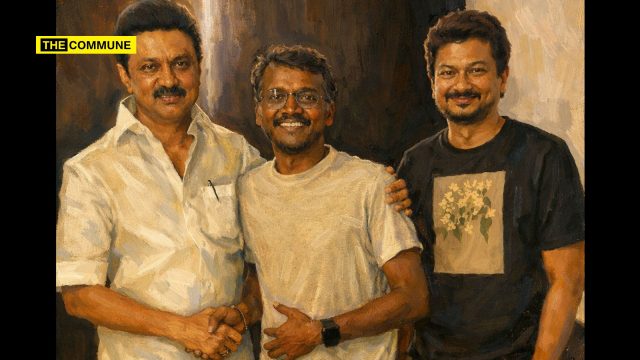
Mari Selvaraj – The man who gave Tamil cinema some of its sharpest images of oppression and state violence is now, reportedly, in talks to direct the ruling party’s 2026 Assembly elections campaign video.
The same Mari Selvaraj whose literary debut circled the Thamirabarani and the Manjolai killings is now being whispered about as a creative face of the Dravidian establishment’s re‑election machinery.
Mari Selvaraj was the first widely recognised writer from the Nellai belt to turn the 1999 Manjolai atrocity into serious literature. Thamirabharaniyil Kollappadaathavargal is not a tourist brochure for the river; it is a graveyard of memory and state brutality, cast as short fiction but rooted in real blood on the Thamirabarani’s banks. Seventeen people died after a police operation on 23 July 1999; the incident has remained one of the ugliest symbols of how “progressive” Tamil Nadu treats its most voiceless workers.
That is the Mari the public first encountered: the chronicler of those “who were not killed” in Thamirabarani, the narrator of absences – the missing bodies, the lives stolen by the state but never really accounted for. His cinema carried that reputation forward, marketed as the voice of the oppressed, the director who would not forget what the river had seen.
Now, fast‑forward to 2026. DMK reportedly wants an official campaign song, a carefully packaged celebration of the “Dravidian model”, splashed across YouTube and party social media. Around this, rumours and “insider talk” start to swirl: that Mari Selvaraj will direct or shape a campaign video for the very regime that sits on top of today’s police force, bureaucracy and contractor nexus. There is no official credit yet naming him, but the buzz itself raises an uncomfortable question.
If the auteur of Manjolai is now a creative partner of the party in power, what happens to the moral claim that he has repeatedly made – that he will remain honest to his soil, his language and the community that trusts him?
Because the soil and the people he speaks about are not living in some ideal, caste-free Tamil Nadu. They are living in a state where the memory of Vengaivayal still feels like an open wound. A Dalit colony’s drinking water was found contaminated with human waste, and we’ve seen how painfully slow the government’s response has been.
So, the question becomes simple and direct: if Mari Selvaraj’s camera is used for a DMK campaign video, will there be space even for one honest shot from the Vengaivayal water tank?
This is the same Tamil Nadu where K. Armstrong, the state president of the BSP and a prominent Dalit voice, was hacked to death in Chennai in 2024. His killing sparked outrage, protests and the usual round of official assurances. Yet even today, it stands as a stark reminder of how vulnerable a Dalit political leader can be in the capital of a state that prides itself on “social justice.”
If Mari Selvaraj’s name eventually appears on a DMK campaign video, a blunt question will follow: will there be even one frame remembering Armstrong or will his death be treated as an inconvenient detail in election season?
The questions do not stop there.
Farmers in Parandur have been protesting a proposed greenfield airport, fearing the loss of their land and water, and have already faced police action and detentions. Coastal communities around Kattupalli say port expansion plans threaten their sea and their livelihoods. In Tirunelveli’s Nanguneri–Radhapuram belt, activists have repeatedly raised allegations about quarrying and mining operations that are said to be flattening hills while enriching politically connected players. This is Mari Selvaraj’s home ground.
Then there is the widely discussed “TASMAC bottle” controversy – the allegation that former Transport Minister Senthil Balaji enabled the collection of extra money (10 rupees) per liquor bottle through the state’s retail system. Investigative agencies have put forward their versions, and the courts are still examining the matter. But politically, the episode has already become shorthand for the uneasy relationship between power and money in Tamil Nadu.
None of these are abstract policy debates. They are exactly the kind of ground-level social conflicts that Mari Selvaraj has built his reputation documenting – the pain beneath Tamil Nadu’s development story, the voices of the marginalised, the friction between state power and ordinary people.
Which is why the speculation around his possible role in the DMK’s 2026 campaign carries unusual weight.
If he does take up the assignment, what will his camera choose to see?
Will it follow the farmers of Parandur as bulldozers move closer to their fields or only showcase glossy airport visuals and industrial growth shots? Will it sit with the women of Vengaivayal drawing water they no longer trust or glide past newly painted overhead tanks? Will it show the blasted hills of Nanguneri and Radhapuram or focus only on tree-planting photo-ops and green slogans?
The sharper question is this: if Mari Selvaraj becomes part of an official ruling-party campaign, can he still convincingly present his art as a witness against state power, or will it begin to look like a polished layer over it?
Artists aligning with governments is nothing new. Radical voices have often moved closer to power over time. The state has always had ways of absorbing its critics. What makes the possible Mari–DMK link-up particularly sensitive is the moral ground on which he built his public image.
You cannot foreground Manjolai, publish Thamirabharaniyil Kollappadaathavargal, and position yourself as a chronicler of state violence and then expect people not to ask hard questions when you appear alongside the same political machinery seeking votes.
If the reports are incorrect, Mari Selvaraj has every right, and perhaps a responsibility, to clarify his position plainly. Silence only strengthens the perception that, yet another strong cultural voice has been drawn into the ruling ecosystem.
But if the reports are accurate, then the standard he set for himself will apply.
At the very least, every time a campaign song celebrates “Dravidian justice,” viewers will expect the uncomfortable realities to be remembered too – Vengaivayal’s water crisis, Armstrong’s murder, the anxieties in Parandur, the fears in Kattupalli, the scarred hills of Nanguneri, the allegations surrounding Senthil Balaji, and the sanitation workers who are protesting day in and day out for permanent jobs under the same Dravidian Model government he wishes to show in a bright light.
If Mari Selvaraj truly remains honest to his land, his language and his people, he cannot afford selective memory.
Subscribe to our channels on WhatsApp, Telegram, Instagram and YouTube to get the best stories of the day delivered to you personally.