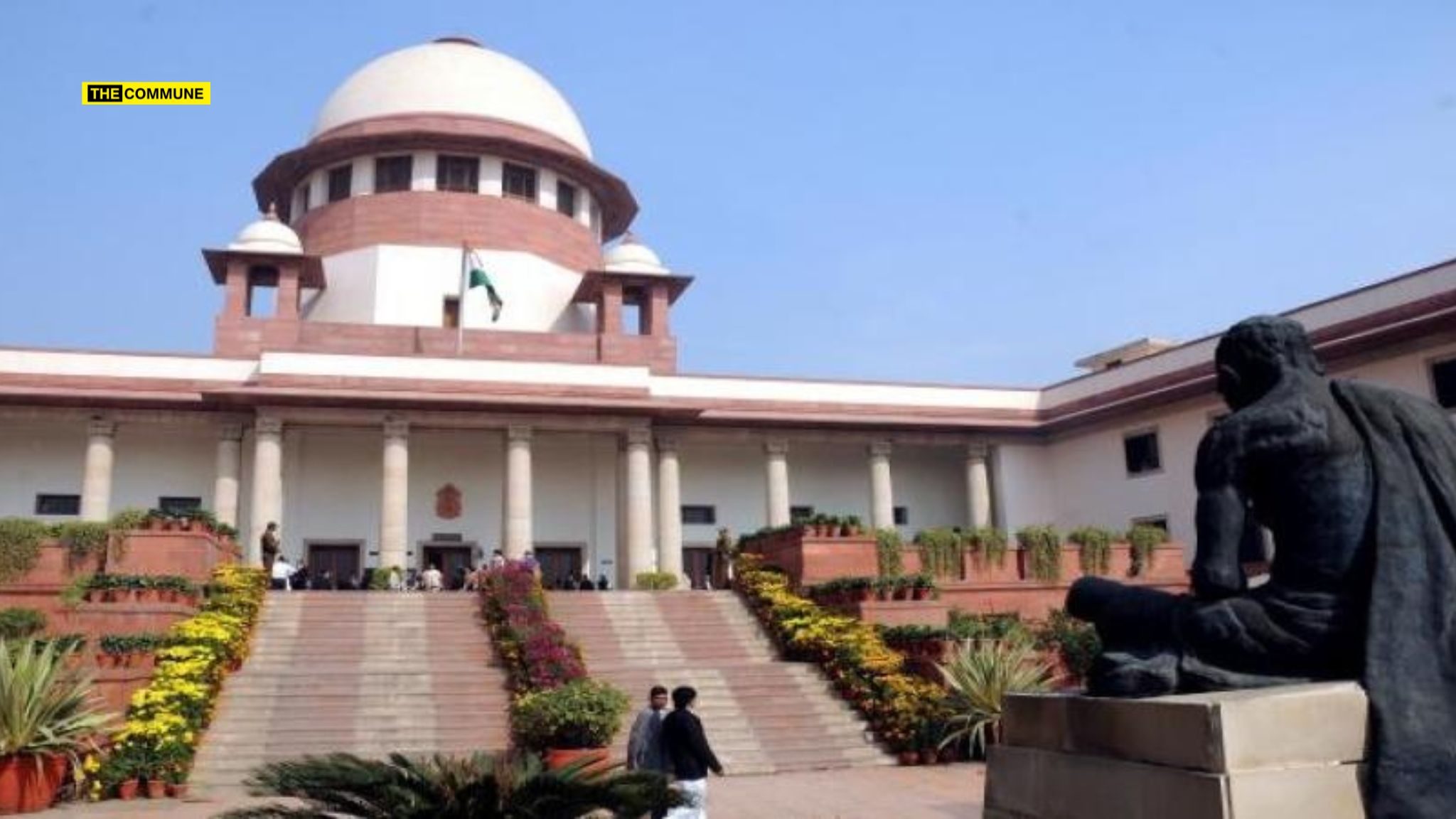
The Supreme Court has observed that it is constitutionally impermissible for any person or entity, whether State or non-State, to vilify or denigrate any community through speeches, memes, cartoons or visual art. The Court underlined that the principle applies with greater force to public figures holding high constitutional offices.
The observations were made by Justice Ujjal Bhuyan in a separate judgment in a petition challenging the title of the Netflix film “Ghooskhor Pandat.” A Bench comprising Justice BV Nagarathna and Justice Bhuyan closed the matter after the filmmakers agreed to change the title.
Although the dispute itself was resolved, Justice Bhuyan noted that it was necessary to restate the constitutional position on fraternity and free speech to avoid any misunderstanding.
The Court emphasised that fraternity is a foundational objective of the Constitution and forms part of the guiding philosophy of the Preamble. Referring to Article 51A(e), the Bench noted that every citizen has a fundamental duty to promote harmony and brotherhood beyond religious, linguistic and regional differences.
Justice Bhuyan wrote: “It is essentially an attitude of respect and reverence towards fellow human beings. Thus, cultivating a sense of brotherhood and respecting fellow citizens irrespective of caste, religion or language is a constitutional dharma each one of us must follow.”
The judgment also referred to the Court’s earlier ruling in the Section 6A Citizenship Act case, which had described fraternity as a concept intended to cultivate a sense of brotherhood among individuals in society.
Against this backdrop, the Court stated: “It is constitutionally impermissible for anybody, be it the State or non-State actors, through any medium, such as speeches, memes, cartoons or visual arts, to vilify and denigrate any community.”
The Court stressed that the prohibition assumes greater significance when public officials engage in such conduct.
Justice Bhuyan observed: “It will be violative of the Constitution to target any particular community on the basis of religion, language, caste or region by whosoever he or she may be. This is particularly true for public figures occupying high constitutional office who have taken the solemn oath to uphold the Constitution.”
The Bench noted that its earlier concerns regarding the film title were therefore “well-founded and valid.”
The observations gain relevance amid the recent controversy surrounding speeches made by the Assam Chief Minister. In a related development, a Bench led by the Chief Justice of India had recently declined to entertain Article 32 petitions seeking registration of an FIR for alleged hate speech against the Assam CM and directed the petitioners to approach the High Court.
At the same time, the Court reaffirmed that filmmakers enjoy protection under Article 19(1)(a) of the Constitution. Justice Bhuyan noted that artistic expression, including cinema and satire, plays an important role in democratic discourse and cannot be curtailed merely because certain groups take offence.
Relying on precedents including S. Rangarajan v. P. Jagjivan Ram, Shreya Singhal v. Union of India, Imran Pratapgadhi v. State of Gujarat, and the Padmavat case involving Viacom 18, the Court reiterated that freedom of expression cannot be held hostage to threats of protest or potential public disorder.
The Bench emphasised that films must be evaluated from the standpoint of a reasonable viewer rather than hypersensitive individuals. It also reiterated that once a film has been certified by the Central Board of Film Certification, courts should ordinarily be slow to interfere with its exhibition.
Justice Bhuyan particularly highlighted the caution in Imran Pratapgadhi that courts must not appear to regulate or stifle free speech. He quoted the earlier observation that a 75-year-old Republic should not be so fragile as to feel threatened by a poem or comic performance.
Concluding his opinion, Justice Bhuyan remarked: “This would equally apply to the title of a movie as well. I say this and no more.”
Source: LiveLaw
Subscribe to our channels on WhatsApp, Telegram, Instagram and YouTube to get the best stories of the day delivered to you personally.