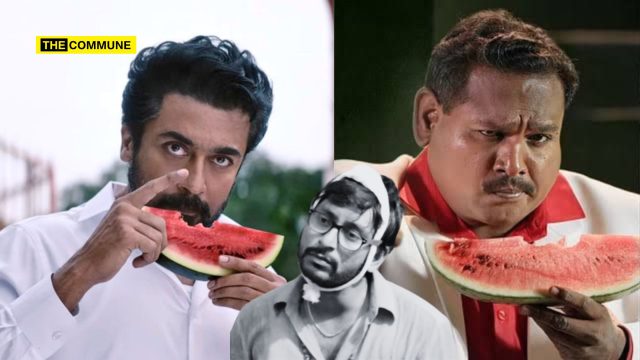
At a recent awards event, a photo of Diwakar, the viral “Watermelon Star”, alongside Suriya flashed on screen, referencing the now-familiar Karuppu meme cycle. For anyone who follows Tamil pop culture, the moment was ripe for humour. After all, Diwakar’s entire comic identity was born from spoofing Suriya’s Ghajini intensity with that now-legendary watermelon smash, and he had already cheekily riffed on the Karuppu teaser as a “Watermelon Star Diwagar promo.”
This was tailor-made territory for RJ Balaji – a man who built his brand on quick wit and sharper commentary.
Instead, he froze.
“No comments. Everyone has mobile these days & doing whatever they want. During Chennai floods, many volunteers helped & they all used mobile. So we can use mobile phones for both positive & negative. Please use it wisely & for the correct purpose.”
#RJBalaji indirectly ignores to comment about Watermelon Star and advises to use phones wisely 👏🏼👌🏼#Karuppu #Suriya pic.twitter.com/aY0HkZRddz
— VCD (@VCDtweets) February 23, 2026
On the surface, it sounds harmless. In context, it reeks of hypocrisy.
Because RJ Balaji is not an innocent victim of “negative mobile culture”. He is one of its biggest beneficiaries.
He rose to fame on the back of the very tools and tones he now disowns. As a radio jockey, he carved out a persona by skewering films, politicians and policies with a mix of mockery and moralising. His rants against the then AIADMK government, his dramatic presence during the Marina Jallikattu protests, his punches on GST, demonetisation and NEET – all of this spread because people clipped his words, shared them on the same mobile phones he now wants used only “positively”.
His jokes about flops like Anjaan and Mugamoodi, his digs at producers and stars – they travelled on Twitter, Facebook, WhatsApp; that digital current is what pulled him from the FM booth onto cinema screens.
Even his political posturing was crafted for viral effect. He publicly boycotted CSK commentary during an IPL match to “protest” over the Cauvery issue, performed outrage over national policies, and happily let a Dravidianist image solidify as he parroted the talking points of the day. Social media wasn’t a menace then; it was his stage, his amplifier, his ladder.
The contrast with his present stance is striking. Once DMK came to power and he moved closer to the industry’s inner circle, working with producers like SR Prabhu and fronting Suriya’s big projects, the “rebel” quietened down. No more sharp words for the ruling party. No more dramatic boycotts aimed upward. Now the complaint is that political IT wings and netizens are “targeting” films, that people are wasting their energy going after cinema, that he’s afraid to pose with the national flag lest he be branded. The man who once told listeners that a film, like a biscuit, is fair game for any kind of review, now frets that online criticism is “scary” and unfair.
That is the real story behind his “no comments” moment at the awards show.
It fits a longer pattern. When the joke was on Rajinikanth’s age, Sivakarthikeyan’s tears, Satish’s career, or on anonymous producers, RJ Balaji happily played executioner and philosopher, confident that social media would reward him. When the pressure shifted towards his own work, his own alliances, his own ideological inconsistencies – on Mookuthi Amman’s quietly removed missionary‑mocking scene, on his simping for Suriya at the Kanguva audio launch, on his selective outrage around caste and politics – the tone changed. Criticism became “negativity”. Pushback became “energy waste”. Netizens doing to him what he did to others suddenly became a moral crisis.
It is not about one meme or one answer. It is about a man who built his name by using the sharp edge of public discourse – cinema criticism, political commentary, online virality – now pretending to float above that very culture, as if he did not help create it. He wants the reach without the risk, the pedestal without the punches, the claps without the clapback.
If RJ Balaji truly believes mobiles must be used “wisely and for the correct purpose”, he might start by acknowledging that for over a decade, his own rise was powered by the same unfiltered, unruly, meme‑driven ecosystem he now scolds. Until he does, every time he says “no comments” and slips into virtue talk, it will sound less like wisdom and more like fear – fear of being held to the same standards he once imposed on everyone else.
Subscribe to our channels on WhatsApp, Telegram, Instagram and YouTube to get the best stories of the day delivered to you personally.