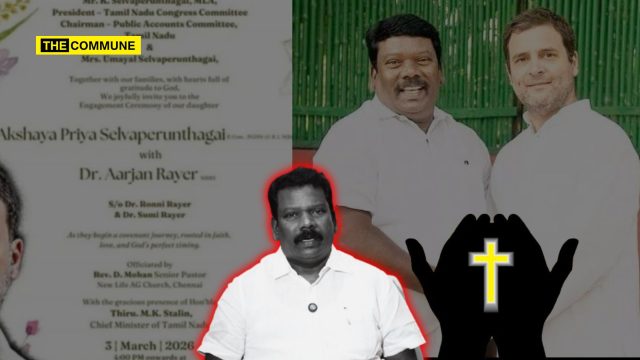
K. Selvaperunthagai, the President of the Tamil Nadu Congress Committee (TNCC) and Member of the Legislative Assembly (MLA) from the Sriperumbudur constituency, has been accused of concealing his alleged Christian faith to contest and win in a Scheduled Caste (SC)-reserved seat.
According to a report by Dinamalar, It stems from an marriage engagement invitation card for Selvaperunthagai’s daughter, which purportedly indicates his affiliation with Christianity. This has sparked debates over the potential misuse of SC reservations, raising questions about constitutional eligibility and legal precedents in India.
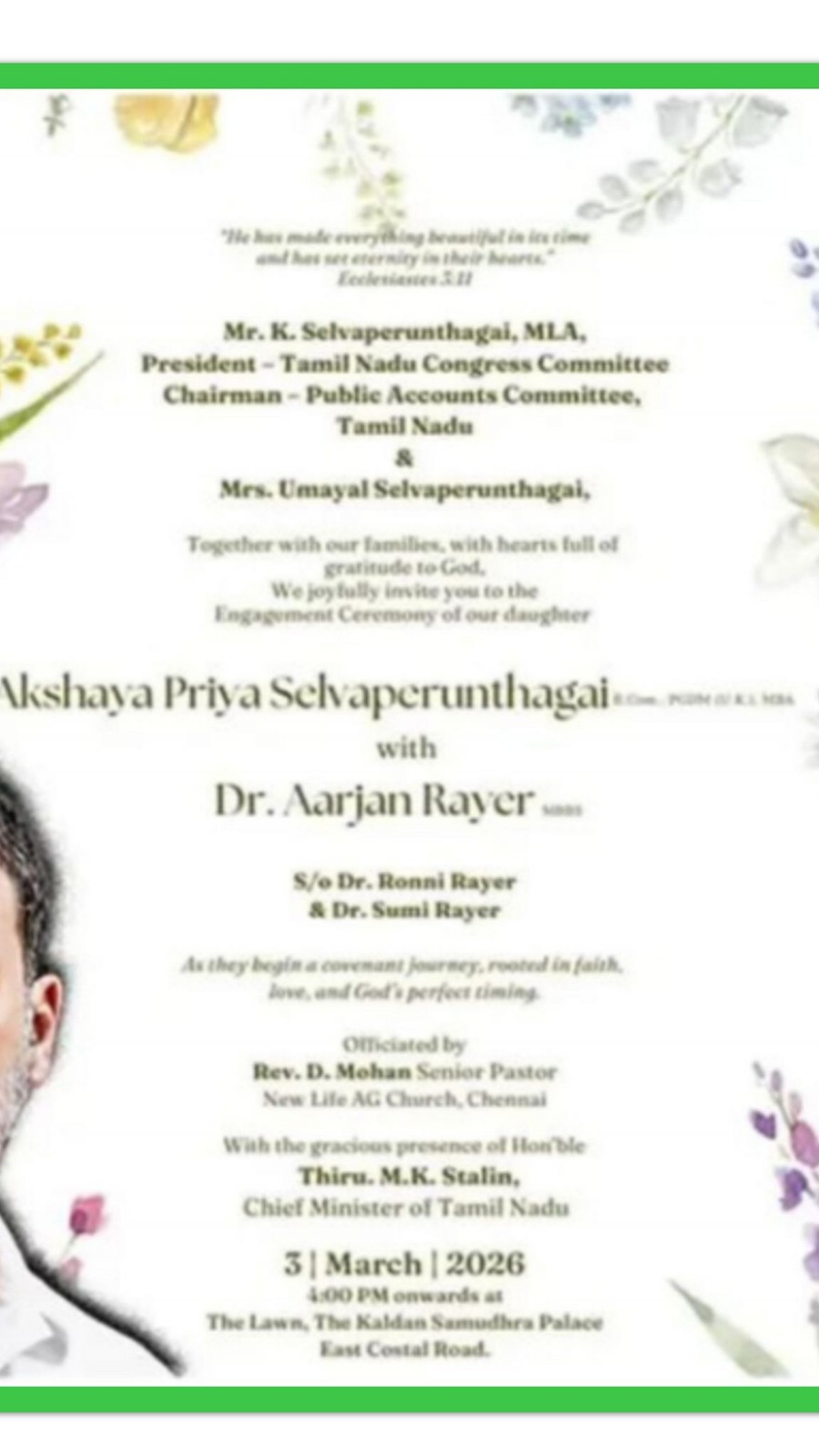
The invitation says that the engagement ceremony is being officiated by Rev. D. Mohan, a senior pastor at New Life AG Church in Chennai.
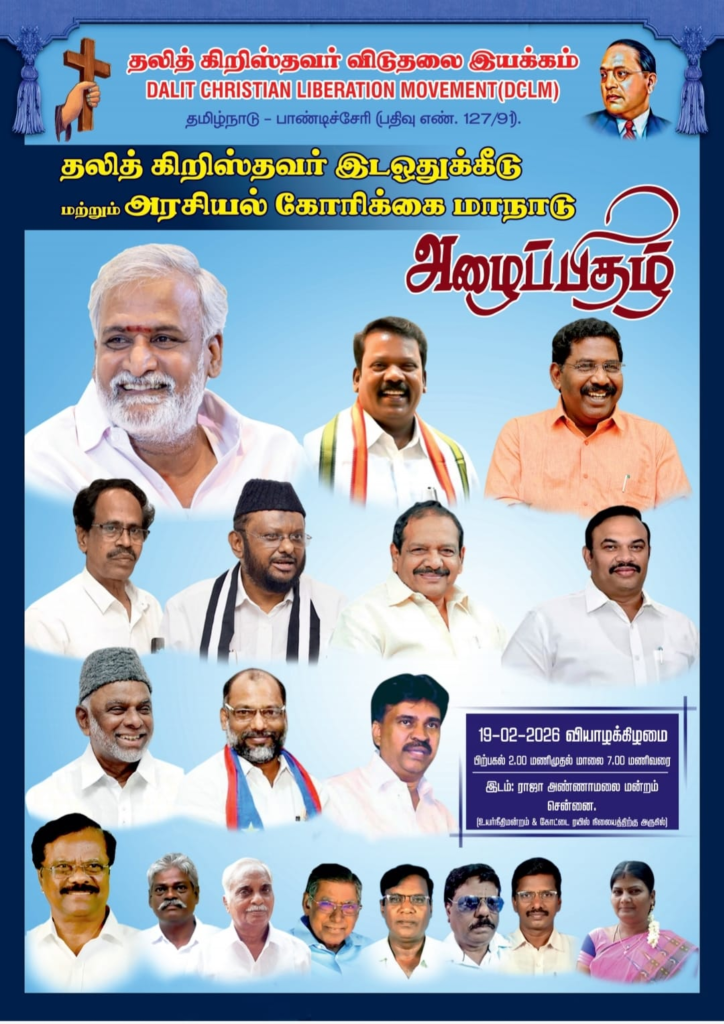
It is to be noted that Tamil Nadu Congress President Selvaperunthagai is also one of the main speakers at the state level conference demanding reservation for ‘Dalit Christians’ organized by Dalit Christian Liberation Movement.
Selvaperunthagai is an MLA from Sriperumbudur constituency which is a seat reserved for Scheduled Caste.
Constitutional Provisions On SC Reservations And Religious Conversion
The core of this dispute revolves around India’s constitutional framework for SC reservations, which is designed to uplift historically disadvantaged castes.
Article 341 of the Constitution empowers the President to specify Scheduled Castes through orders, with Parliament able to modify them.
The key document here is the Constitution (Scheduled Castes) Order, 1950, particularly Paragraph 3, which states: “No person who professes a religion different from the Hindu, the Sikh, or the Buddhist religion shall be deemed to be a member of a Scheduled Caste.”
This provision explicitly excludes converts to Christianity or Islam from SC benefits, as these religions are not considered to perpetuate the caste-based discrimination rooted in Hindu social structures.
A 2021 statement by the then-Union Law Minister Ravi Shankar Prasad in the Rajya Sabha reinforced this: “A person who converts to Islam or Christianity cannot avail benefits for the depressed classes. They cannot contest in constituencies reserved for the depressed classes.”
The rationale is that conversion severs ties to the original caste system.
As per the 1950 Order and subsequent amendments, SC status is tied to Indic faiths (Hinduism, Sikhism, Buddhism), and changing religion disqualifies individuals from reservations in education, employment, and electoral constituencies.
Supreme Court Judgements: Precedents on Conversion and FraudThe Supreme Court of India has consistently upheld these restrictions through landmark judgements, emphasizing that claiming SC benefits post-conversion constitutes a violation:
Soosai v. Union of India (1985): The Court ruled that a person from an SC community loses eligibility for reservations upon converting to Christianity, as the caste identity ceases to exist in the new faith.
C.M. Arumugam v. S. Rajgopal (1975): The apex court observed that “conversion operates as an expulsion from the caste,” meaning converts no longer belong to their original caste for reservation purposes.
C. Selvarani v. Special Secretary (2024): In a stern ruling, the Court held that claiming caste-based benefits after conversion amounts to “fraud on the Constitution,” potentially leading to disqualification and penalties.
Recent High Court Rulings: The Allahabad High Court has directed Uttar Pradesh authorities to prevent misuse of SC benefits by converts, calling it a “fraud on the Constitution.” Similarly, the Andhra Pradesh High Court (2025) stated that SC status “stands nullified upon conversion,” regardless of prior caste certificates.
These judgements underscore that while conversion is a personal right under Article 25 (freedom of religion), it cannot be used to retain reservation benefits. In cases like Selvaperunthagai’s, any proven concealment could lead to electoral disqualification under the Representation of the People Act, 1951, which penalizes false declarations in nominations.
Subscribe to our channels on Telegram, WhatsApp, and Instagram and get the best stories of the day delivered to you personally.