As the Tamil Nadu State Budget is unveiled, against the backdrop of the State’s debt burden crossing the ₹10-lakh-crore mark, questions over fiscal priorities are once again coming to the fore.
Even as the government speaks of welfare expansion and fresh capital expenditure, several already-inaugurated multi-crore infrastructure projects, launched with fanfare by the Chief Minister, Deputy Chief Minister, and senior ministers, continue to lie in limbo, with little utilisation and few takers on the ground.
Earlier, The Commune had reported on how taxpayer money has been channelled into what critics describe as monumental white elephants under the so-called Dravidian Model of governance. Ground reports, site visits, and departmental data pointed to infrastructure that was ceremonially opened but operationally hollow.
Several big-ticket projects rolled out by the DMK government across sectors are now facing under-utilisation, low occupancy, or operational bottlenecks:
Kolathur Ornamental Fish Trade Centre (₹53.5 cr): 188 shops built; barely a handful functional.
Mudichur Omni Bus Terminus (₹42 cr): Built for 150 buses; around 15 in use.
Kilambakkam Kalaignar Centenary Bus Terminus – KCBT (₹50 cr): Operational but plagued by congestion and last-mile connectivity gaps.
Tholkappia Poonga Eco Park (₹42.45 cr): Ecological criticism and visitor management concerns.
Tindivanam Mega Food Park (₹120 cr): Low industrial occupancy.
Theni Mega Food Park (₹70 cr): Significant idle capacity.
Alanganallur Jallikattu Stadium (₹63 cr): Limited core-event utilisation.
VOC Park Stadium, Erode (₹7.5 cr): Sparse long-term usage.
In this report, we take a closer look at a few more such “vanity infrastructure” projects, high-budget showpieces that made headlines at inauguration but today stand as costly assets with limited public utility, effectively turning into projects that were, in effect, dead on arrival.
Transport Department Headquarters
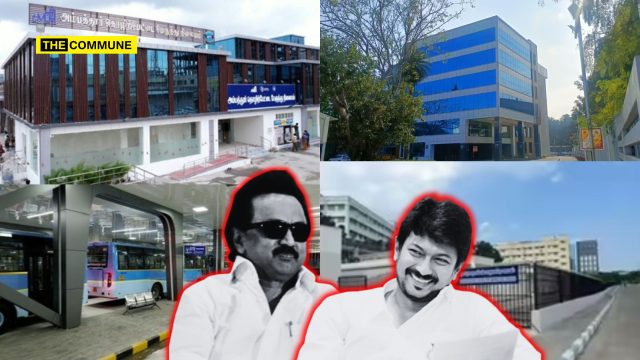
The ₹40-crore Transport Department headquarters in Guindy, inaugurated twice in 2025, once by Deputy Chief Minister Udhayanidhi Stalin and again by Transport Minister S.S. Sivasankar, has several vacant sections.
A field visit found the reception desk on the first floor unattended, while rooms designated for the assistant secretary, library, and conference hall were not in use. Multiple rooms on upper floors remained locked, and the proposed road safety museum on the fifth floor has yet to take shape.
Officials said many staff members continue to function from the department’s old offices at Ezhilagam. Consultant appointments for key wings, including the World Bank-aided road safety division and private bus enforcement teams, are still pending. Authorities said steps are being taken to shift remaining personnel.
Ambattur Bus Terminal Commercial Complex
The Ambattur Bus Terminal Commercial Complex, upgraded at a cost of ₹11.81 crore and inaugurated in November 2025, presents a similar picture.
While bus operations function, the commercial block remains largely locked. Ground-floor shops, a senior citizen waiting room, and several public amenities have not been opened. First-floor facilities, including staff rooms, CCTV control room, and administrative spaces, remain unused, though disability-friendly toilets have been built.
Native Dog Breeding Centre
The ₹5-crore Native Dog Breeding Centre in Saidapet, inaugurated in 2025, is yet to become operational. The facility contains 51 kennels, all of which remain locked.
Officials from the Animal Husbandry Department said pedigree dogs have only recently begun to be procured, delaying functional rollout.
Administrative Response
Planning authorities acknowledged delays. Chennai Metropolitan Development Authority Member-Secretary K. Prakash said construction across facilities had been completed, but operational and maintenance models were still being finalised. Tenders have been floated, and contracts are expected to be awarded.
As we await Tamil Nadu state budget in sometime, here’s a look at the already inaugurated multi-crore public infrastructures projects by CM, Dy CM, and ministers which lie in limbo without any takers.
Some of these are transport department HQ in Guindy, Kolathur ornamental… pic.twitter.com/tkPbKDBegt
— Omjasvin M D (@omjasvinMD) February 17, 2026
The continued under-utilisation of these high-value public assets has triggered criticism over what observers describe as “vanity infrastructure”, projects inaugurated with fanfare but lacking timely institutional readiness, stakeholder integration, and revenue planning.
Subscribe to our channels on WhatsApp, Telegram, Instagram and YouTube to get the best stories of the day delivered to you personally.