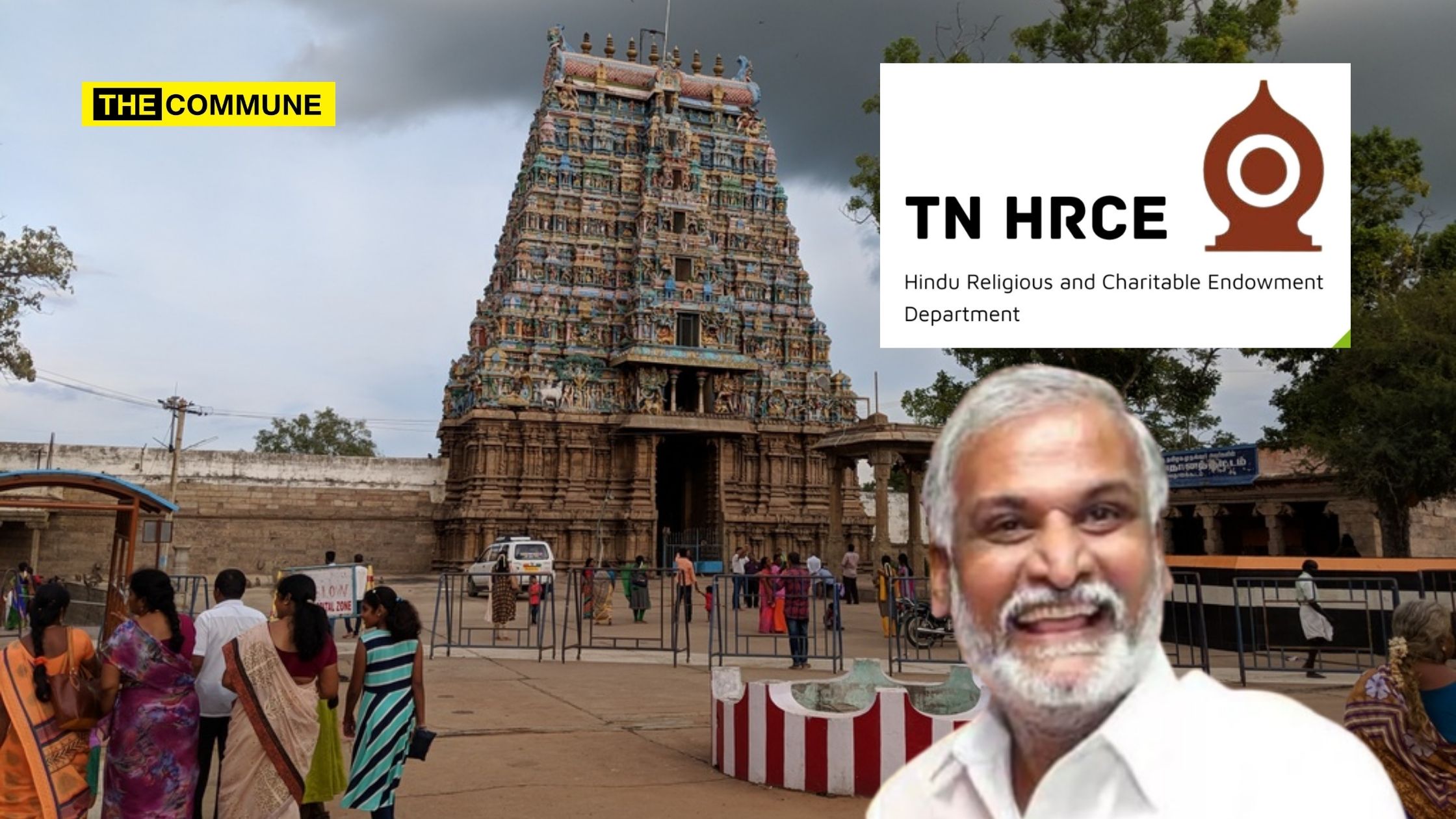
In a scathing and unprecedented judgment, the Madurai Bench of the Madras High Court has delivered a comprehensive indictment of the Tamil Nadu government and the Hindu Religious and Charitable Endowments (HR&CE) Department for illegally usurping the management of the historic Sri Kallazhagar Temple and diverting its funds for large-scale construction projects without authority of law.
A Division Bench comprising Justice Anita Sumanth and Justice C. Kumarappan struck down G.O. Ms. No.135 dated 8 March 2024 and consequential proceedings dated 11 October 2024, holding that the State had “no business” deploying temple funds unilaterally and had acted in gross violation of constitutional guarantees, statutory provisions, and Supreme Court precedents.
‘Temple is Not a Government Project’
At the heart of the case was the State’s decision to include the 108 Divya Desam Sri Kallazhagar Temple under its so-called ‘Iconic Project’, announcing civil works worth nearly ₹92 crore, later revised to ₹40 crore, for construction of toilets, dining halls, guest houses, shops, parking facilities, sewage treatment plants and other infrastructure using temple surplus funds.
The Court categorically rejected the very premise of the project, observing that the HR&CE Department had reduced the temple to a mere real-estate development site.
“The Department has envisioned the temple as a ‘project’ requiring development and upgradation, concepts that are alien to a temple,” the Bench held, warning that such an approach dilutes the sanctity of religious institutions.
State Has ‘No Role’ in Envisioning Temple Projects
In one of its strongest rebukes, the Court ruled that the Tamil Nadu government has no authority whatsoever to conceptualise or announce development projects for temples, especially when such projects involve massive financial implications.
“It is not for the State to make grandiose announcements relating to the deployment of temple funds… They have, to put it bluntly, no business to deploy temple funds unilaterally,” the judges declared.
The Bench held that only the Board of Trustees of a temple is legally empowered to propose, evaluate and approve any project involving temple property or finances, reiterating that Articles 25 and 26 of the Constitution protect religious autonomy from executive overreach.
13 Years Without Trustees: ‘Travesty of the Act’
The Court came down heavily on the HR&CE Department for failing to constitute a Board of Trustees for over 13 years, despite the temple earning several crores annually and clearly falling under Section 47(iii) of the HR&CE Act.
“To have such a temple managed by a Fit Person and an Executive Officer is a travesty of the scheme of the Act,” the judgment stated, describing the arrangement as a gross statutory violation.
The Bench noted that during this period, the Executive Officer appointed in 1966 continued indefinitely, directly contradicting Supreme Court rulings that such appointments must be temporary and crisis-specific.
Budgets, Audits, and Accountability: A ‘Casual and Careless’ Regime
The judgment exposes a systemic collapse of financial discipline within the HR&CE Department. The Court found:
- No proper budgets prepared as mandated under Section 86 of the Act
- No transparency in sanctioning or approving expenditures
- No evidence of audits conducted for the last three financial years
- Massive depletion of temple surplus funds without statutory approval
The Bench described the approach of the authorities as “casual and careless”, stating that there was nothing on record to show that officials were even aware of the statutory limits governing temple finances.
₹45 Crore Vanished in One Year
One of the most damning findings relates to the temple’s accumulated surplus funds. The Court recorded that the temple’s reserves fell from approximately ₹107.6 crore in 2023 to ₹62 crore in 2024, a drop of nearly ₹45 crore in a single year.
“This reduction represents expenditure without budgeting and without authority,” the judges observed, calling it a serious matter of concern and an instance of illegal appropriation and diversion of temple funds.
‘Crime Against the Deity’
Invoking its parens patriae jurisdiction, the Court underscored that temple funds belong to the deity, not to the State, the HR&CE Department, trustees, or ministers.
“The entirety of the funds, current or accumulated, vests in the deity,” the judgment held, adding that the unauthorised spending amounted to a “crime against the deity”.
Government Orders Quashed, Constructions Halted
Concluding that the impugned Government Order and work proceedings constituted a “usurpation of the role of temple management by the State”, the Court:
- Quashed G.O. Ms. No.135 dated 08.03.2024
- Set aside the work order dated 11.10.2024
- Upheld the stay on further construction
- Issued detailed directions to ensure future compliance with constitutional and statutory limits
The ruling makes clear that development cannot override dharma, law, or constitutional boundaries, and that temples cannot be governed by executive fiat masquerading as welfare or modernization.
Statewide Implications
Legal experts note that the 91-page judgment has far-reaching implications across Tamil Nadu, where hundreds of temples remain under prolonged HR&CE control without properly constituted trustee boards.
By reaffirming that “power to regulate does not mean power to supersede”, the Madras High Court has drawn a firm constitutional line against State overreach into Hindu religious institutions, a line the government and HR&CE Department have now been judicially warned not to cross again.
Subscribe to our channels on Telegram, WhatsApp, and Instagram and get the best stories of the day delivered to you personally.