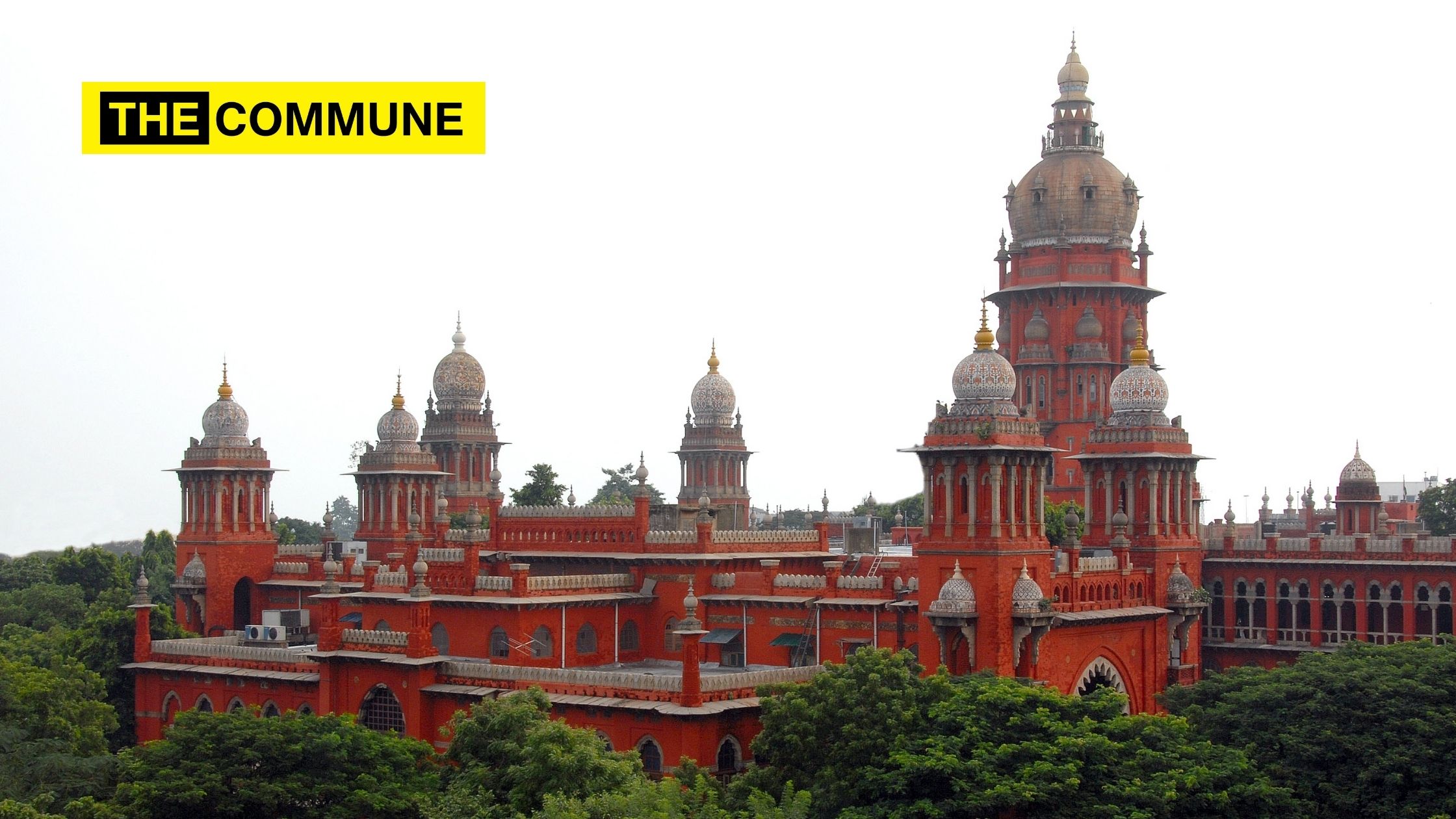
The Madras High Court on 22 January 2026 ordered the removal of a roadside Christian shrine in Chennai, holding that public roads cannot be encroached upon by any structure, irrespective of its religious significance. The Court observed that streets and roads are meant exclusively for public use and “do not carry any religious character.”
Justice V. Lakshminarayana passed the order while hearing a writ petition filed by A. Sarath, a resident of Thiru Vi Ka Nagar, who purchased a property in November 2024. Sarath informed the Court that at the time of purchase, he noticed a raised structure near the entrance of the property and was told it was temporary and would be removed.
However, while undertaking renovation work and preparing for a housewarming ceremony, Sarath discovered that a statue of Mother Mary had been installed inside the structure, effectively converting it into a permanent shrine. He contended that the shrine obstructed the main entrance to his house, inconvenienced pedestrians using the public pathway, and that electricity was being illegally drawn from a nearby house to power lights and sound equipment at the site.
After his representation dated 13 September 2025, failed to prompt action from civic authorities, Sarath approached the High Court seeking directions for removal of the encroachment.
The Court noted that the shrine occupied approximately eight square metres of land classified as “sarkar poramboke street,” which is public road property. Justice Lakshminarayana held that the nature or purpose of the structure was irrelevant, stating that “any encroachment on public land has to be removed.”
During the proceedings, a private individual, R. Daniel, sought to intervene, claiming that he had installed the shrine in 1995 and that it had functioned for nearly three decades as a place of faith and emotional support for local residents. He argued that no objections had been raised until the petitioner purchased the property and contended that removal of the shrine would hurt religious sentiments and disturb communal harmony.
Daniel also alleged selective targeting, pointing to another structure used for Hindu worship in the area, and raised allegations about the petitioner’s activities. The Court clarified that such claims could be addressed separately through appropriate legal remedies and were not relevant to the issue of encroachment.
Referring to settled Supreme Court jurisprudence, the High Court reiterated that religious sentiments cannot be invoked to legitimise encroachments on public roads. Citing Section 128 of the Local Bodies Act, the Court said it is the statutory duty of the Municipal Commissioner to remove unauthorised structures from public places after issuing due notice.
Since notices had already been issued in the present case, the Court directed the Greater Chennai Corporation to proceed with the removal of the shrine, holding that the petitioner was entitled to relief as the structure stood on public road land.
Source: OpIndia
Subscribe to our channels on Telegram, WhatsApp, and Instagram and get the best stories of the day delivered to you personally.