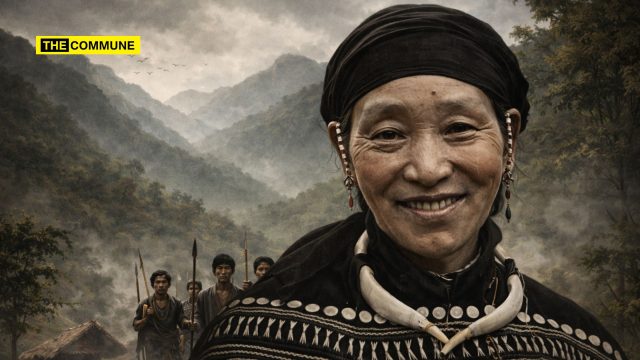
Born on 26 January 1915, in a remote Rongmei village in the hills of what was then colonial Manipur, Rani Gaidinliu grew up far from the marble halls of empire and closer to the mud, mist, and moral certainties of the Naga highlands. She never learned to read or write, but she learned early how to lead.
Gaidinliu’s world was one where the British Raj appeared not as a distant abstraction but as an intrusive power that taxed huts, forced men into porterage, and interfered with local faith and authority. By the time she was 13, she had joined a revivalist and resistance movement known as Heraka (Pure), led by her cousin Haipou Jadonang. It combined ancestral religious practices with a blunt political demand: that the Nagas, who had governed themselves for generations, should not bow to white rulers who had arrived only yesterday.
Jadonang was arrested in 1931 and hanged after what his followers called a mock trial. His death might have ended the movement. Instead, it handed its leadership to a slight, determined teenage girl. At 16, Gaidinliu took charge of Heraka and did something that unnerved the colonial authorities more than any rifle: she persuaded entire villages to stop paying tax, refuse forced labour, and deny the legitimacy of British rule. The Raj, accustomed to obedience in the hills, suddenly found itself defied by a child.
The British press and parliamentarians branded her “the terror of the North-East”. A manhunt was launched. She slipped across forests and villages in what are now Assam, Nagaland, and Manipur, protected by her people. Eventually, in October 1932, she was captured after a military ruse by the Assam Rifles. After a ten-month trial, she was convicted of murder and attacks on British forces and sentenced to life imprisonment.
Thus began 14 years behind bars, from 1933 to 1947, in jails at Guwahati, Shillong, Aizawl, and Tura. In Shillong, she was kept in a dark cell. Jawaharlal Nehru, touring Assam in 1937 as Congress president, heard of the young rebel and insisted on meeting her. What he found shocked him: a teenage girl who had already sacrificed her youth to an idea. Writing later, he called her “this brave child of her hills” and conferred on her the title by which she would be known ever after: Rani, the Queen of the Nagas.
She was released after independence in 1947, on Nehru’s orders and against the advice of provincial officials who still regarded her as troublesome. Free India didn’t celebrate her as Nehru had predicted. The little it did remember her was uneven and often inconvenient. She was honoured as a freedom fighter, but she refused to fade into ceremonial harmlessness. Instead, she plunged back into the politics of the hills.
Her aim was not separatism but something subtler and more controversial: the unification of the Zeliangrong communities into a single administrative unit within India, and the revival of the Heraka cultural system. This put her at odds with two powerful forces: Naga separatists who wanted independence, and Christian leaders who saw Heraka as pagan and retrograde. In the 1950s and 1960s, as the Naga insurgency intensified under AZ Phizo, Gaidinliu again went underground.
She even created her own parallel administration, the “Zeliangrong Government of Rani Party”, with about a thousand followers, several hundred rifles, and a determination to defend what she saw as her people’s soul. Delhi, under Indira Gandhi, judged that she was not anti-Indian but fiercely nationalist. After years of persuasion, she and her followers surrendered in 1966. Her men were absorbed into the Nagaland Armed Police. She settled in Kohima, where she lived for the next quarter-century.
In later years, she became a national figure of a different sort: touring India, addressing conferences, and insisting that Nagas were not Christian, not all wanted separation, and not all rejected India. She was associated with organisations such as Vanvasi Kalyan Ashram and Vidya Bharti and served as president of the All-India Freedom Fighters Association. The state, which once hunted her, now showered her with honours: the Tamrapatra in 1972, the Padma Bhushan in 1981, and other awards besides.
Rani Gaidinliu was not easy to categorise. She was a rebel who became a loyalist, a mystic who built an army, a nationalist who fought both empire and insurgency. She spoke the language of Dharma as fluently as that of politics. Admirers saw her as the embodiment of courage and integrity; critics saw rigidity and a refusal to adapt. Both were right.
What never wavered was her conviction that identity mattered, and that freedom meant more than a change of rulers. For her, independence was not merely constitutional; it was cultural and spiritual. In that sense, she resembled many of the 20th century’s anti-colonial leaders who refused to separate politics from belief.
She withdrew from public life after the Kuki–Naga conflict in 1992 and returned to her native village. A brief illness carried her off the following year on 17 February 1993. Her funeral in Manipur was conducted with full state honours. The prime minister mourned her. Stamps, ships, and coins would later bear her name.
India, till two decades ago, had a strange habit of celebrating freedom fighters who conformed to certain ‘standards’ and forgetting those who did not fit neat narratives. Rani Gaidinliu did not fit. She was a hill woman who confronted the empire, a teenager who frightened Parliament, someone who proclaimed that the Nagas aren’t Christians, and a nationalist who insisted that the periphery mattered as much as the centre.
Rani Gaidinliu lived by the following shloka from the Bhagavad Gita (18:47)
श्रेयान्स्वधर्मो विगुण: परधर्मात्स्वनुष्ठितात् |
स्वभावनियतं कर्म कुर्वन्नाप्नोति किल्बिषम्
It is better to do one’s own dharma, even though imperfectly, than to do another’s dharma, even though perfectly. By doing one’s innate duties, a person does not incur sin.
Raja Baradwaj is a marketing communications professional who works with a leading technology multinational company. He is an avid reader, history buff, cricket player, writer, and Sanskrit and Dharma Sastra student.
Subscribe to our channels on Telegram, WhatsApp, and Instagram and get the best stories of the day delivered to you personally.