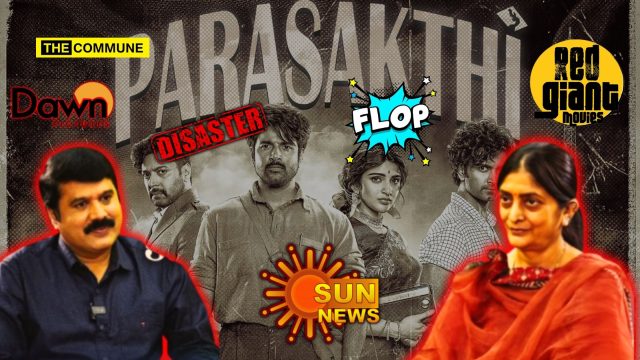
On 10 January 2026, pro-DMK propaganda film Parasakthi, directed by DMK stooge Sudha Kongara was released. If one assumed that the film is a story based on true events, you are wrong. The film is a work of fiction for most part and scanty with the truth.
Kongara seems to have internalised the fiction part of it and is seen spreading the same distortions at interviews, public speeches and what not.
In line with this, she was interviewed by DMK mouthpiece Sun News and in this 40-minute interview too, she spews distorted history, speaks the same separatist language as the DMK and makes anti-central government comments.
Instead of limiting herself to artistic license, Sudha repeatedly makes categorical historical claims that collapse under the most basic scrutiny. Worse, she frames the story as a civilizational clash between “Tamil people” and the “Centre”, carefully stoking anti‑Delhi sentiment under the guise of defending Tamil.
Let us take a close look at what distortions she presents as facts in the interview.
#1 Says Congress Buried History, But She Buried The Martyrs, Projected Karunanidhi As Hero
She claims the history of how the then-CM functioned to suppress the agitation was removed from public eye and that there is nothing in the National as well as British archives, but she herself forgot to mention the true language warriors who gave their life for this struggle. Instead, she glorified Karunanidhi, who was a nobody at that time – he was nowhere close to Annadurai’s circle – it was MGR, Nedunchezhian and others who were in the picture and not otherwise.
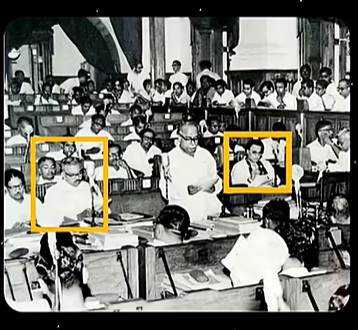
But she chose to project Karunanidhi as a hero.
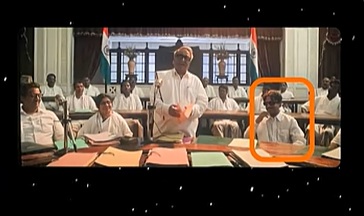
#2 The “Hindi Money Order” Fairy Tale
Sudha’s big claim is that the anti‑Hindi spark began when money orders to students were “suddenly changed into Hindi”, allegedly delaying hostel and exam fees for a month. She says, “The spark started from the Hindi money order issue. Those days, if you had to go to colleges, since there were no colleges in the villages. So, you had to go to the city. When in the city, you had to stay in a hostel. When in the hostel, money comes only by money order. At that time, for the grandfather, grandmother, mother, or father in the villages, mostly they didn’t know how to read or write. Definitely they didn’t know any other language. So, the money orders they sent every month were late. The spark started there. Students were not getting money for mess fees, exam fees. It was late for a whole month because suddenly the money orders were changed into Hindi. Even recently, bank forms changed to Hindi.”
Standard works on the 1965 agitation including those she cites, like A Ramasamy’s Tamilan Thodutha Por and Baladandaiyudham’s Hindi Egathipathiyam – do discuss resentment over Hindi creeping into central forms and signage. But there is no documented evidence that money‑order forms were printed only in Hindi, or remittances to Tamil students were delayed or blocked for a whole month because “everything was changed into Hindi”.
What was, at most, a genuine fear about Hindi creeping into paperwork, is retold by Sudha as an accomplished policy that strangled money flow. She converts anxiety into “fact” – a classic propaganda move.
Interestingly, she says she met Justice Chandru – a Dravidianist, a card-carrying Communist and some of the names she mentions are all DMK Dravidianists to the core – so it raises the question whether a hard-core Dravidianist will be able to give a neutral retelling of events.
She says, “Professor Nannan, he has fought so much for the students. He stood right there in that protest. He was put in jail. If the government hadn’t changed in ’67. He would have been in jail for his whole life. For what? Simply for saying he wants to speak Tamil, for saying don’t impose Hindi. So this is a freedom struggle.”
Do note the over-the-top claims she makes here – Where is the proof that people were jailed just for saying they wanted to speak Tamil? Equating this to a freedom struggle is alluding to secessionism.
Inventing “First Time In World History” Atrocities
Next, Sudha segues to a point where she dramatically claims that during the 1965 anti‑Hindi agitations, it was the “first time in history of the world, a student was shot.” She says she interwove fact and fiction such that no one could tell it apart – “It is interwoven to the point where you don’t know what is fiction and what is real.”
This is demonstrably false. Even a school‑level understanding of world history shows this. Colonial police fired on student protestors in pre‑Independence India and elsewhere decades before 1965. Here are examples:
British colonial police opened fire on student-led or student-involved protests multiple times pre-Independence:
- 1942 Vidyasagar College protests (Calcutta): On September 10, students led by Sasadhar Ganguly attacked a police van; police fired, killing students in clashes amid Quit India Movement protests.
- 1922 Chauri Chaura (though not purely students): Police fired on Non-Cooperation Movement protesters (including youth), killing three civilians before the crowd retaliated.
- 1925 Neemuchana peasant protests: State police fired on protesters against land revenue hikes, which included student agitators in princely states.
Similar incidents are documented in British‑ruled India, Egypt, Russia and other countries long before the Dravidian movement existed. Here is the list.
Egypt under British Occupation: In 1935, during anti-British student protests in Cairo marking “National Independence Day”, thousands of students marched, clashed with police; police fired warning shots and live rounds, killing two students (one in Cairo, one in Tanta) and injuring dozens, including police.
Tsarist Russia: Russian imperial police suppressed student protests violently before 1917:
- 1901-1902 Kiev student strikes: Students from KPI (Kyiv Polytechnic) and universities struck against tsarist educational restrictions; police clashed with marchers, arresting over 100 and injuring participants on 2-3 February 1902.
- 1905 Bloody Sunday: While worker-led, it involved student radicals; police under Grand Duke Vladimir fired on demonstrators, killing over 100.
By upgrading a tragic but local episode into a never‑before‑seen global atrocity, Sudha converts history into melodrama. The goal is obvious: inflate the victimhood narrative around the 1965 agitation to mythic proportions, unmoored from evidence.
Blurring Fears And Facts On IAS Exams And Railways
Another pair of claims from the interview – “The IAS exams might have been changed to Hindi.” “The advertisement for Railway jobs didn’t come in Tamil papers but only in Hindi papers.”
Yet UPSC exams of the period remained in English with regional‑language options; there was no policy to conduct IAS only in Hindi.
Railway recruitment notices historically appeared in English‑language and several vernacular papers; a deliberate “Hindi‑only” policy for ads in Tamil Nadu is not supported by accessible records.
Here again, fears voiced by agitators 60 years ago are retold as if they were enacted decisions – a subtle but dangerous distortion, because it converts speculative “if this goes on, they will…” rhetoric into retroactive “this is what they did”.
Attempt To Brainwash Young Minds With Separatist Ideas?
She says she wanted to keep it in a palatable, entertaining form so she couldn’t keep it raw. She said, “Saying it very raw is also a thing, then you will get an ‘A’ rating. I desire for children – 13, 14, 15, 16, 17, young minds to see this. That is when their minds are forming.”
So has Sudha accepted that her goal was to brainwash teenagers with false/distorted history?
“North Indian Dialects Are Dead” – Another Casual Falsehood
Sudha goes on to claim that various Hindi‑belt dialects are now “dead, they are gone.” She says, “Now there are so many dialects of Hindi in the North. So many. None of that is there now. They are dead, they are gone. It would have been like that here too. It is a fact that many, many languages are dead. There is no doubt about it. Like that, why do we want the oldest language in the world to die? If you destroy our language, how will we think? What is our future?”
Basic linguistic data contradicts her:
Bhojpuri, Awadhi, Maithili, Braj and others each have millions of active speakers, thriving folk music, films and print cultures. Claiming these languages are “dead” is not a slip of the tongue – it is part of a script: exaggerate “Hindi imperialism” so aggressively that facts become expendable.
“TN Would Have Had No Language Had 1965 Agitation Not Occurred”
Sudha asserts: “If that language struggle hadn’t happened… Tamil Nadu would have been without a language.”
She adds, “We might be speaking in Hindi. Or we might be without jobs. Or we may have been in a small position. Because only if you know a language and are an expert in it can you advance. In such a situation, how many years would it take for us to become experts in it? That’s what is said in our film: it took me 200 years to learn English because I was a slave.”
This flies in the face of the Constitution she claims to defend:
- Tamil is in the Eighth Schedule; Part XVII dealt with the Union’s official language, not the abolition of Tamil in Tamil Nadu.
- Article 345 explicitly allows states to choose their own official language(s); nothing in the 1965 framework could have legally erased Tamil from use in the state.
In other words, Sudha’s line is not just wrong, it is constitutionally impossible. But by insisting “we would have been without a language,” she reinforces the separatist trope that New Delhi was one step away from linguistically liquidating Tamil society – a paranoid narrative with zero legal basis.
Turning A Multi‑Party Agitation Into A DMK Monopoly
The interviewer confidently declares that, “Everyone who led the student protest comes from a DMK background—most of them.”
Serious documentation of the 1965 agitation shows:
- DMK‑linked student fronts were crucial, but
- Congress, CPI, SSP, independent student unions and local caste/community outfits also played significant roles across districts.
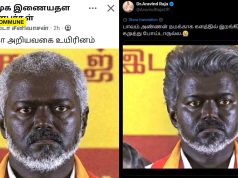
She says the film shows a student’s viewpoint of Karunanidhi or Annadurai but the fact remains that Karunanidhi was nowhere near Annadurai in those days. (refer image above)
Sudha has not even mentioned the real language warriors or their families. All those who died have been forgotten, all those who were harmed are forgotten to this day – the entire film is nothing but a propaganda piece for the ruling party in Tamil Nadu.
Such statements retrofit history to today’s DMK‑centric political narrative. The student movement becomes a one‑party property, conveniently amplifying the ruling party’s moral capital while erasing others.
Pollachi “Mass Burials” Without A Shred Of Proof
On Pollachi, Sudha goes even further, claiming that: “Many more died there than what they showed… They took them to the Army camp itself and buried them.”
Yet academic histories and contemporary press archives record police firing and deaths in Pollachi, but in single digits, with named victims. None of the standard sources – including Dravidian‑sympathetic writers – document any secret mass graves in an Army camp or wholesale disappearing of bodies.
When asked about how she got the data for Pollachi deaths, she quotes anonymous elders, saying “I went to Pollachi and spoke to people of that age, in their 80s, 70s, what they said was, “We heard it like crackers bursting somewhere far away.” We didn’t know so many were dying or it was happening like this. As it happened, they cleaned it up immediately and left.”
What Sudha presents as a matter‑of‑fact truth is, at best, unverified oral lore dressed up as history. In effect, she accuses the Indian state and Army of a cover‑up without producing any documentary proof – exactly the kind of narrative that fuels long‑term suspicion of national institutions.
Using Tamil Brahmi As Code
In the film, she shows the use of Tamil Brahmi or Tamili as a code language. She says, “Bharathidasan (who wrote these lines) was the greatest revolutionary poet of that time. He was someone who fought for the language. He has written so many. This seemed very apt to me. So we used it.”
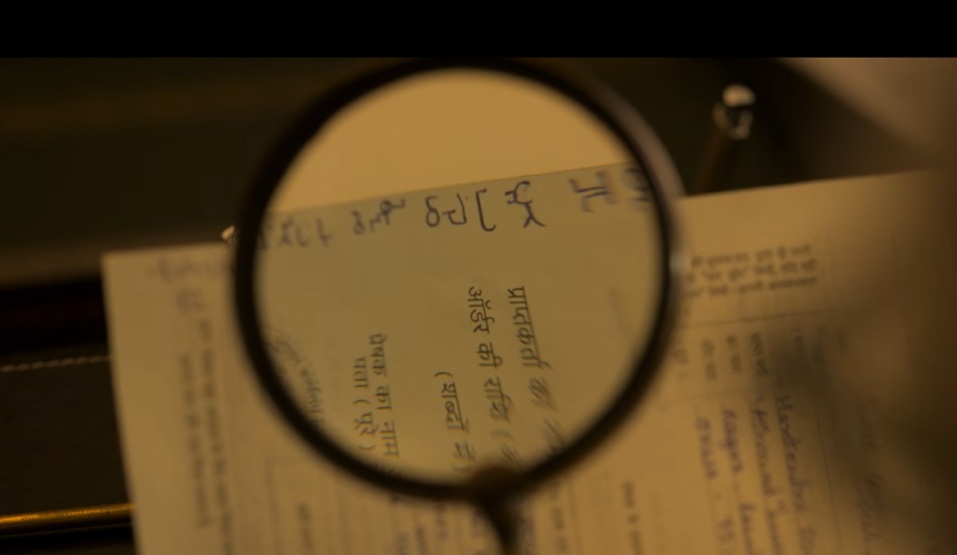
Historians have called this claim historically untenable. Tamil Brāhmī was barely known in 1964. While KV Subramanya Iyer conducted pioneering work in the 1930s, it was not pursued systematically. Serious academic focus began only in 1961, when K A Nilakanta Sastri encouraged Iravatham Mahadevan to take up the subject.
Mahadevan published his first major findings only in 1965–66, based on the Pugalur and Mangulam inscriptions. Even then, Tamil Brāhmī did not enter wider academic or public consciousness until the 1990s, when Mahadevan resumed extensive research.
The idea that Tamil Brāhmī was being widely understood,or covertly used as a “code” within government circles in 1964, has no historical basis. This scene exemplifies propaganda-driven storytelling, where symbolism is prioritised over facts.
When propaganda takes centre stage, facts tend to go missing. Tamil Brāhmī was barely known in 1964. Although K. V. Subramanya Iyer had carried out some pioneering work in the 1930s, it was not pursued systematically thereafter. It was only in 1961 that K. A. Nilakanta Sastri… https://t.co/uADqanxGna
— 𑀓𑀺𑀭𑀼𑀱𑁆𑀡𑀷𑁆 🇮🇳 (@tskrishnan) January 5, 2026
Indira Gandhi Reduced To A Caricature
The film also has Indira Gandhi’s character in 3 scenes. Sudha claims, “For those three scenes… the one who came as Indira Gandhi also—she spoke exactly like Indira Gandhi. You see, Mrs. Gandhi will talk like this. She will keep her hand like this. She did all that. Her walking, walking fast on that stage. She never had time for anybody. Impatient. She would go like that.”
But in reality, the Indira Gandhi character looked like a joke.
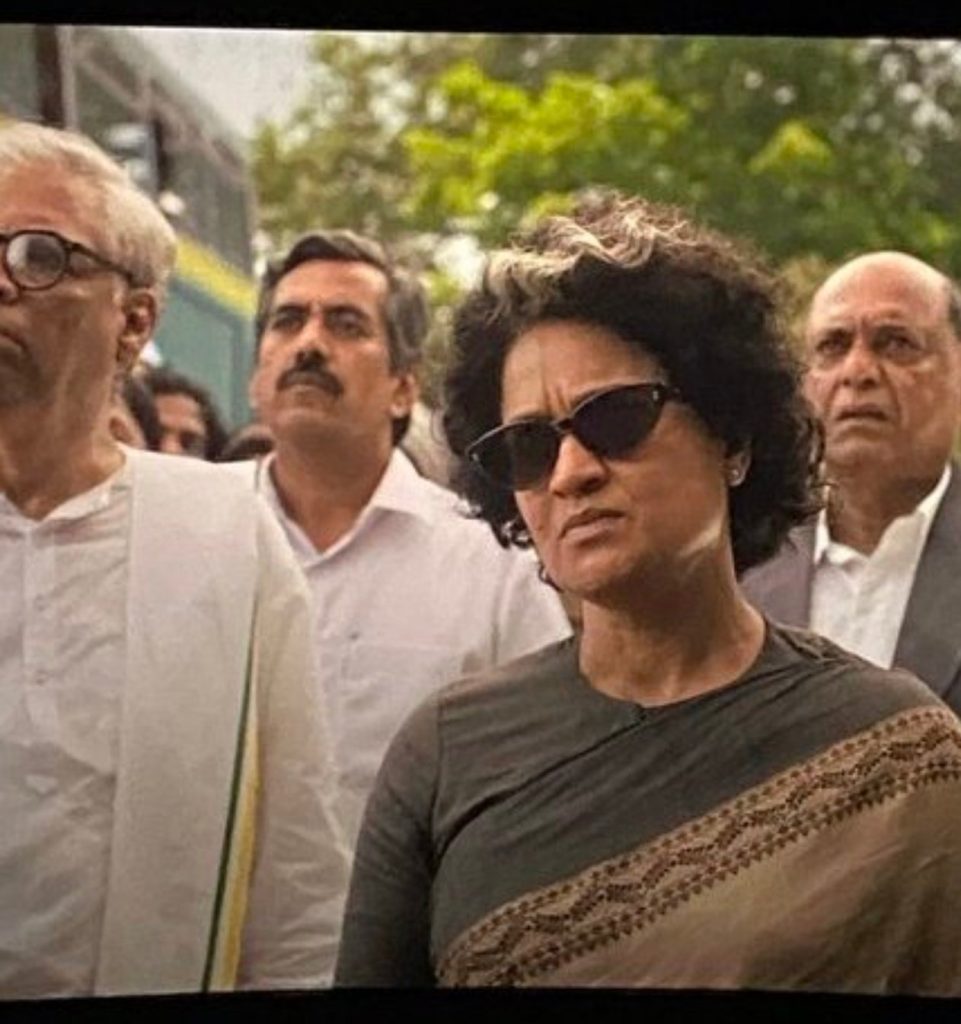
A 1991 film called Maanagara Kaaval had a more dignified looking Indira Gandhi.
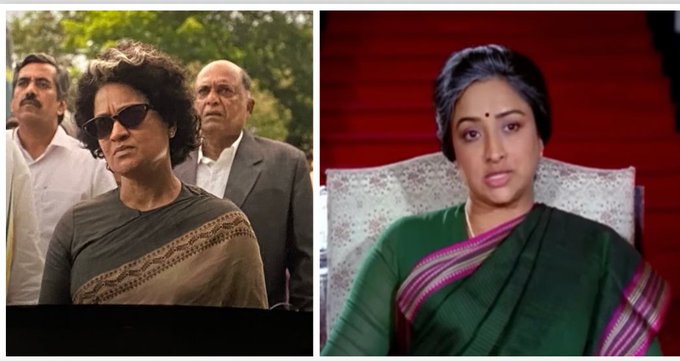
Anti‑Centre Framing Straight Out Of A Separatist Playbook
Underneath these factual problems lies an unmistakable ideological through‑line. She openly compares her project to The Kashmir Files, positioning Parasakthi as a necessary retelling of “genocide‑like” oppression by the Union.
When asked if she was stirring up something among the public, she says she told the censor, “We must learn from history. If some things happened, if a genocide happened, it should not happen again. That is why I am talking about it.”
Taking the example of Dhurandhar, she says, “Now, you are doing a Dhurandhar, you are taking a film about are you going to war with Pakistan or drop a nuclear bomb on them? We are taking films about freedom, 1947. Then do we take the film so that we should go and fight with them? You have taken The Kashmir Files. Why have you taken The Kashmir Files? A genocide happened. It happened 100%. You are telling that. Now, are you taking it so that two religious factions should fight? No. This happened in history. This must be known to people so that it doesn’t happen again.”
She is wrong about the fact that while Kashmir Files is based on true events and shows the truth, Parasakthi, in her own words, mixes fiction and non-fiction too much.
Parasakthi – A Distorted Diarrhea That Turned Out To Be A Disaster
Parasakthi was marketed as a “textbook” on the language struggle. When the writer‑director herself promotes dramatic myths – “first time in world history,” “Tamil Nadu without a language,” “mass burials in Army camps,” “all leaders DMK,” “Hindi killed all northern dialects” – these narratives will migrate from cinema halls into classrooms, social media and political speeches.
That is precisely how historical memory is captured: not by one slogan, but by thousands of repeated semi‑truths and outright falsities, all pushing citizens to see their own country as an enemy.
Sudha Kongara is entitled to make a political film. What she is not entitled to do is smuggle demonstrably false claims and unproven conspiracy theories into public discourse under the respectable label of “research” and “hidden history”.
Subscribe to our channels on Telegram, WhatsApp, and Instagram and get the best stories of the day delivered to you personally.