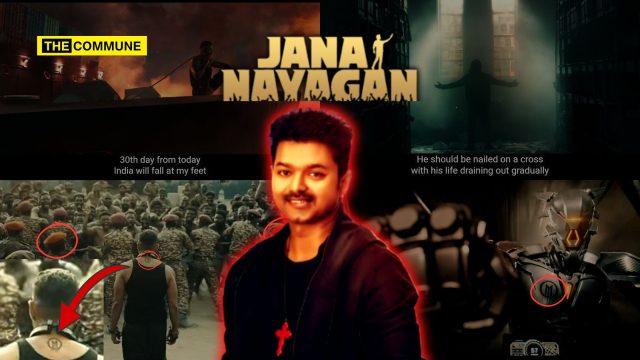
The trailer for Jana Nayagan, Joseph Vijay’s final film before he plunges full time into politics with his Tamilaga Vettri Kazhagam (TVK), dropped on January 3, 2026, and it is an unapologetic display of Christian triumphalism wrapped in mass-hero packaging.
Directed by H. Vinoth and starring Bobby Deol as the villain, the film is the political launch vehicle for Joseph Vijay and has references to TVK scattered across. But we aren’t going to decode that.
The trailer brazenly portrays Vijay as a Christ-like redeemer while associating Hindu sacred symbols as instruments of evil. This is not subtle symbolism – it is a deliberate projection of “Christutva” politics, where Vijay leverages his Christian identity to position himself as the persecuted savior of Tamil Nadu.
As a practicing Christian with deep-rooted connections to evangelical networks, Vijay is using his reel life to signal his real-world agenda: consolidating Christian and minority votes while systematically undermining Hindu cultural dominance in the state.
The Villain’s ‘O-M’ Plan: Hindu Symbols Weaponized For Evil
Bobby Deol’s character reveals his diabolical “master plan” named ‘O-M’, sporting a prominent tattoo on the back of his neck— the letter M inside a circle O, which reads like OM, the most sacred syllable in Hinduism, representing the ultimate reality and divine sound.
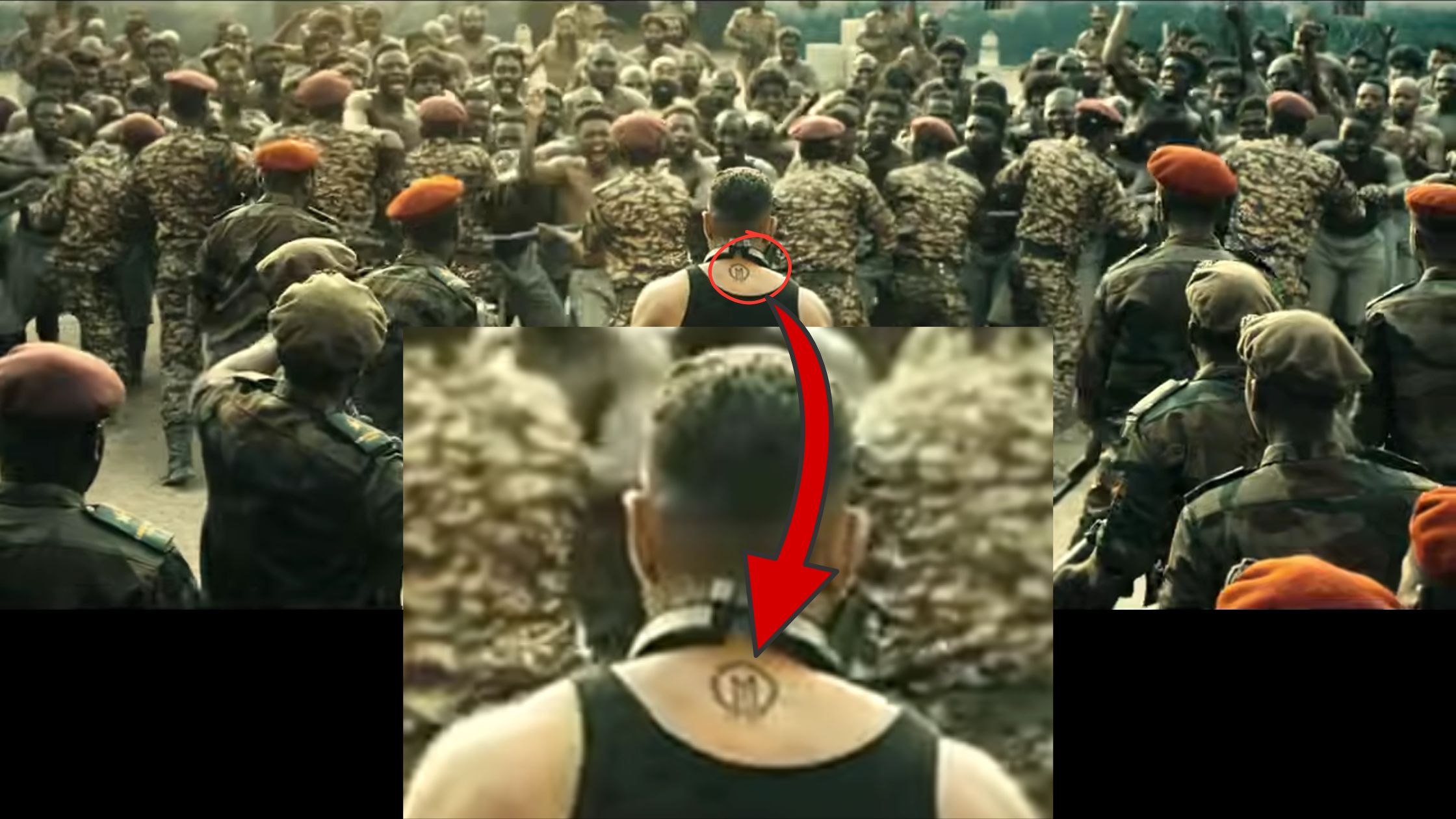
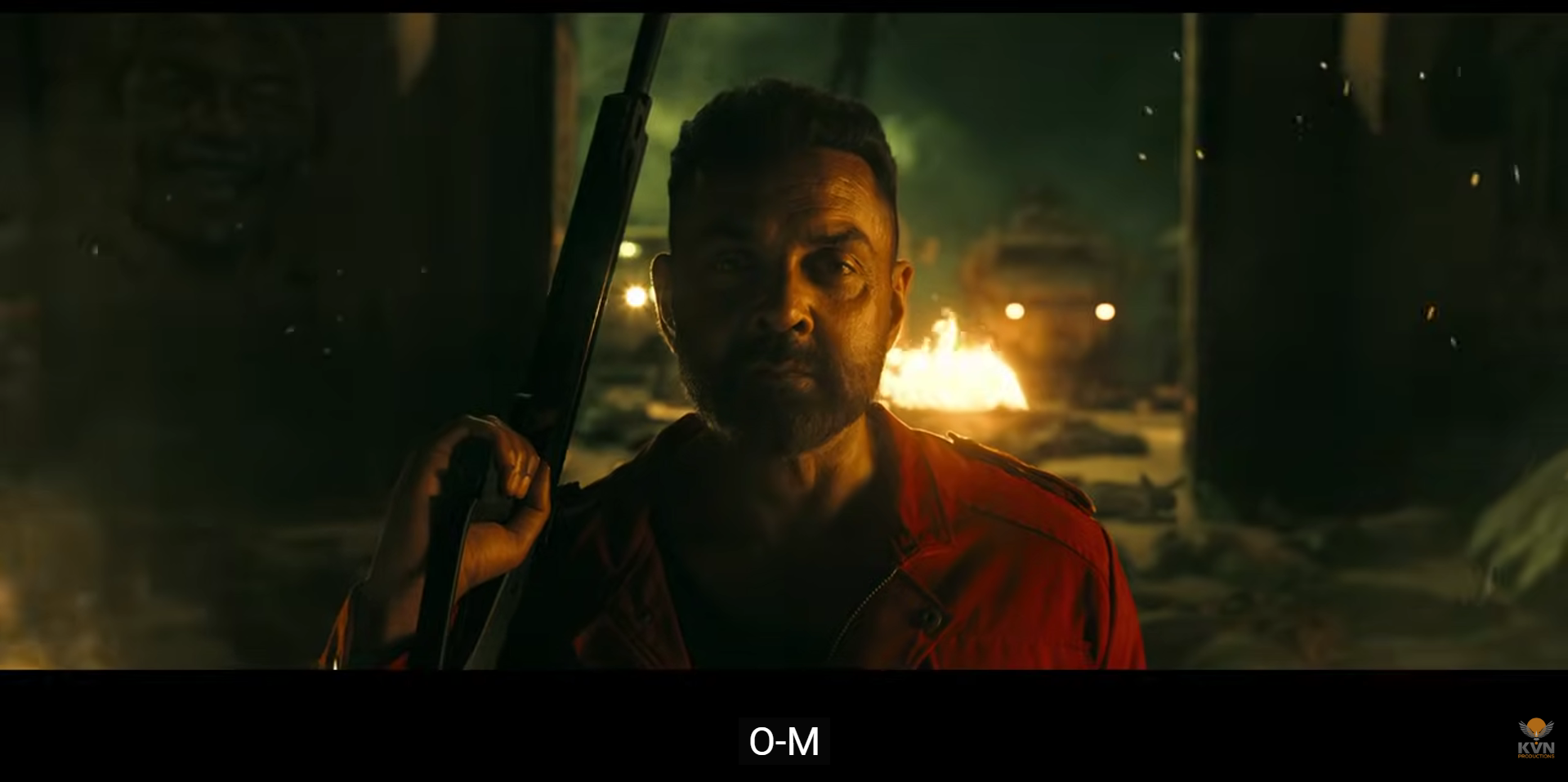
The villain’s frames are drenched in saffron, the color central to Hindu spirituality and identity.
The trailer culminates with a humanoid robot glowing in saffron light, bearing an ‘O-M’ engraving on its armor as it charges to destroy Vijay’s hero.
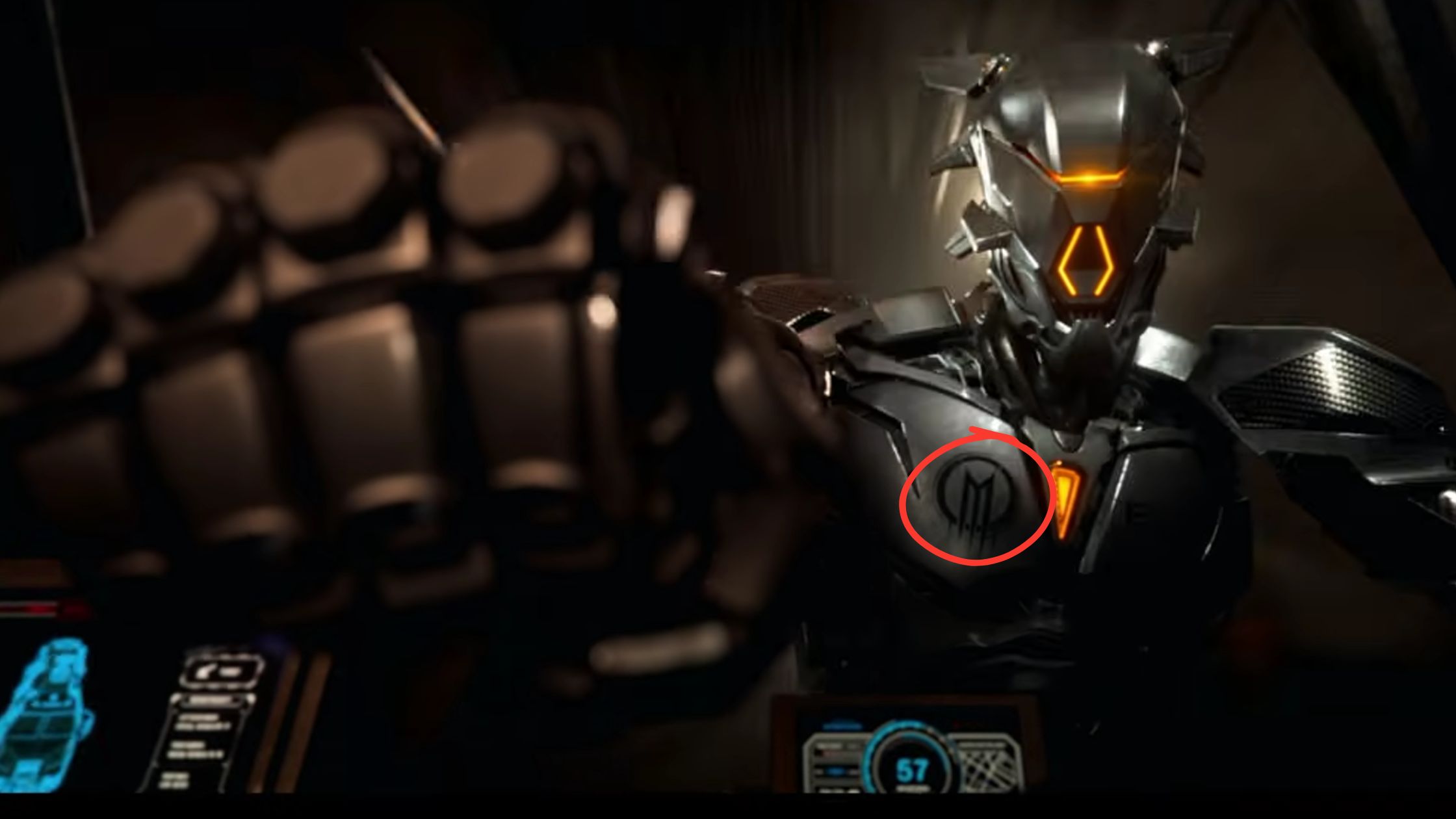
This is no coincidence. The film deliberately takes O-M and saffron—and attaches them to a terrorist-like villain who seeks absolute domination.
The same villain then declares that Vijay’s hero “should be nailed on a cross with his life draining out gradually,” explicitly invoking the crucifixion of Jesus Christ and the agony of slow death on the cross, ensuring no resurrection.
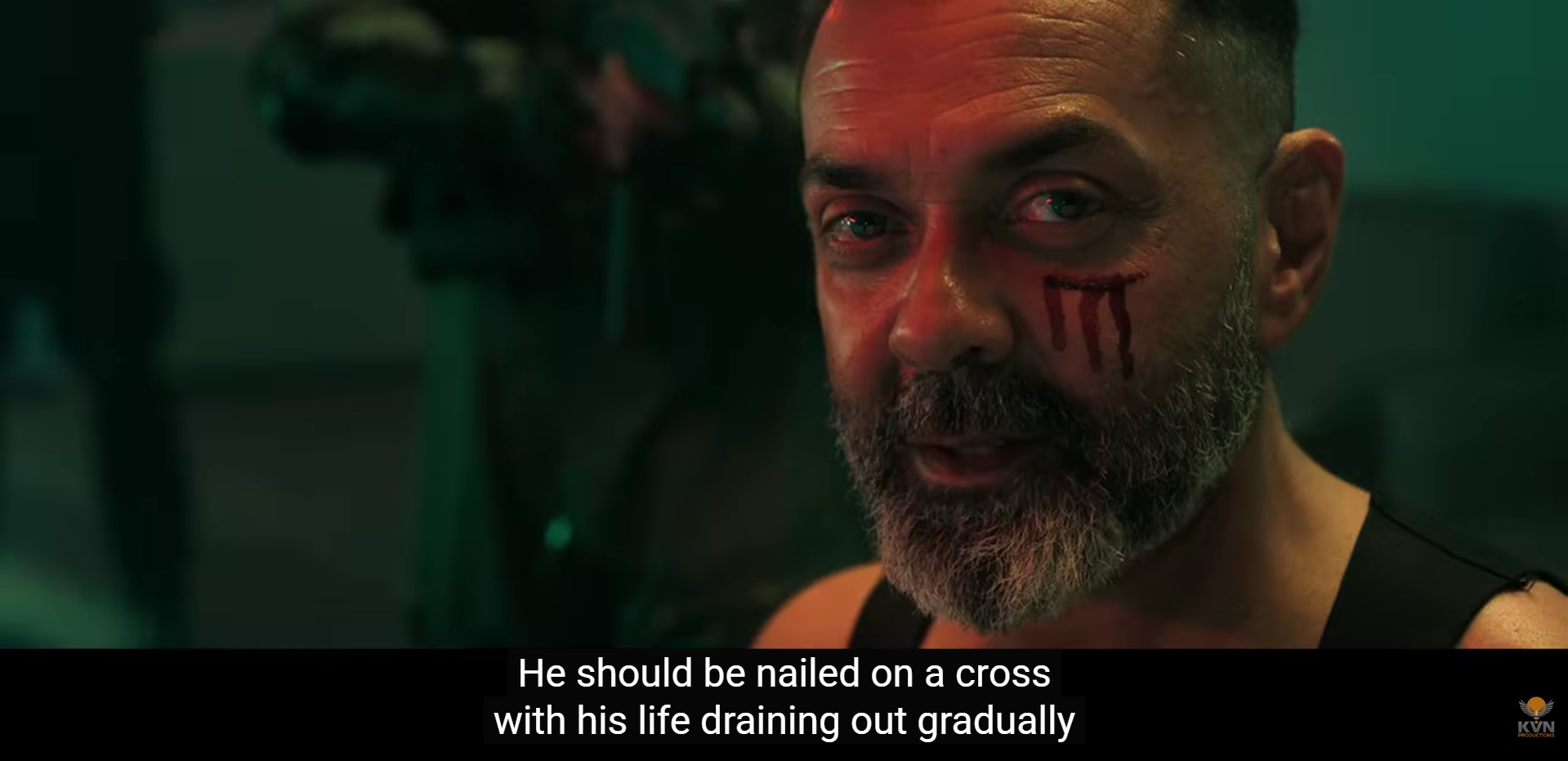
The message is clear: Hindu forces want to crucify the Christian savior, but he will rise to defeat them.
Vijay As The Christ Redeemer
In one of the trailer’s most striking shots, a character (presumably Vijay) stands in silhouette with arms outstretched, sunlight streaming through windows and forming a halo of scattered rays around him—an exact visual replica of the Christ the Redeemer statue in Rio de Janeiro.
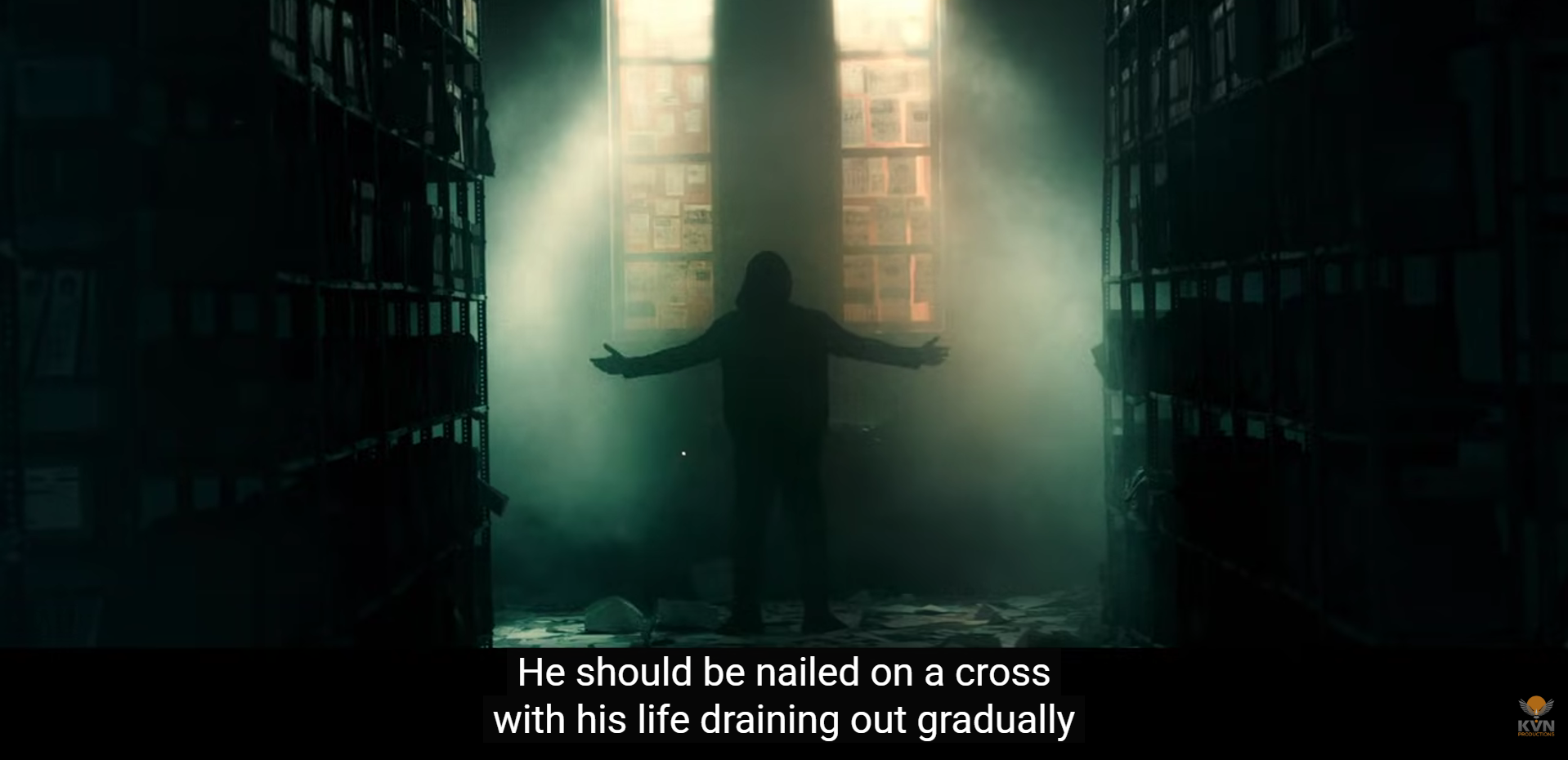
This pose, combined with the crucifixion dialogue, casts Vijay’s character as Jesus himself? The innocent, persecuted messiah who sacrifices for the people and will overcome death and evil?
Joseph Vijay is not just playing a hero—he is portraying himself as Tamil Nadu’s Christian redeemer, destined to suffer at the hands of “saffron” forces but ultimately triumph.
The Christutva Blueprint: From Cinema To Politics
Cloaked in the language of Dravidianist secularism, the project mirrors a familiar template—aggressive minority consolidation backed by evangelical networks and the entrenched “Loyola syndicate,” including Vijay’s Jesuit-connected uncles.
His identity playbook is unmistakably borrowed from Y.S. Jagan Mohan Reddy. His political attire—a white shirt and khaki pants—mirrors Jagan’s. Like Jagan, Vijay has deep Christian roots. His family, particularly his uncles. Xavier Alphonse and Xavier Britto, have strong ties to the Catholic Church and the Society of Jesus, a powerful religious order with significant influence in education and politics.
This ideological positioning did not emerge overnight. When Mersal landed in controversy for peddling demonstrably false claims about GST, Vijay did not respond as a neutral citizen or artiste. He issued a statement under the name “C. Joseph Vijay,” beginning with the invocation “Jesus Saves.” That moment marked a clear shift—from ambiguity to assertion.
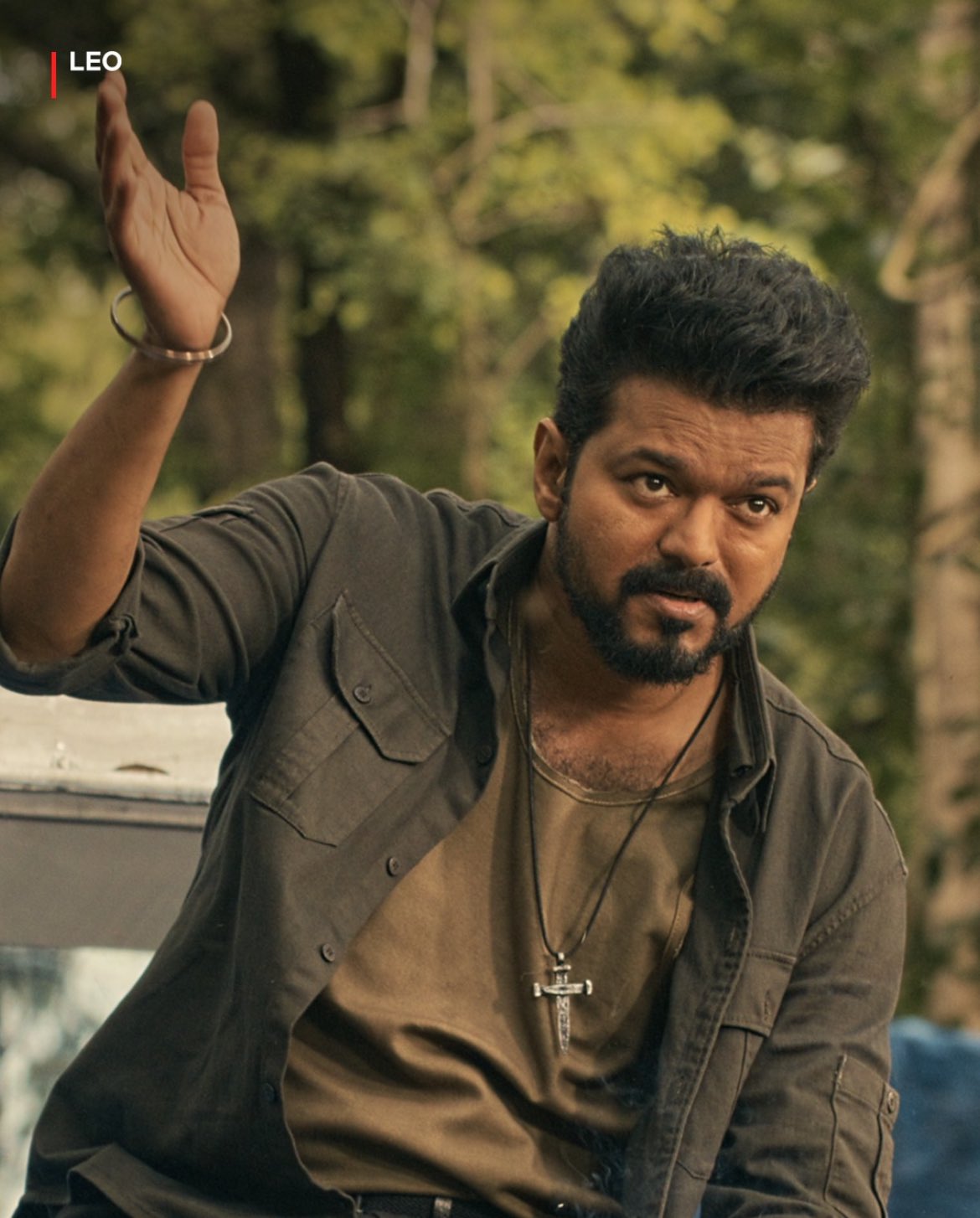
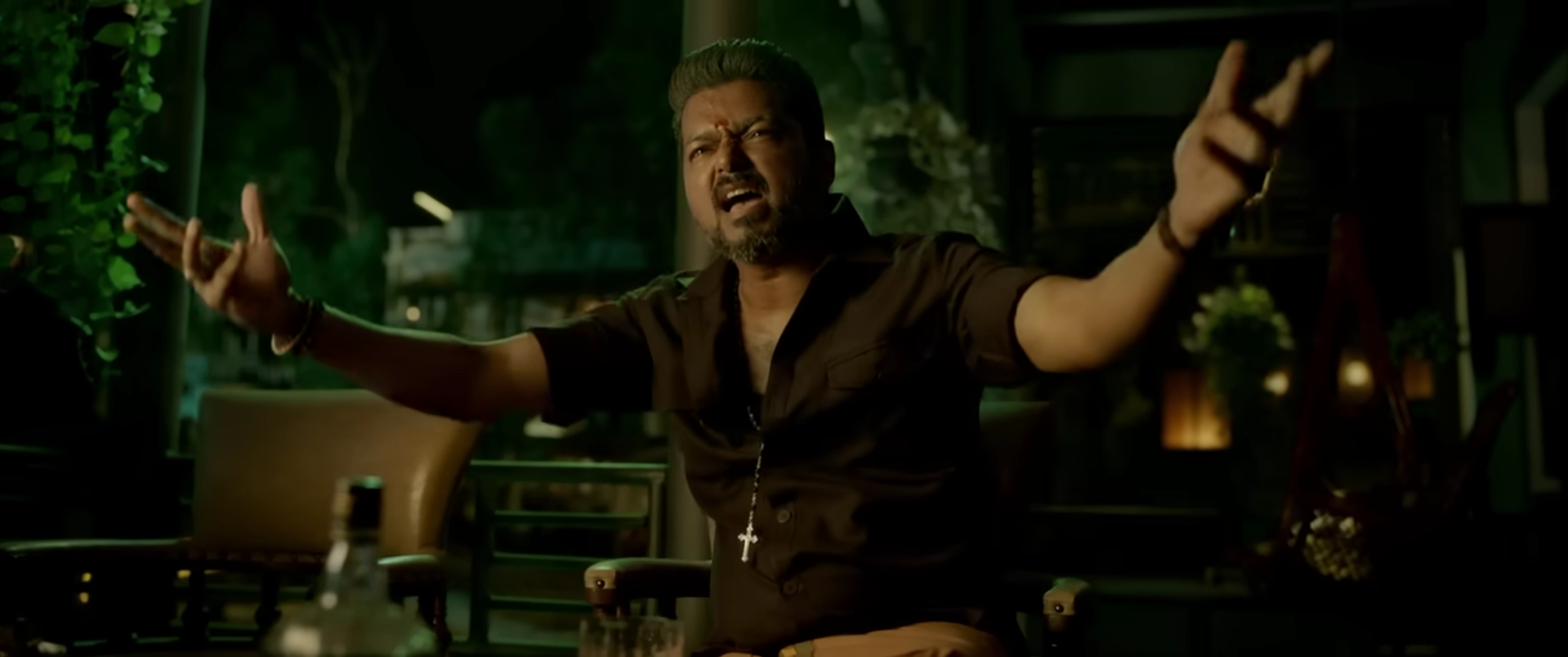
What followed was even more telling. His subsequent films—Theri, Bigil, Master, and Leo—were peppered with increasingly explicit visual and symbolic glorification of Christianity, most notably the recurring use of the Cross, framed not as personal faith but as moral authority.
In Theri directed by Atlee, a telling exchange unfolds when Amy Jackson’s character asks, “What does the Bible preach?” Vijay, playing Joseph Kuruvilla, responds evasively—“The Bible preaches many things; what are you referring to?”—prompting her to underline the point herself: “Love your enemies.” The scene is framed less as character development and more as theological messaging.
In Leo there are many scenes where Vijay visibly flaunts the cross to assert his identity and Christian symbolism.
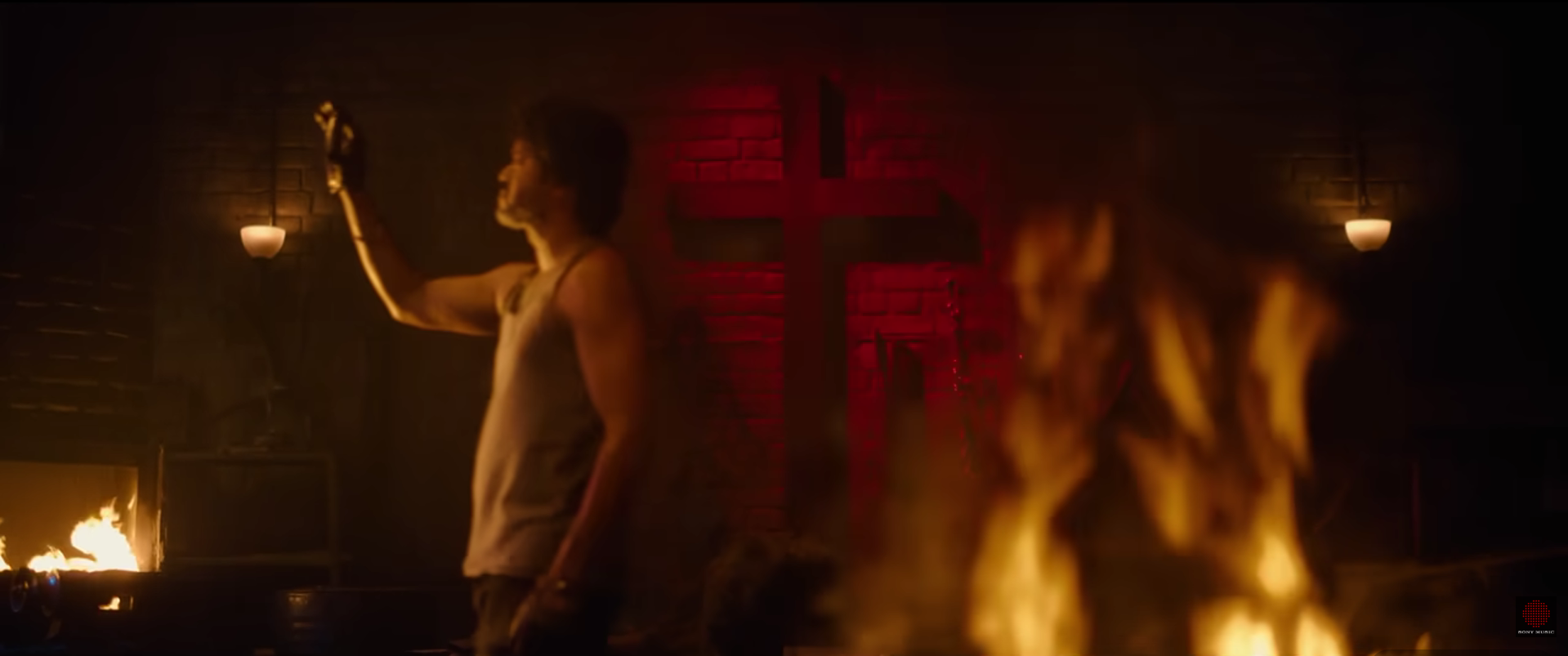
And then you have Bigil, again directed by Atlee.
This Christhutva playbook extends to his political rhetoric, as seen in a December 22, 2025, Christmas event organized by TVK, where Vijay recounted a “kutty story” from the Bible about betrayal and victory—referencing the story of Joseph from Genesis 47. He painted Joseph as a benevolent savior who, after being betrayed, rose to power and saved his betrayers and the nation through God’s will. However, the actual biblical account reveals Joseph coercively collecting Egyptians’ money, livestock, land, and even enslaving them during a famine in exchange for grain, imposing a permanent 20% tax and reducing the people to servitude under Pharaoh. Vijay’s cherry-picked version ignores these exploitative elements, turning a tale of state consolidation and loss of autonomy into a triumphant narrative of protection—mirroring his own promises of “secular ideology” and safeguarding minorities while quietly advancing Christian institutional power.
His ideological enemy, as defined by him, is the BJP-RSS, aligning perfectly with the philosophies of Christian missionaries and followers of Robert Caldwell and G.U. Pope, who historically sought to fracture Indian unity by promoting divisive Dravidian narratives.
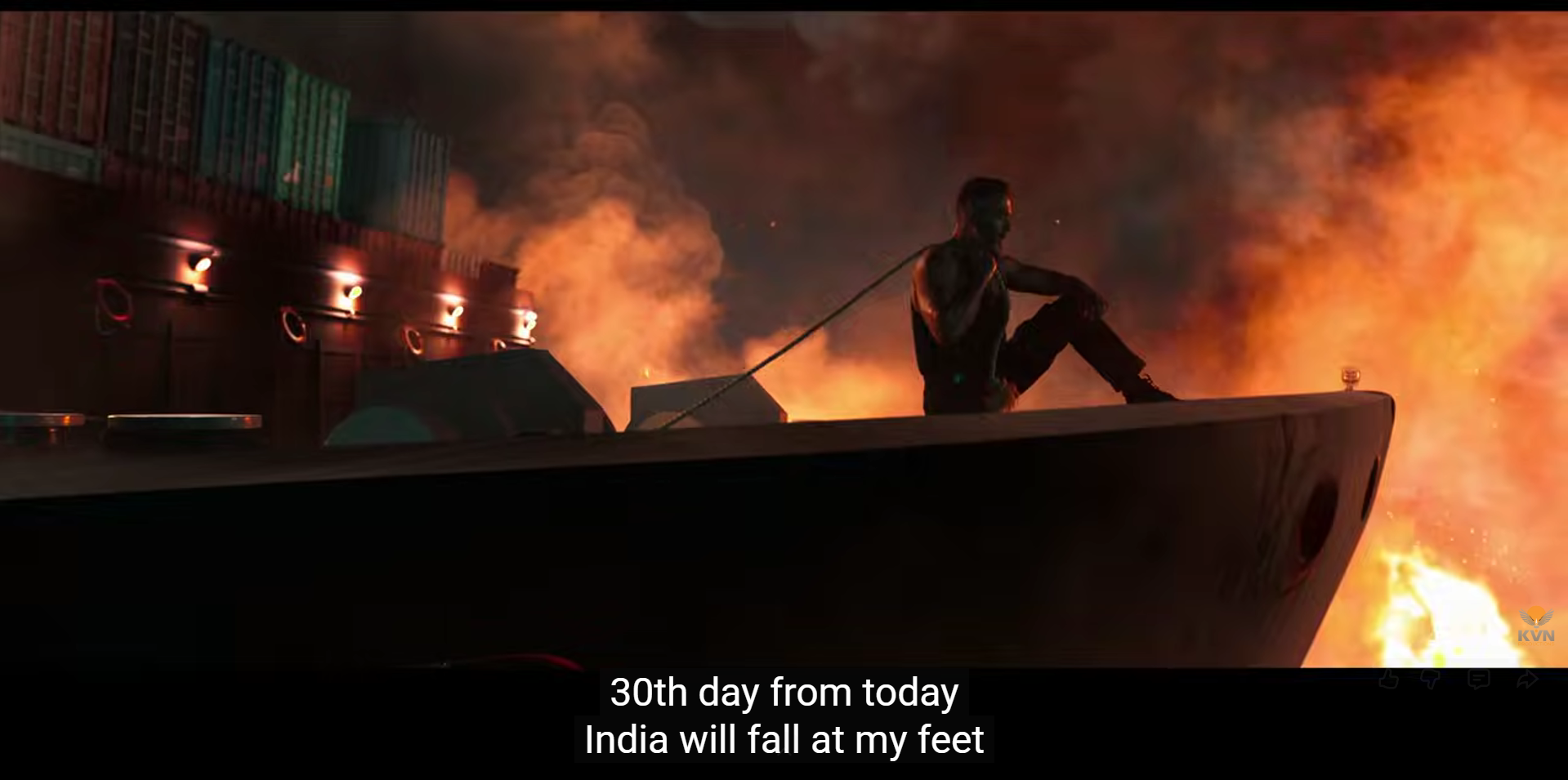
The Jana Nayagan trailer is Vijay’s cinematic manifesto: Hindu symbols represent tyranny and terror; the Christian figure, even when threatened with crucifixion, is the true people’s hero who will redeem Tamil society.
Vallavaraayan is a political writer.
Subscribe to our channels on WhatsApp, Telegram, Instagram and YouTube to get the best stories of the day delivered to you personally.