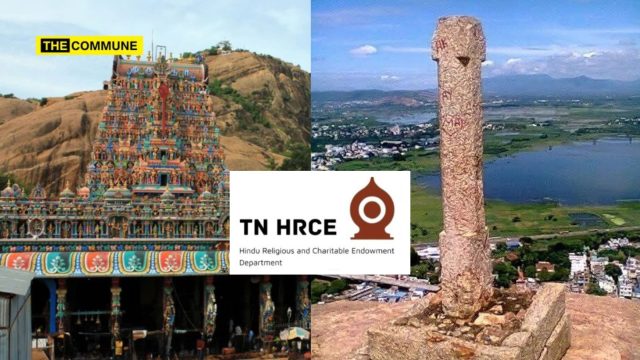
The HR&CE administration of the Thirupparankundram Subramania Swamy Temple on 15 December 2025 informed the Madurai Bench of the Madras High Court that the structure located atop the Thirupparankundram hill was not a Deepam (lamp) pillar, but a pillar dating back to the Jain period, erected as a marker of Jain habitation in the region.
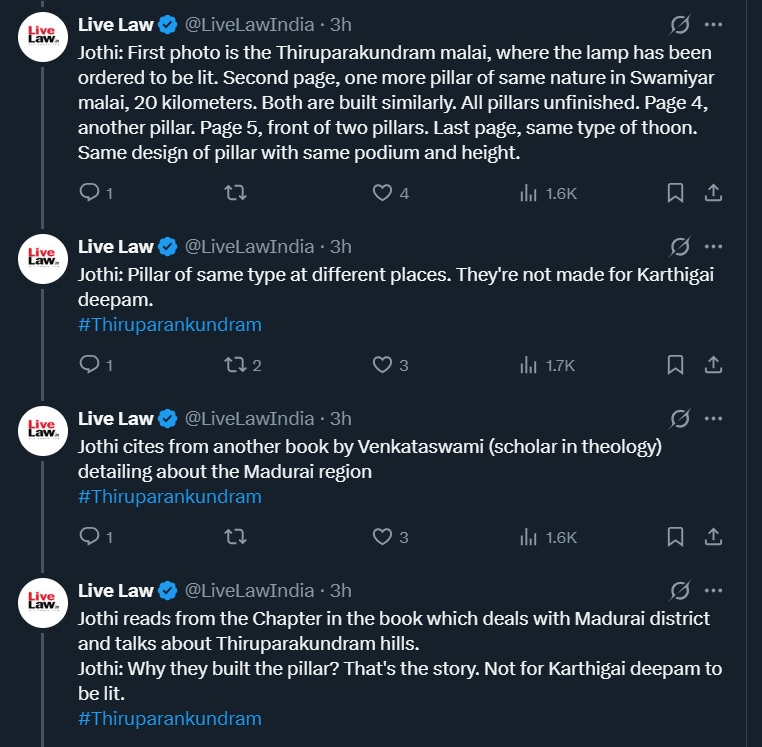
Senior advocate N Jothi appearing for Joint Commissioner HR&CE department made submissions during the hearing of an appeal challenging an earlier order permitting the lighting of the Karthigai Deepam, stating that the temple administration stated that the pillar in question did not have any historical or religious function connected to the lighting of ceremonial lamps. The argument was advanced as part of the HR&CE’s challenge to the order passed earlier by Justice GR Swaminathan.
Senior advocate N Jothi appearing for Joint Commissioner HR&CE department says the pillars does not belong to Hindus. Says they were used by sages residing on the hills (used to live away from public) for lighting at night and were not meant for Karthigai Deepam.…
— Anagha Kesav (@anaghakesav) December 15, 2025
Senior advocate Jothi submitted that photographic evidence and related materials had been placed before the High Court to substantiate the claim that the pillar was a Jain-era structure. According to the submission, similar pillars were historically erected to denote areas inhabited by Jain communities, and the hilltop structure at Thirupparankundram fell within that category.
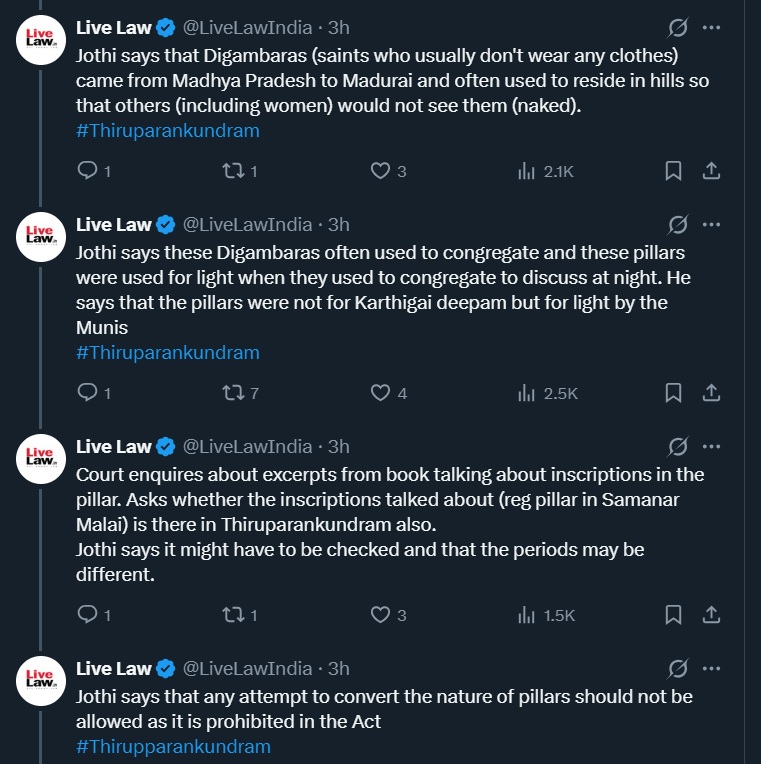
They argued that earlier studies and examinations conducted during previous hearings had also failed to establish that the structure was a Deepathoon. It was submitted that no conclusive evidence had emerged in prior proceedings to show that the pillar had ever been used for lighting lamps as part of temple rituals.
The question of whether the structure constituted a Deepathoon has been one of the central points of dispute in the case. They contended that the absence of evidence supporting its identification as a Deepathoon was significant, and that the clarification that it was a Jain-era pillar could materially affect the course of the litigation.
The appeal before the Madurai Bench seeks the complete setting aside of the earlier order permitting the lighting of the lamp atop the hill. During the course of arguments, the temple administration also reiterated its position that decisions relating to temple administration and religious practices should not be interfered with by the court, and that the issue ought to fall within the domain of the Hindu Religious and Charitable Endowments Department and the temple authorities.
The temple administration further argued that in the appeal proceedings, only certain parties had been impleaded, while others with a direct stake in the matter had not been made parties, contending that such selective impleadment was improper.
The case has attracted wide attention across Tamil Nadu and beyond, with the dispute over the hilltop structure being raised in public forums and even in Parliament. During earlier stages of the controversy, political parties, including the DMK, had taken strong positions on the issue, including attempts to move resolutions relating to the conduct of the judge who passed the original order.
The High Court is expected to continue hearing arguments from all sides before reserving orders. The acceptance or rejection of the temple administration’s claim that the structure is a Jain-era pillar is likely to play a key role in determining the outcome of the appeal.
Subscribe to our channels on WhatsApp, Telegram, Instagram and YouTube to get the best stories of the day delivered to you personally.