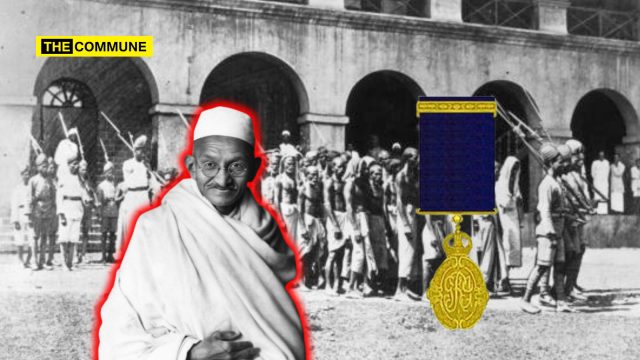
An exhibition at the National Archives of India in 2022 brought to light historical documents that presented a nuanced picture of Mahatma Gandhi’s decision to return his British medals, clarifying that the primary impetus was the Khilafat Movement and not solely the Jallianwala Bagh massacre as is commonly believed.
The original letter, dated 2 August 1920, written by Gandhi to the then Viceroy Lord Chelmsford, is part of the ‘Saga of Freedom: Known and Lesser-known Struggles’ exhibition. In it, Gandhi states his reasons for returning the prestigious Kaisar-i-Hind Gold Medal, the Zulu War Medal, and the Boer War Medal.
The communication reveals that the act was a direct part of the “scheme of non-cooperation inaugurated today in connection with the Khilafat movement.” Gandhi expressed his inability to wear the honours “with an easy conscience, so long as my Mussalman countrymen have to labour under a wrong done to their religious sentiment.”
He strongly criticised the Imperial Government, accusing it of acting in the Khilafat matter in an “unscrupulous, immoral and unjust manner.” The Khilafat Movement was a pan-Islamic protest against the dismantling of the Ottoman Caliphate by the Allied powers after World War I.
We were taught in school that Mahatma Gandhi returned his Kaiser-i-Hind medal awarded by the British to protest against the Jallianwala Bagh massacre. The reality is somewhat different. In his letter of August 1920 to Viceroy Chelmford, Gandhiji wrote that he returned this and… pic.twitter.com/JtuiHCx70y
— Anuj Dhar (@anujdhar) October 6, 2025
While the Jallianwala Bagh massacre of April 1919, where British troops gunned down hundreds of unarmed Indians, was a significant factor in the growing discontent, the archival evidence shows it was an “additional cause for grave dissatisfaction” in Gandhi’s decision, not the primary one. The timeline supports this, with the medal return occurring over a year after the massacre.
Gandhi also used the letter to condemn the British response to the Punjab disturbances, holding Lieutenant Governor Sir Michael O’Dwyer’s policy “primarily responsible for infuriating the mob at Amritsar.” He did, however, acknowledge the “unpardonable” mob excesses, including the “murder of five innocent Englishmen and the cowardly assault on Miss Sherwood.”
The exhibition also features Rabindranath Tagore’s 1919 letter renouncing his knighthood in direct protest against the Jallianwala Bagh massacre, drawing a parallel yet distinct form of intellectual dissent against colonial rule.
(With inputs from The Print)
Subscribe to our channels on Telegram, WhatsApp, and Instagram and get the best stories of the day delivered to you personally.