The United Kingdom has been thrust into the spotlight as concerns over the safety of its Jewish community escalate, following a deadly terror attack outside a synagogue in Manchester. On Yom Kippur, the holiest day in the Jewish calendar, a terror attack occurred when a Jihadi drove his car into congregants before proceeding to stab two people to death and injuring three others. UK Prime Minister Keir Starmer described the attack as a chilling reminder of the persistent threat of antisemitism, warning that hatred against Jews is “rising once again” and emphasizing the urgent need for national vigilance to protect Britain’s Jewish population.
UK – Growingly Unsafe For Jews
A British Jew took to X and made the following post calling for fellow Jews to leave the country. He wrote, “I am a British Jew… I left the UK last year out of fear for my family’s safety. Today, my worst fears were confirmed. But the writing was on the wall. When Muslim thugs drove through our neighbourhoods screaming they were going to rape our daughters… no one was jailed. When a Muslim thug tried to stab Jews at our kosher supermarket… he wasn’t jailed. When British streets were flooded by mobs screaming globalise the intifada… the home secretary joined them. Meanwhile Jews were told to leave because our presence was “provocative”. The British government and police have Jewish blood on their hands. To my friends and family… leave while you still can.”
I am a British Jew… I left the UK last year out of fear for my family’s safety.
Today, my worst fears were confirmed.
But the writing was on the wall.
When Muslim thugs drove through our neighbourhoods screaming they were going to rape our daughters… no one was jailed.
When…
— Israel Advocacy Movement (@israel_advocacy) October 2, 2025
Given the recent incidents and the Jihadist attacks on Jews in the United Kingdom, the fears of this handle are not unfounded.
Let’s take a look at the recent attacks on Jews and the larger community in the country.
Increasing Anti-Semitic Attacks
The synagogue terror attack in Manchester is not the lone incident that took place in the recent days targeting the Jewish community.
Here is a list of instances where Jews were targeted for their faith/community.
#1 Heaton Park Hebrew Congregation Synagogue Attack (Manchester, 2 October 2025)
On Yom Kippur morning, a 35-year-old British national of Syrian descent drove his car into pedestrians outside the synagogue, then stabbed the on-site security guard. Two worshippers were killed and three others seriously injured before armed officers shot the assailant dead. Greater Manchester Police have classified the incident as a terrorist act.
#2 Rising Physical Assaults Recorded by CST (First Half 2025)
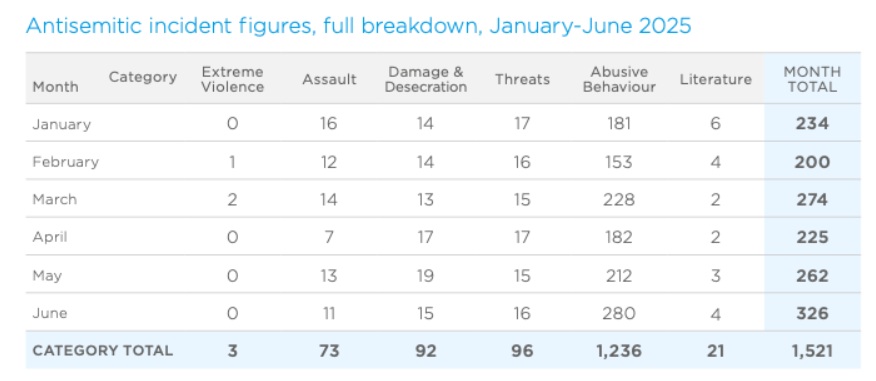
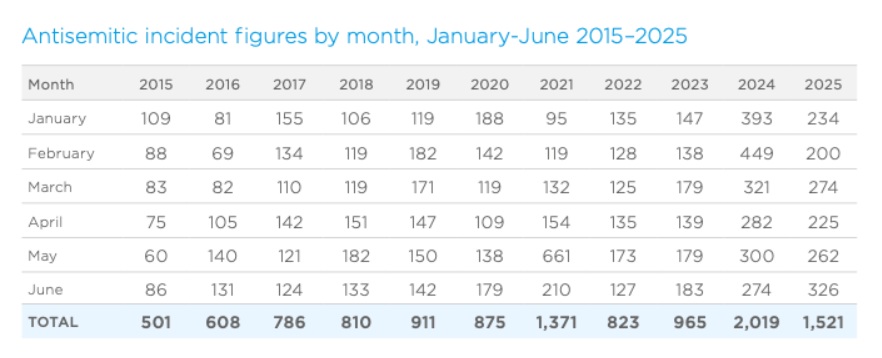
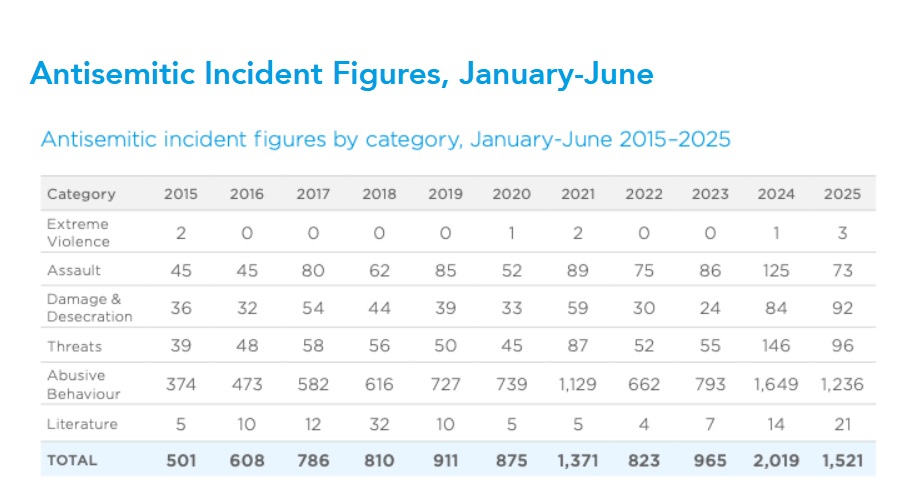
The CST documented 1,521 antisemitic incidents nationwide from January to June 2025, including 315 assaults on visibly Jewish individuals and 223 incidents targeting synagogues or congregants. Of these assaults, 86 involved offenders in vehicles, and 97 incorporated explicit threats.
#3 Surge in Assaults and Threats (2024)
In 2024, Britain experienced its second-highest annual total of antisemitic incidents, with over 3,500 reported. The CST recorded 121 cases of physical assault, 223 synagogue-related incidents, and 260 school-related antisemitic cases, alongside more than 1,240 instances of online hatred.
#4 Incidents Linked to Public Demonstrations (2025)
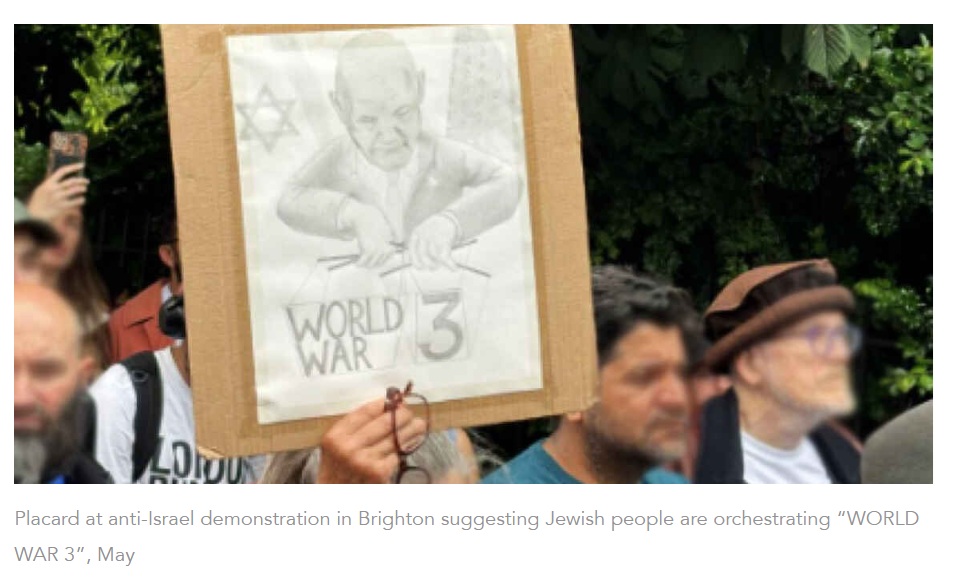
Throughout 2025, at least 33 antisemitic incidents occurred at or en route to anti-Israel demonstrations in Westminster, involving placard-wielders and individuals shouting threats at Jewish passersby. A further 21 incidents targeted Jewish organisations during these events.
Grooming Gangs
Grooming gangs in the United Kingdom emerged as a major social and criminal issue over the past two decades, drawing significant media attention and public outrage. These gangs typically targeted vulnerable children and teenagers, often from marginalized communities, using manipulation, coercion, and psychological control to exploit them for sexual purposes. Victims were frequently lured with gifts, attention, or false promises, before being subjected to sexual abuse and sometimes criminal activities.
Several high-profile cases, including those in Rotherham, Rochdale, and Oxford, revealed systemic failures in addressing the abuse. In Rotherham alone, an estimated 1,400 children were sexually exploited over a 16-year period, with local authorities accused of failing to act due to fears of being labeled racist, as a majority of the perpetrators were of Pakistani heritage. The scandal exposed gaps in law enforcement, social services, and child protection protocols, prompting nationwide investigations and reforms.
Critics argued that authorities were slow to respond, citing political correctness and bureaucratic inertia as key factors. In response, the UK government implemented stricter safeguarding policies, increased funding for victim support services, and launched initiatives to improve inter-agency coordination. Awareness campaigns also aimed to educate communities about the signs of grooming and the importance of early intervention.
Despite these efforts, grooming gangs remain a pressing concern because the authorities failed to recognise the people behind the grooming gangs for what they are.
Allowing the jihadis to breed and thrive in their country has led to the present situation of the United Kingdom where their own people feel fear and want to leave.
This has been furthered by the election of Islamist leaders in positions of power. Let us take a look at them.
Muslim Politicians And Elected Officials In The United Kingdom
Muslims make up approximately 6.5% of Britain’s population (3.4 million people), while Muslim MPs represent about 4% of Parliament. The increasing political participation of British Muslims reflects the growing problems in UK politics – the community seems to refuse to integrate in the cultural fabric of the UK while trying to push Sharia on the mainstream English.
Here is a list of Muslim politicians in power in the UK.
A record number of 25 Muslims were elected to the UK Parliament in 2024, representing the most diverse parliament in British history. This includes:
Labour Party MPs (18 total):
- Dr. Zubair Ahmed – Glasgow South West
- Sadik Al-Hassan – North Somerset
- Rushanara Ali – Bethnal Green & Stepney
- Tahir Ali – Birmingham Hall Green
- Dr. Rosena Allin-Khan – Tooting
- Apsana Begum – Poplar & Limehouse
- Dr. Rupa Huq – Ealing Central & Acton
- Imran Hussain – Bradford East
- Afzal Khan – Manchester Rusholme
- Naushabah Khan – Gillingham & Rainham
- Shabana Mahmood – Birmingham Ladywood (Secretary of State for Justice/Lord Chancellor)
- Abtisam Mohammed – Sheffield Central
- Yasmin Qureshi – Bolton South & Walkden
- Naz Shah – Bradford West
- Tulip Siddiq – Hampstead & Highgate (Economic Secretary to the Treasury)
- Zarah Sultana – Coventry South
- Mohammed Yasin – Bedford
- Nesil Caliskan – Barking
Conservative Party MPs (2 total):
- Saqib Bhatti – Meriden & Solihull East
- Nusrat Ghani – Sussex Wealdayaaninstitute
Independent MPs (4 total):
- Adnan Hussain – Blackburn
- Ayoub Khan – Birmingham Perry Barr
- Iqbal Mohammed – Dewsbury & Batley
- Shockat Adam – Leicester South
Executive Mayors
Sadiq Khan – Mayor of London (since 2016), serving his third term as the first Muslim mayor of London. Khan oversees a budget of approximately £20.4 billion and manages transport, policing, and housing across the capital.
Ceremonial Mayors (Recent Appointments)
Several appointments were made in 2025:
- Shahin Ashraf MBE – First Muslim woman mayor of Solihull (appointed May 2024)
- Mohammed Asaduzzaman – First South Asian Muslim mayor of Brighton and Hove (appointed May 2024)
- Mayor of Sandwell – First Muslim mayor appointed in 2025
Local Councillors
Over 200 Muslims currently serve in British local government across various councils. Key concentrations include:
- Tower Hamlets (London): 30 Muslim councillors
- Bradford: 24 Muslim councillors
- Birmingham: 17 Muslim councillors
Recent local elections in May 2024 saw 39 Muslim candidates win seats across 24 local authorities out of 134 who stood for election.
Historical Context
The first Muslim elected official in Britain was Bashir Maan, who became a Glasgow City Councillor in the 1970s after emigrating from Pakistan in 1953. The first Muslim MP was elected in 1997, followed by the first Muslim life peer in the House of Lords in 1998. Shahid Malik became the first Muslim government minister in 2007 as Parliamentary Under Secretary of State for International Development.
Current Government Positions
Several Muslims hold ministerial positions in the current government:
- Shabana Mahmud – Secretary of State for Justice and Lord Chancellor
- Tulip Siddiq – Economic Secretary to the Treasury
- Rushanara Ali – Parliamentary Under-Secretary of State for Housing, Communities and Local Government
UK Becoming Unsafe For Jewish Communities
Based on the above, it is clear that the United Kingdom is facing a profound and systemic crisis regarding the safety of its Jewish community. The horrific Yom Kippur synagogue attack in Manchester is not an isolated event but the culmination of a deeply troubling trend of rising antisemitic violence, intimidation, and institutional failure.
The fears expressed by British Jews are a direct consequence of this escalating environment. This atmosphere has been fostered by the alarming rise in jihadist-inspired attacks and public incitement, and a concerning political trajectory that has seen individuals with documented histories of anti-Israel and divisive stances elevated to the highest offices of law and order and national security.
The appointment of figures such as Shabana Mahmud, who describes her Islamic faith as the “absolute driver of everything” she does and has a record of supporting the BDS movement and opposing the deportation of foreign criminals to the pivotal role of Home Secretary, despite these controversies, signals a troubling shift in the UK’s political landscape. This, combined with the record number of Muslim politicians attaining power, many of whom represent constituencies and hold views that appear at odds with the integration and security of the Jewish community, has created a palpable sense of vulnerability among British Jews.
When the streets witness mobs chanting “globalize the intifada,” when grooming gangs have operated with impunity due to political correctness, and when the government’s response has been inadequate or conflicted, the conclusion is inescapable: the foundational security and cultural identity of Britain is in danger. Without a decisive and unequivocal reversal of these trends rooted in robust security measures, political accountability, and a reaffirmation of British values over divisive identity politics, the fear that the UK is growing increasingly unsafe for Jews will not only persist but will become a tragic reality.
Subscribe to our channels on Telegram, WhatsApp, and Instagram and get the best stories of the day delivered to you personally.