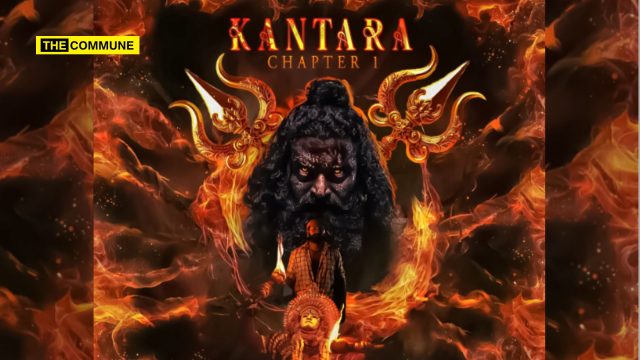
When Rishab Shetty released Kantara in 2022, it became more than a film—it was a cultural phenomenon, a spiritual storm that gripped the nation. Now, with Kantara: Chapter 1, Shetty dives deeper, crafting a prequel that transports audiences to the misty forests of Kadamba-era Karnataka, where myth, faith, and human frailty clash in a blaze of cinematic grandeur. The film isn’t just a story—it’s an invocation, a spectacle that thunders with both divinity and philosophy, while daring to counter the divisive narratives of Dravidianist cinema.
But does this ambitious saga live up to its predecessor? The answer lies somewhere between spiritual magnificence and cinematic imperfection.
A Spectacle Forged In Fire And Faith
From the opening frame, Kantara: Chapter 1 declares itself a visual and sonic odyssey. Cinematographer Arvind S. Kashyap paints the forests as both sanctuary and battlefield—mist curling around ancient trees, fire consuming ritual altars, and armies clashing in bursts of primal energy. The dense jungles themselves are a feast for the eyes, captured with a richness that makes the screen breathe with life. It’s the kind of world-building that feels mythic yet tangible, like stepping into a legend told around tribal fires centuries ago.
The VFX, a noticeable leap from the original, doesn’t scream technology but whispers devotion. Animals—majestic and godlike—emerge as symbols of power and reverence. The divine possession sequences, where Shetty’s Berme channels the deity Panjurli, transcend performance. They don’t feel staged; they feel summoned. Only a person with sincere devotion and guided by the divine could’ve pulled it off!
And then there’s B. Ajaneesh Loknath’s music. If the film is the body, the score is its heartbeat. Tribal drums pound like war cries, flutes soar like whispers of the divine, and crescendos crackle with energy. The nerve-shredding clash between the tribes and the kingdom—erupts with a force that leaves audiences breathless at the interval. The climax is just audacious, an equivalent to Lord Krishna revealing his Vishwaroopam avatar that leaves the viewers mesmerized in devotion.
Performances Anchored In Devotion
Rishab Shetty is the film’s soul. As Berme, the tribal leader, he embodies both primal fury and spiritual surrender. This isn’t mere acting—it feels like a man possessed, channelling something larger than himself. His sincerity seeps into every frame, convincing you that only someone guided by devotion could pull off such a role.
Rukmini Vasanth rules the screen as Princess Kanakavathi, balancing elegance with sharp intelligence as she navigates a patriarchal court. Jayaram lends gravitas as King Vijayendra, while Gulshan Devaiah’s Kulasekhara, though compelling, doesn’t get the narrative space he deserves. Still, the ensemble holds strong, with Shetty’s raw energy anchoring the storm.
Where The Film Stumbles
For all its grandeur, Kantara: Chapter 1 isn’t flawless. The screenplay takes its time—too much time—meandering through exposition-heavy setup before the story truly ignites. What should feel like mythic immersion occasionally drags like a heavy trek. The editing, too, could have been tighter; several stretches would have benefitted from sharper cuts to sustain rhythm and urgency.
Then there’s the humor. In a film steeped in mysticism and reverence, the clunky jokes and misplaced banter fall embarrassingly flat. Instead of offering relief, they rupture the atmosphere, leaving viewers shifting uncomfortably in their seats. The gags “hardly tickle your ribs” and feel like filler in an otherwise thunderous narrative.
The Philosophical Counterpoint
But the true power of Kantara: Chapter 1 lies not just in its cinematic craft but in its philosophy. At its heart, the story pits the Kantara tribe—guardians of the sacred forest—against a kingdom blinded by greed and arrogance. This echoes the eternal oppressed-versus-oppressor trope, yet Shetty flips the narrative lens.
Unlike Pa Ranjith or TJ Gnanavel, whose films (Kaala, Jai Bhim) reduce oppression to caste binaries—vilifying Brahmins, Vanniyars, or Thevars as monolithic villains—Shetty refuses to demonize entire communities. Instead, the oppressor here is not a caste but an exploitative system of hubris motivated by individual greed of those in power.
On one side stand Dravidianist propagandists like Pa. Ranjith, dismissing the Chola era as a ‘dark age’ simply because the dynasty openly upheld Vedic Hinduism. On the other side, we have filmmakers like Rishab Shetty, who rise above petty politics and instead seek to unite people through the realm of spirituality.
This is where the film becomes an antidote to the poison of hate. Berme’s resistance, rooted in his communion with Panjurli, is not a call to resentment but a spiritual rebellion against desecration. The climax doesn’t end with vengeance; it ends with restoration of dharma. Unlike Dravidianist cinema that thrives on anti-Hindu hate and confrontation, Shetty’s story finds resolution in transcendence and spirituality. Justice here is divine, not divisive.
It’s a radical narrative choice—and a powerful one. Instead of perpetuating blame, Kantara reasserts that unity lies in aligning with the divine, not in tearing communities apart. This is the film’s greatest victory: a reclamation of cultural pride that uplifts rather than divides.
Final Verdict: Flawed, But Towering
Yes, Kantara: Chapter 1 has its faults. The dragging first half tests patience, the humor misfires, and parts of the narrative feel uneven. The editing could have been leaner, sharpening the storytelling without compromising depth. Yet when weighed against its ambition, its sincerity, and its spiritual firepower, these shortcomings seem minor.
This is not just another prequel cashing in on a franchise—it is a statement, a cultural beacon. Cinematically, it demands the big screen. Philosophically, it dares to counter the rhetoric of hate with the resonance of faith. Spiritually, it revives an old truth: that dharma, not division, restores balance.
Rishab Shetty has not just made a film—he has offered an experience. Kantara: Chapter 1 is flawed, yes. But it is also magnificent, a towering achievement that roars with devotion and resonates with hope in a fractured world.
Subscribe to our channels on Telegram, WhatsApp, and Instagram and get the best stories of the day delivered to you personally.