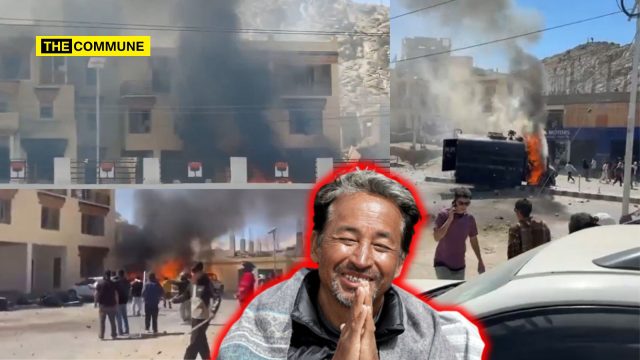
Protests led by activist Sonam Wangchuk escalated into violence on Wednesday, as members of the Leh Apex Body (LAB) youth wing clashed outside the BJP office. The demonstration, initially organized in solidarity with Wangchuk’s ongoing hunger strike, was meant to press for full statehood for Ladakh, Sixth Schedule protection, and separate Lok Sabha seats for Leh and Kargil.
According to police, agitators pelted stones and set fire to the BJP office and a nearby CRPF vehicle. Tear gas and baton charges were deployed to control the situation.
#WATCH | Leh, Ladakh: BJP Office in Leh set on fire during a massive protest by the people of Ladakh demanding statehoothe d and the inclusion of Ladakh under the Sixth Schedule turned into clashes with Police. https://t.co/yQTyrMUK7q pic.twitter.com/x4VqkV8tdd
— ANI (@ANI) September 24, 2025
Wangchuk squarely laid the blame of the escalation on “misguided Gen-Z supporters,” claiming their frustration had led to violent acts.
#WATCH | Leh | Activist Sonam Wangchuk says, “Today, on the 15th day of our fast, I am deeply saddened to report that widespread violence and vandalism erupted in Leh city. Several offices and police vehicles were set on fire. Yesterday, two of those who had been on a 35-day fast… pic.twitter.com/uwkYLBxdYY
— ANI (@ANI) September 24, 2025
Why is Wangchuk Protesting?
Wangchuk has been the public face of widespread protests in Ladakh, arguing that the region has been left without democratic safeguards or adequate representation since it was carved out of Jammu and Kashmir as a Union Territory in 2019. The Home Ministry has announced a new round of talks with Ladakhi leaders scheduled for 6 October 2025.
From Peaceful Protest to Violence: Who is Responsible?
While Wangchuk has framed the movement as a peaceful Gandhian protest, the recent violence has raised questions. In the aftermath, Wangchuk took to social media to suggest that “GenZ” elements within the protest may have been responsible for the arson, distancing his movement from the destructive acts.
What is He Hiding? The Land Allotment Controversy
However, a closer look reveals a more complex picture that may explain the timing and intensity of the protests. The violence comes just weeks after the Ladakh administration cancelled a 135-acre land allotment to Wangchuk’s Himalayan Institute of Alternative Learning (HIAL).
The administration’s order, dated August 21, states the allotment was cancelled because Wangchuk’s institute failed to meet key conditions of the 2018 lease agreement:
- No University Established: The land was allotted to establish an accredited university within one year. Six years later, no university has been built. HIAL applied for university status only in 2022.
- Lapsed Agreement & Unpaid Dues: The allotment officially lapsed in May 2019. The administration alleges Wangchuk has not paid rent for years for land whose current market value is estimated between ₹27-30 crore.
- Local Complaints: The administration acted partly on complaints from local village leaders in Phyang, who alleged violations of land use by HIAL.
Despite the documented non-compliance, Wangchuk has portrayed the cancellation as political “witch-hunting,” claiming it is retaliation for his statehood activism. This narrative has been amplified by Pakistani social media accounts, which have seized the opportunity to support Wangchuk and criticise the Indian government.
(With inputs from OpIndia)
Subscribe to our channels on Telegram, WhatsApp, and Instagram and get the best stories of the day delivered to you personally.