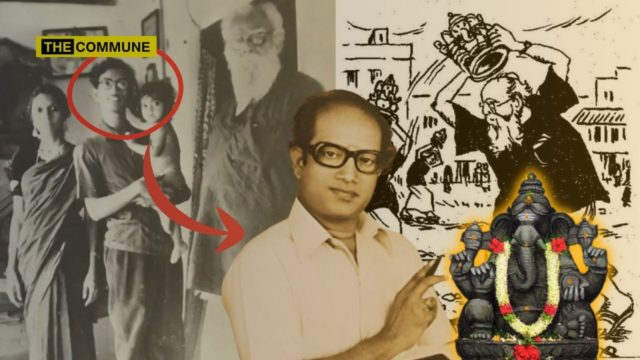
History is full of unexpected transformations, and Tamil Nadu a land steeped in spiritual tradition has witnessed many such profound personal journeys. One such story is that of Ulundurpettai Shanmugam, a name that might not ring as many bells as poet Kannadasan’s, but whose impact is no less significant.
While most people are familiar with Kannadasan’s famous shift from atheism to devout belief, fewer have heard of Ulundurpettai Shanmugam a committed rationalist who later became one of Tamil Nadu’s most celebrated devotional lyricists. Ironically, his lyrics now echo through streets and temples during Vinayagar Chaturthi, especially the beloved song “Vinayagane Vinai Theerpavane”, soulfully sung by Seerkazhi Govindarajan.
From Breaking Idols To Writing Bhakti Songs
In an old Doordarshan interview, poet Valli shared the fascinating story of Shanmugam’s ideological transformation. According to him, Shanmugam was once deeply involved in the rationalist movement spearheaded by E.V. Ramasamy Naicker (Periyar), even participating in protests where Ganesha idols were destroyed. In fact, during one such event led by Periyar, it was Shanmugam himself who reportedly smashed a Vinayagar idol.
Valli says, “Ulundurpettai Shanmugam is a respected Tamil scholar and poet. A special fact about him I know that many people don’t know is that he was once a great atheist who broke idols of Vinayagar (Ganesha). When Periyar led the protest to break Vinayagar idols, this very same Ulundurpettai Shanmugam was the one who broke them. Afterward, he became a theist and wrote a wonderful song, “Vinayagane Vinai Theerppavane”, which is sung by Sirkaali Govindarajan in a concert. That song was written by him.”
The famous “Vinayakane, Vinai Theerpavane” song was written by Ulundhurpettai Shanmugham, who was a former atheist. Once a participant in EVR’s Pillayar idol breaking stunts, he eventually reformed into a devout theist and wrote 4000+ Bhakti songs.
Happy Vinayagar Chadurthi 🙏 pic.twitter.com/sWj9Fxnk4a
— Tamil Labs 2.0 (@labstamil) August 27, 2025
How His Life Turned?
It is believed that the life took a spiritual turn for Shanmugam. At some point, he underwent a major personal transformation, turning away from atheism and embracing belief. One pivotal moment, as accounts suggest, came during a serious health crisis in his middle age. Close to death and with little hope, Shanmugam experienced what he believed was divine intervention a miraculous recovery that he attributed to Lord Muruga.
This spiritual awakening led him to immerse himself in devotional writing. Over time, he composed more than 4,000 Bhakti songs, many of which are still sung today. Among his most famous are “Nee Allal Deivam Illai Muruga”, “Thirupathi Malai Vaazhum Venkatesa”, and “Madurai Arasaalum Meenakshi” — songs that remain widely cherished by Tamil devotees.
A Life Rich In Scholarship And Devotion
Dr. Ulundurpettai Shanmugam wasn’t just a lyricist; he was also a respected Tamil scholar and academic with a doctorate in Tamil. He came from a large family reportedly having fathered between 15 and 16 children and many of his descendants continue to contribute to Tamil arts and literature.
His talents extended beyond devotional music. He wrote lyrics for several Tamil films including Raja Raja Sozhan, Agathiyar, and Thirumalai Thenkumari. His collaborations with renowned singer Seerkazhi Govindarajan — who was also his co-brother — brought many of his compositions to life. Notably, Shanmugam authored the Murugan Suprabatham, and translated into Tamil both the Venkatesa Suprabatham (popularized by the Bombay Sisters), Bhaja Govindam, and Hanuman Chalisa.
His legacy extends through his children as well. One of his sons, Saravanan, is a film director and cinematographer, married to actress Sangeetha. Another son, Shankar, is known for the project Saadagaparavaigal.
In a twist of fate rich with poetic irony, the man who once destroyed Ganesha idols would go on to be celebrated for a song that now forms the spiritual soundtrack of Vinayagar Chaturthi across Tamil Nadu. His composition “Vinayagane Vinai Theerpavane” has become an integral part of the festival, sung with devotion and reverence each year.
Ulundurpettai Shanmugam passed away in 2003, but his story from fiery rationalist to revered spiritual poet remains a compelling narrative of personal evolution, cultural integration, and the enduring power of belief.
(This article is based on an X Thread By K Bala Kumar)
Subscribe to our channels on Telegram, WhatsApp, and Instagram and get the best stories of the day delivered to you personally.