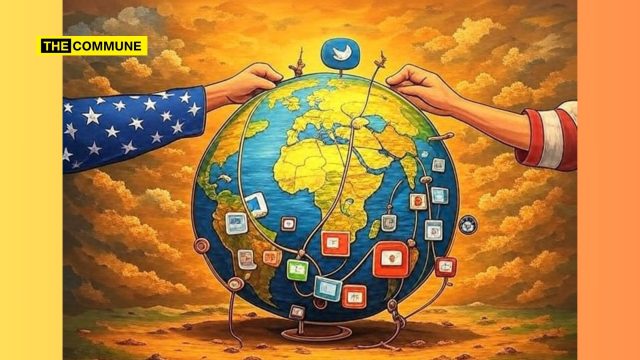
The current tension between Elon Musk’s X platform and governments worldwide, from India’s censorship orders to Brazil’s operational shutdowns, exposes a fundamental flaw in our global digital architecture. As nations increasingly recognize the vulnerabilities of depending on American-controlled social media platforms, we stand at a critical crossroads: either X transforms into a truly global platform with international governance, or countries must develop their own digital ecosystems to escape the specter of U.S. sanctions and political weaponization.
The American Platform Problem: A Global Dependency Crisis
The Illusion of Global Reach
X’s claim to be a “global” platform is fundamentally misleading. While the platform serves over 500 million users across 150+ countries, it remains entirely American-owned and American-controlled. Based in Bastrop, Texas, and operating under U.S. laws, X’s “global” nature extends only to its user base, not its governance structure. This creates a dangerous asymmetry where billions of users worldwide depend on a platform that can be weaponized by a single nation’s political objectives.
The recent conflicts illustrate this vulnerability starkly. X has blocked over 8,000 accounts following Indian government orders, including those of international news organizations like Reuters. In Brazil, the platform shut down operations entirely after legal disputes with Brazilian Supreme Court Justice Alexandre de Moraes. These incidents aren’t isolated, X faces restrictions in China, Iran, Myanmar, North Korea, Pakistan, Russia, Turkmenistan, and Uzbekistan, with Pakistan being the only country to ban the service after Musk’s takeover.
The Sanctions Weaponization
Perhaps most concerning is X’s vulnerability to U.S. sanctions policy. The platform has been accepting payments from sanctioned entities including Hezbollah, Houthi officials, and Iraq-Syria militia bosses, highlighting how American foreign policy directly impacts global digital discourse. When sanctioned individuals lose their verification status or platform access, it demonstrates how U.S. economic warfare extends into the digital realm, affecting users worldwide who have no voice in American policy decisions.
The recent case of U.N. Special Rapporteur Francesca Albanese, who lost her verification on X after U.S. sanctions were imposed on her, exemplifies this dynamic. Her observation that “it’s very serious to be on the list of people sanctioned by the U.S.” reveals how American economic power now extends into global communication infrastructure.
European Union’s Growing Resistance
The European Union has recognized this threat and is taking concrete action. The EU is preparing to fine X up to $1 billion for violating the Digital Services Act, marking the first major penalties under the DSA. European officials argue that X’s “freedom of speech” philosophy, implemented after Musk’s takeover, is incompatible with European legal requirements for content moderation and transparency.
More significantly, Canada is explicitly treating American social media platforms as national security threats. Canadian analysts warn that “American tech CEOs wield unprecedented power and influence over Canada’s political discourse on their social media platforms and could easily tilt the playing field in favour of their preferred candidate.” This recognition that American platforms pose sovereignty risks is spreading across the democratic world.
The Two Pathways Forward
Option 1: True Globalization of X
For X to continue as a genuinely global platform, it must undergo fundamental structural transformation:
International Governance Structure
X must transition from American corporate ownership to an international governance model. This could involve:
- Multi-stakeholder ownership: Representatives from major economies holding equity stakes proportional to their user base or economic contribution
- International board of directors: Ensuring no single nation controls platform policies
- Distributed headquarters: Regional offices with autonomous decision-making authority for their jurisdictions
- Treaty-based operations: Operating under international agreements rather than unilateral American law
Jurisdictional Decentralization
Rather than applying American legal standards globally, X must implement:
- Regional content policies: Allowing different regions to establish their own community standards within broad international frameworks
- Local data governance: Ensuring user data is stored and processed within their home jurisdictions
- Autonomous moderation: Regional teams making content decisions based on local legal and cultural contexts
- Appeal mechanisms: International arbitration panels for cross-border content disputes
Financial Independence from U.S. Systems
To escape sanctions vulnerabilities, X must:
Diversify payment systems: Integrate non-American payment processors and financial institutions
Multi-currency operations: Reduce dependence on U.S. dollar-denominated transactions
Distributed revenue streams: Prevent any single government from controlling platform finances
Sanction-resistant infrastructure: Technical and financial architecture that operates independently of American control
Transparency and Accountability
True global governance requires:
- Public oversight: Regular reporting to international bodies on content moderation, data handling, and policy enforcement
- Open algorithms: Transparency about how content is prioritized and distributed
- Democratic participation: User representation in platform governance decisions
- Independent auditing: Regular assessment by neutral international organizations
Option 2: National Digital Sovereignty
Given the complexity and political resistance to truly globalizing American platforms, the more realistic path may be national digital independence. Countries are increasingly recognizing that digital sovereignty is as crucial as traditional sovereignty.
The Strategic Imperative
Nations must develop indigenous social media platforms for several compelling reasons:
- Economic Security: Dependence on American platforms means national digital economies are subject to U.S. policy whims. When platforms change algorithms, impose sanctions, or alter business models, entire national digital ecosystems can collapse overnight.
- Political Independence: As we’ve seen with X’s content blocking in India and Brazil, American platforms can be pressured by their home government or foreign governments to suppress domestic discourse. National platforms ensure domestic political conversations remain under domestic control.
- Data Sovereignty: American platforms collect vast amounts of data on foreign citizens, creating national security vulnerabilities. Indigenous platforms keep citizen data within national borders and under national privacy laws.
- Cultural Preservation: American platforms often impose Western cultural values and English-language dominance. National platforms can prioritize local languages, cultural expressions, and social norms.
Successful Models and Emerging Examples
Several nations have already begun building digital independence:
China’s Ecosystem: Despite criticism of its censorship, China’s decision to develop WeChat, Weibo, and TikTok has created a $1 trillion digital economy independent of American control. Chinese platforms serve over 1 billion users and compete globally with American alternatives.
India’s Growing Initiative: India has launched several indigenous platforms including Koo (alternative for X) and Chingari (TikTok alternative). While still developing, these represent serious attempts at digital independence.
Russia’s Response: Following Western sanctions, Russia has accelerated development of VKontakte and other domestic platforms, demonstrating how geopolitical pressure drives digital sovereignty initiatives.
European Alternatives: The EU is supporting decentralized platforms like Mastodon and quasi-decentralized ones like BlueSky as alternatives to American-controlled social media.
Building National Platform Ecosystems
Countries seeking digital sovereignty must develop comprehensive strategies:
Technical Infrastructure: Nations need robust internet infrastructure, cloud computing capabilities, and cybersecurity systems to support domestic platforms. This requires significant investment in technical education and infrastructure development.
Legal Frameworks: Clear regulations protecting user privacy while ensuring platform accountability. This includes data protection laws, content moderation guidelines, and antitrust provisions to prevent domestic monopolies.
Economic Incentives: Government support for domestic tech companies through funding, tax incentives, and procurement preferences. Creating venture capital ecosystems that support indigenous innovation.
User Migration Strategies: Encouraging citizens and businesses to adopt national platforms through government use, integration with public services, and ensuring feature parity with international alternatives.
International Cooperation: Smaller nations can collaborate on shared platform development, creating regional alternatives that serve multiple countries while maintaining independence from superpower control.
The Geopolitical Implications
The New Digital Cold War
The battle over social media control represents a new form of digital cold war. Just as the original Cold War featured competing ideological systems, today’s digital conflict centers on competing models of internet governance. American platforms promote a market-driven, corporate-controlled model, while alternatives emphasize state sovereignty and democratic accountability.
China’s Belt and Road Initiative now includes digital infrastructure, offering developing nations alternatives to American tech platforms. Russia’s emphasis on digital sovereignty following Western sanctions provides a model for nations seeking independence from American digital hegemony. Even European Union’s Digital Services Act represents a middle path, maintaining American platforms but imposing European regulatory control.
The Sanctions Proliferation Risk
As digital platforms become increasingly important for economic and political activity, sanctions targeting platform access become more powerful weapons. The ability to deny individuals, organizations, or even entire nations access to global communication networks represents unprecedented power concentration.
This creates dangerous incentives for sanctions escalation. If X remains American-controlled, future U.S.-China tensions could result in blocking Chinese users. U.S.-Europe disputes could affect European access. Developing nations could find themselves cut off from global digital networks based on American foreign policy disagreements.
National platforms provide insurance against this vulnerability. Countries with indigenous digital ecosystems can maintain communication and commerce even under comprehensive international sanctions.
The Democratic Accountability Problem
American platforms operate with minimal democratic oversight even within the United States. For foreign users, there is essentially no democratic accountability – platform policies are set by American corporate executives and influenced by American government pressure, with no input from the billions of affected international users.
This democratic deficit is unsustainable in an interconnected world where social media platforms shape political discourse, economic activity, and cultural expression. Either platforms must become democratically accountable to their global user base, or nations must develop platforms accountable to their own citizens.
Economic and Technical Challenges
The Cost of Digital Independence
Building national social media ecosystems requires substantial investment. Technical infrastructure, content moderation systems, cybersecurity capabilities, and user interface development demand billions of dollars and years of development. Many smaller nations lack the resources for comprehensive digital independence.
However, the cost of continued dependence may be higher. Vulnerability to foreign sanctions, loss of domestic data sovereignty, and absence of indigenous digital economies represent long-term strategic risks that outweigh upfront development costs.
Regional cooperation offers a solution for smaller nations. African Union social media initiatives, ASEAN digital cooperation, and Latin American platform development can share costs while maintaining sovereignty. Multiple nations collaborating on shared platforms can achieve economies of scale while avoiding dependence on superpowers.
Technical Standards and Interoperability
National platforms risk creating digital fragmentation that reduces global communication and commerce efficiency. However, technical standards and interoperability protocols can maintain connectivity between national systems while preserving sovereignty.
Decentralized social media protocols like ActivityPub (used by Mastodon) demonstrate how multiple platforms can interconnect while remaining independently controlled. Blockchain-based social networks offer another model for maintaining global connectivity without central control.
International technical standards organizations must develop frameworks ensuring national platforms can communicate across borders while respecting domestic governance preferences. This requires diplomatic cooperation and technical innovation.
The Network Effect Challenge
Existing American platforms benefit from massive network – effects users join platforms where their friends, colleagues, and communities are already active. New national platforms face the challenge of attracting users away from established networks.
Government anchor usage provides one solution, requiring government agencies and officials to use national platforms creates initial user bases. Integration with public services makes national platforms essential for citizen interaction with government. Business incentives encourage companies to maintain presence on national platforms alongside international ones.
Content localization gives national platforms competitive advantages. Local language support, cultural relevance, and region-specific features can attract users despite smaller network sizes. Over time, as national platforms mature, network effects begin working in their favor.
The Path Forward: A Hybrid Approach
Short-term Tactical Measures
While building long-term alternatives, nations must implement immediate protective measures:
Regulatory Oversight: Imposing strict transparency requirements on American platforms operating domestically. Regular reporting on content moderation decisions, data handling practices, and foreign government requests creates accountability even without ownership control.
Data Localization Requirements: Mandating that platforms store citizen data within national borders and under national jurisdiction. This reduces surveillance vulnerabilities and ensures domestic law applies to citizen information.
Content Sovereignty: Establishing clear legal frameworks for content decisions that apply to all platforms operating domestically. Platforms must comply with domestic law rather than corporate policies or foreign government pressure.
Financial Oversight: Monitoring platform revenue streams and ensuring domestic advertising markets benefit national economies rather than only American corporations.
Medium-term Strategic Development
Regional Platform Initiatives: Countries with shared cultural or economic ties should collaborate on regional social media ecosystems. ASEAN, African Union, and Latin American initiatives can create viable alternatives to American platforms while sharing development costs.
Technical Capability Building: Massive investment in domestic technical education, research and development, and digital infrastructure. Nations must build the human capital and technical foundation for digital independence.
International Cooperation Frameworks: Developing treaty systems for digital governance that establish international rules for platform operation, content moderation, and cross-border data flows. This creates alternatives to American-dominated governance structures.
Economic Incentive Systems: Creating venture capital funds, tax incentives, and procurement preferences that support domestic digital platform development. Making indigenous alternatives economically competitive with American platforms.
Long-term Vision: Digital Multipolarity
The ultimate goal should be digital multipolarity: a world where multiple nations and regions maintain viable social media ecosystems that can interoperate while preserving sovereignty. This requires:
Technical Interoperability Standards: International agreements ensuring platforms can communicate across borders while maintaining independent governance. Email-like federated systems demonstrate how global communication can function without central control.
Economic Balance: Preventing any single nation or platform from dominating global digital commerce. Multiple currency systems, diverse payment networks, and distributed economic activity reduce single points of failure.
Cultural Diversity Protection: Ensuring global digital systems support linguistic diversity, cultural expression, and local community needs rather than imposing homogeneous American corporate culture.
Democratic Governance: Creating genuinely international oversight mechanisms for cross-border digital activity. This might involve UN-based systems, multilateral treaty organizations, or other frameworks that give all nations voice in global digital governance.
To Sum-up: The Sovereignty Imperative
The current crisis between X and various national governments represents more than content moderation disputes; it reveals the fundamental unsustainability of American digital hegemony in a multipolar world.
As digital platforms become essential infrastructure for economic, political, and social activity, national control over these systems becomes a sovereignty requirement.
X faces a clear choice: transform into a genuinely global platform with international governance, or accept that its American control makes it unsuitable for serving as global digital infrastructure. The platform’s recent conflicts with India, Brazil, the European Union, and other jurisdictions demonstrate that unilateral American control is increasingly unacceptable to the international community.
For nations worldwide, the message is equally clear: digital sovereignty requires indigenous alternatives to American-controlled platforms. While building national or regional social media ecosystems requires substantial investment and faces significant challenges, the alternative is permanent vulnerability to American sanctions and political manipulation.
The future of global digital communication will likely be multipolar rather than American-dominated. Whether this transition occurs through X’s transformation into a genuinely international platform or through the development of multiple national and regional alternatives, the era of American digital hegemony is ending.
Nations that recognize this reality and invest in digital sovereignty will be better positioned for the emerging multipolar digital order.
The choice is stark but clear: globalize digital governance or accept digital fragmentation.
Either path is preferable to the current system where billions of global citizens depend on platforms controlled by a single nation’s corporate and political interests. The time for decisive action is now, before digital dependence becomes digital subjugation.
Ganesh Kumar is a geo-political analyst.
Subscribe to our channels on Telegram, WhatsApp, and Instagram and get the best stories of the day delivered to you personally.