
In a recent episode of Newsance, Newslaundry’s satirical podcast hosted by Manisha Pande, India’s significant progress in indigenous ammunition production was mocked and downplayed as “sirf goliyaan” (“just bullets”). While critiquing media coverage of Operation Sindoor and India’s defence exports, Pande dismissed the achievement of 88% self-reliance in ammunition, exposing more about the outlet’s ideological bias than about the actual data or strategic importance of the milestone.
Can you believe?
Newslaundry mocks India’s self reliance in ammunition as “sirf goliyaan”
India’s self reliance in ammunition
2014: 32%
2024: 88%
If it was so easy to make “sirf goliyaan” … why couldn’t this be done before 2014?
Have you forgotten 2012 when India had… pic.twitter.com/AuHQugJiSr
— Abhishek (@AbhishBanerj) July 28, 2025
When Satire Becomes Intellectual Laziness
Pande rightly calls out inflated claims of Indian weapons being sold “everywhere,” and flags misleading equivalence between expressions of “interest” and signed defence deals. But she crosses a line when she sneers at the indigenisation of ammunition, equating it with propaganda. If Newslaundry wants to mock the government’s chest-thumping over minor wins, that’s fair game. But belittling a genuine course-correction in defence preparedness, especially in a country that once had to ration ammunition, is not satire. It’s strategic amnesia.
“Sirf Goliyaan”? Please, Recall How India Was Pre-2014
A little over a decade ago, the situation was dire. In 2012, media reports and official audits revealed that India had just four to ten days of critical ammunition stock for several key types, raising alarm bells about national security vulnerability. Reports from that period highlighted how the Indian Army could barely sustain artillery fire beyond a few days in a major conflict.
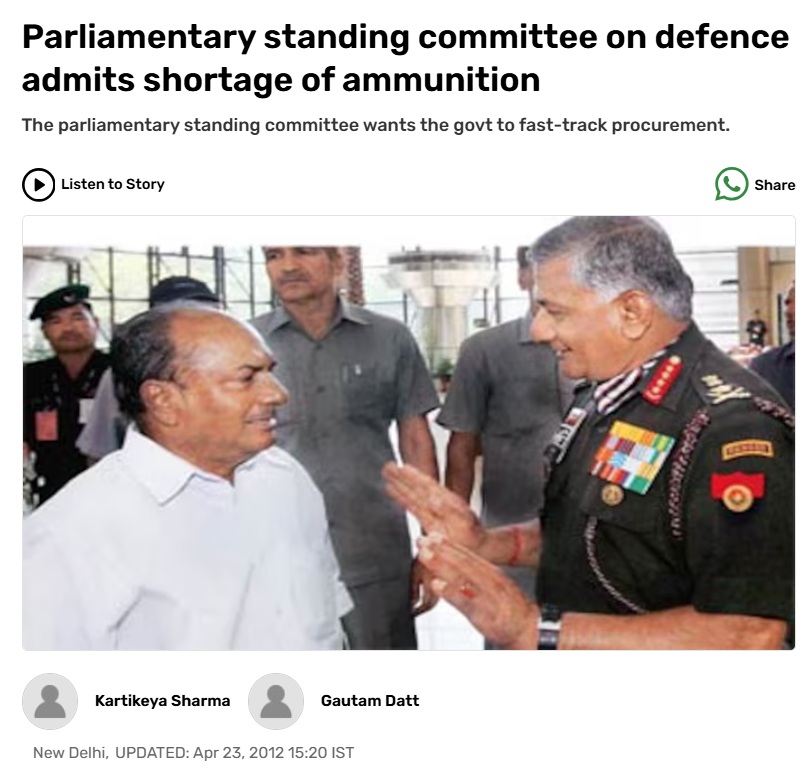
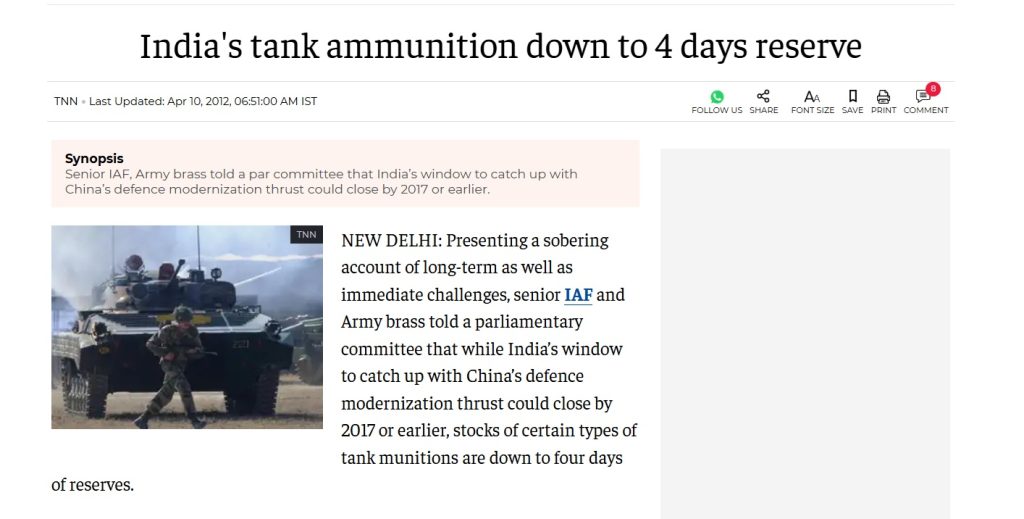
This position did not arise due to lack of easy fixes: it reflected decades of over-reliance on imports, bureaucratic delays, sluggish manufacturing, and policy inertia.
Turning the situation around was anything but “easy.” Through focused policy changes and major investment, India raised its self-reliance in ammunition production from just 32% in 2014 to a remarkable 88% by 2024. This wasn’t a bureaucratic checkbox, but a hard-won strategic transformation involving technology transfer, defence public sector reforms, and a clear-eyed recognition of past vulnerability.
Why Does Defence/Ammunition Atmanirbharta Matter?
Ammunition is the foundation of military power: without adequate shells, bombs, and bullets, the most advanced tanks or aircraft are rendered useless. India’s long-standing vulnerability having to wait for imports in a conflict posed a grave risk to security. Eliminating that weakness is no small feat.
If it was so “easy” to make “just bullets,” why did India languish at 32% self-reliance for decades? The jump to 88% didn’t happen overnight or by accident; it required determination, investment, and reform at every level. Newslaundry’s casual dismissal fails to recognize the strategic autonomy gained, the confidence boost to India’s armed forces and the savings of foreign exchange and growth of skill and capacity in India’s defence sector.
Yes, it’s true that India is not yet fully self-reliant in complex weapons. Honest coverage should make a clear distinction between ammunition (bullets, shells, bombs) and major weapons platforms (tanks, aircraft, artillery) and also acknowledge the extraordinary progress where it has happened.
Defence Exports Are Rising Too
As India’s defence industry matures, there’s been a dramatic surge in exports: from just ₹686 crore in 2013-14 to over ₹23,000 crore in 2024-25. This isn’t proof of “world domination,” but it does mark the maturing of India’s manufacturing and export capabilities
While India’s defence exports are still growing (currently 0.2% of global share), the surge in interest from nations like Vietnam, Philippines, and Indonesia for systems like Brahmos is undeniable. Mocking this progress, while ignoring how far India has come, reeks of bias and hypocrisy.
Subscribe to our channels on Telegram, WhatsApp, and Instagram and get the best stories of the day delivered to you personally.