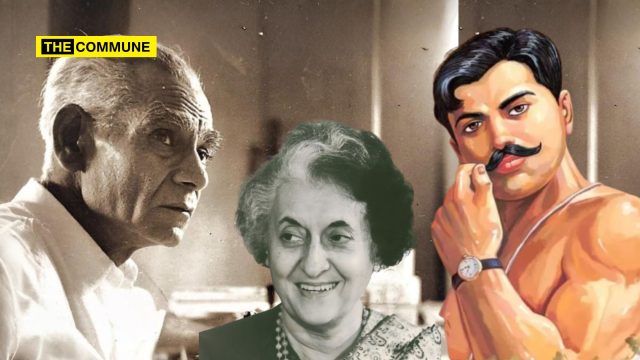
Whenever credit is given to figures with a controversial or anti-national past, it is often the Congress party that leads the applause. This was once again evident during the remembrance of revolutionary icon Chandra Shekhar Azad on his birth anniversary on 23 July, where another name surfaced Yashpal Singh, a former revolutionary who later turned into a prominent writer and political commentator. He was honored with the Padma Bhushan and Sahitya Akademi Award during Indira Gandhi’s tenure, despite serious allegations surrounding his role in Azad’s demise.
The Last Stand Of Chandra Shekhar Azad
On 27 February 1931, Azad, commander-in-chief of the Hindustan Socialist Republican Association (HSRA), died in a fierce gunfight with British officers at Alfred Park in Allahabad (now Prayagraj’s Azad Park). True to his vow, Azad chose death over capture.
Azad’s inner circle noted in their writings that he was intensely secretive and cautious, revealing his whereabouts only to the most trusted. After Bhagat Singh’s arrest, he continued to evade detection, following a rigid rulebook. This often put him at odds with close aides like Vishwanath Vaishampayan, who once challenged Azad over his suspicions but was reminded that emotional thinking could cost lives in a struggle like theirs.
Suspicions Of Betrayal
What exactly led to Azad’s final encounter with the British? Was it merely coincidence, or was there betrayal from within?
Three key figures Vaishampayan, Sukhdev Raj, and Yashpal left behind conflicting accounts of the day. All three agreed that Veerbhadra Tiwari, a fellow HSRA member, was likely the informant who led police to Azad. However, Vaishampayan and Sukhdev Raj went a step further, casting suspicion on Yashpal due to his close association with Veerbhadra.
They recalled how both Yashpal and Veerbhadra had been disciplined by Azad for misusing revolutionary funds and violating party norms. Meanwhile, Veerbhadra, unlike other revolutionaries, roamed freely without fear of arrest raising strong suspicions of him being a police mole.
The Events Of 27 February 1931
On that fateful day, Sukhdev Raj met Azad at the park shortly after Yashpal and Surendra Pandey had left. Azad asked Sukhdev whether he had ever been to Burma (Myanmar) hinting at an escape route to Soviet Russia. However, Azad remained committed to continuing the fight from within India.
During their conversation, Azad spotted Veerbhadra Tiwari and grew suspicious. Moments later, two British officers, including Superintendent John Nott-Bower, approached. A shootout ensued. Nott-Bower wounded Azad in the thigh, while Azad returned fire, injuring the officer’s wrist. Azad urged Sukhdev Raj to flee and continued fighting until his ammunition ran out.
Conflicting Testimonies
Yashpal admitted he and Pandey accompanied Azad to the park but said they were sent away to the market supposedly to buy sweaters for a trip abroad. When gunshots rang out, Yashpal claimed he wanted to return, but Pandey held him back.
Vaishampayan and Sukhdev Raj outright rejected Yashpal’s version, accusing him of complicity in Azad’s betrayal. In retaliation, Yashpal alleged that Sukhdev Raj later surrendered under pressure in Lahore, leading to another comrade’s death.
Was It Just A Coincidence?
According to statements by British officers like Nott-Bower, CID DSP Vishveshwar Singh, and IG S.T. Hollins, the encounter occurred because Singh thought he had spotted Azad in the park. They reportedly confirmed the sighting and moved in, leading to the gunfight.
While official British sources denied any prior intelligence, skepticism remains. Given Azad’s legendary caution, it’s hard to believe he would have been at Alfred Park without reason or without vetting the location.
A report in Leader newspaper added to the mystery. The post-mortem showed two bullet wounds in Azad’s leg, one in the lung, and a fatal one in the head. British accounts claimed Azad shot himself with his final bullet. However, some medical professionals disputed that, questioning whether the headshot was truly self-inflicted.
Alleged British Intelligence Letter Identifies Yashpal As A Spy Within Revolutionary Circles
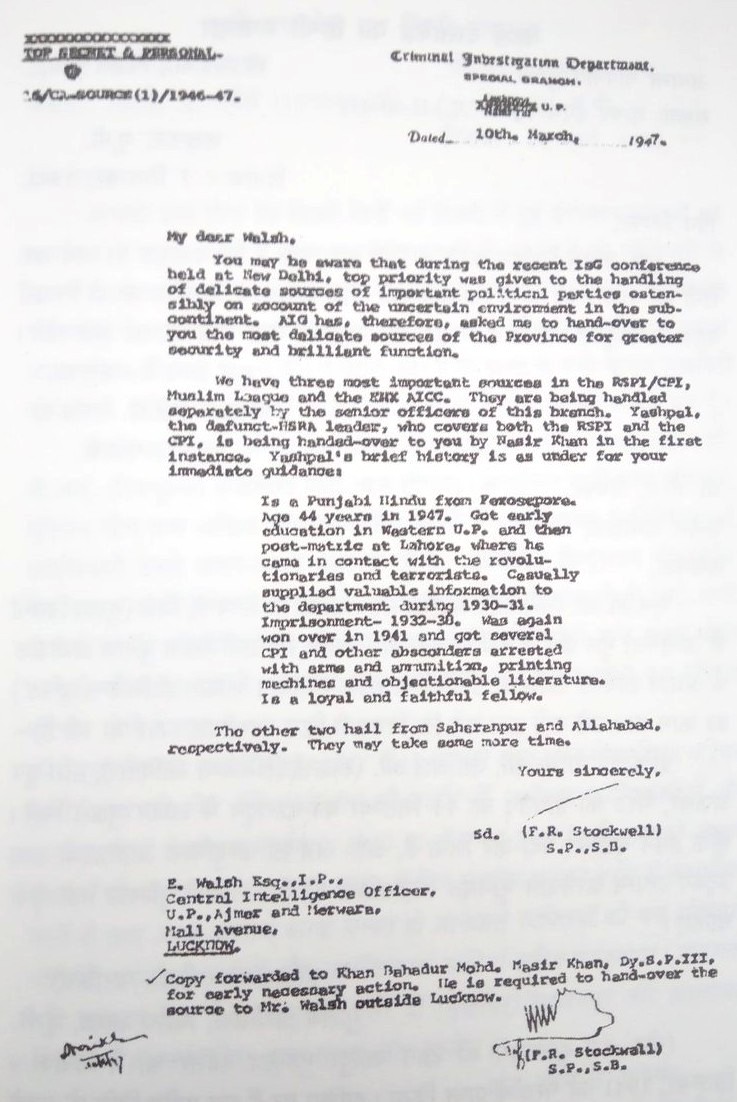
Amid the lingering questions surrounding the betrayal of revolutionary leader Chandra Shekhar Azad, a controversial letter allegedly from British Intelligence adds another layer of suspicion. The letter, claimed to be both “Top Secret and Personal,” was reportedly written by F.R. Stockwell, Superintendent of Police, Special Branch, U.P., and addressed to E. Walsh, Central Intelligence Officer of the U.P. CID and Berwar States.
Dated 10 March 1947, the letter refers to a key informer who had infiltrated both the RSPI (Revolutionary Socialist Party of India) and CPI (Communist Party of India). It suggests that this informant identified as “Yashpal” was an ex-HSRA (Hindustan Socialist Republican Association) member and is widely believed to be Yashpal. Stockwell describes him as a “loyal and faithful fellow” who had previously helped British authorities during the revolutionary movements of the 1930s and 1940s.
Here is a excerpt of the letter’s content, “You may be aware that during the recent ISG conference held at New Delhi, top priority was given to the handling of delicate sources of different political parties, ostensibly on account of the uncertain environment in the sub-continent. AIG has, therefore, asked me to hand-over to you the most delicate source of the Province for greater security and brilliant function. We have three most important sources in the RSPI/CPI, Muslim League and the RNX KICC. They are being handled separately by the senior officers of the Branch. Yashpal, the defunct-HSRA leader, who covers both the RSPI and the CPI, is being handed-over to you by Nazir Khan in the first instance. Yashpal’s brief history is as under for your immediate guidance:- Is a Punjabi Hindu from Ferozepore. Age 44 years in 1947. Got early education in Western U.P. and then post-matric at Lahore, where he came in contact with the revolutionaries and terroristic. Usually supplied valuable information to the department during 1930-31. Imprisonment 1932-33. Was again in year in 1941 and got several CPI and other absconders arrested with arms and ammunition, printing machines and objectionable literature. Is a loyal and faithful fellow. The other two hail from Saharanpur and Allahabad, respectively. They may take some more time.”
The Nehru Theory: An Unfounded Claim
A fringe theory that occasionally circulates on social media suggests Jawaharlal Nehru betrayed Azad to the British. This narrative claims that Azad met Nehru to discuss Bhagat Singh’s rescue and inadvertently revealed his location.
This claim lacks any credibility:
- No revolutionary account confirms a meeting with Nehru on 27 February.
- Nehru was in Delhi, engaged in discussions over the Gandhi-Irwin Pact, and heading to Lahore.
- Azad was known for his secrecy even his closest aides didn’t know his movements in full. To suggest he would share plans with a non-member of HSRA is implausible.
While Nehru did mention a prior meeting with Azad in his autobiography during which he reportedly dismissed the revolutionaries as “fascists” he later changed his tone. According to Yashpal, Nehru was convinced and even contributed Rs 1,500 through Shivmurti Singh to help the group escape abroad. However, this claim is disputed by Manmath Nath Gupt, though Sukhdev Raj confirmed the financial support, clarifying that the money was indeed given to Azad.
Azad’s Funeral And Legacy
Fearing public unrest, the British authorities secretly cremated Azad’s body at Rasulabad Ghat (now Chandrashekhar Azad Ghat). But the news spread quickly. Thousands including Kamala Nehru and Purushottam Das Tandon came to collect his ashes.
A large procession carried his remains through the streets as people observed a general strike. During the event, Pratibha Sanyal, wife of HSRA founder Sachindra Nath Sanyal, declared she would carry some of Azad’s ashes with her as many had done with Khudiram Bose. Inspired, the crowd scrambled to do the same, leaving little for immersion in the Ganga at Varanasi.
In the aftermath, people began to venerate the tree under which Azad fought his final battle. Alarmed, the British had it chopped down overnight. After Independence, Baba Raghav Das, a Congress leader, planted a new tree in its place ensuring that Azad’s memory lived on.
(With inputs from Rediff)
Subscribe to our channels on Telegram, WhatsApp, and Instagram and get the best stories of the day delivered to you personally.