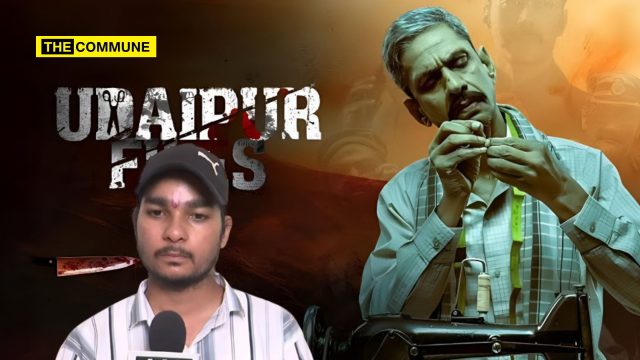
The movie portrays the horrific June 2022 incident in which Kanhaiya Lal was stabbed 26 times by two Muslim men after he publicly expressed support for BJP leader Nupur Sharma’s remarks about the Prophet Mohammed. The killers had even recorded the gruesome act and circulated the video online, openly claiming responsibility.
Speaking to ANI, Yash Sahu criticized the legal system’s swift action in halting the film’s release while noting the painfully slow progress in prosecuting his father’s killers. “There were more than 150 witnesses, yet only 15 to 16 hearings have taken place. There’s no fast-track court, no day-to-day trial even with direct video evidence. The case hasn’t moved forward in nearly three years,” he said.
Despite the National Investigation Agency (NIA) handling the case and the Central Bureau of Investigation (CBI) joining later, Sahu said no convictions have been made. In contrast, objections from groups like Jamiat Ulama-i-Hind led to the quick judicial intervention against the film, he noted.
“Why does the legal system act so fast to block a film, but not to punish those who brutally murdered my father?” Sahu questioned. He emphasized that Udaipur Files attempts to portray how his father was allegedly murdered by individuals associated with terror groups with ideological roots in Pakistan. Describing the court’s decision as disheartening, he expressed hope that the filmmakers would challenge the stay order in the Supreme Court. “My father was murdered in cold blood. Justice has been elusive, and now even a film that speaks the truth is being silenced,” he added.
#WATCH | Delhi High Court stays the release of the film “Udaipur Files: Kanhaiya Lal Tailor Murder” until the Central Government decides on the revision application filed by Jamiat Ulema-i-Hind challenging the CBFC’s certification of the film.
Son of Kanhaiya Lal, Yash Sahu,… pic.twitter.com/Fdv4Sff6u1
— ANI (@ANI) July 10, 2025
On 10 July, the Delhi High Court stayed the film’s release until the Union Government resolves a revision plea filed under Section 6 of the Cinematograph Act. Petitioners included Jamiat Ulama-i-Hind and journalist Prashant Tandon. The court directed the Centre to decide on the application within a week and maintained that the stay would remain in place until then.
A day earlier, on 9 July, the court had instructed producer Amit Jani to arrange a private screening of the film and its trailer for all legal representatives involved, after the CBFC disclosed that it had suggested 40–50 cuts before certification. The court also clarified that media reports claiming the Supreme Court had directed the film’s release were inaccurate.
The petitioners argued that the movie violated Section 5B of the Cinematograph Act and the 1991 certification guidelines, which prohibit content likely to incite communal violence. Referring to the trailer released on 26 June, they alleged that it contained inflammatory and provocative material capable of disturbing social harmony.
(With Inputs From Law Beat)
Subscribe to our channels on Telegram, WhatsApp, and Instagram and get the best stories of the day delivered to you personally.