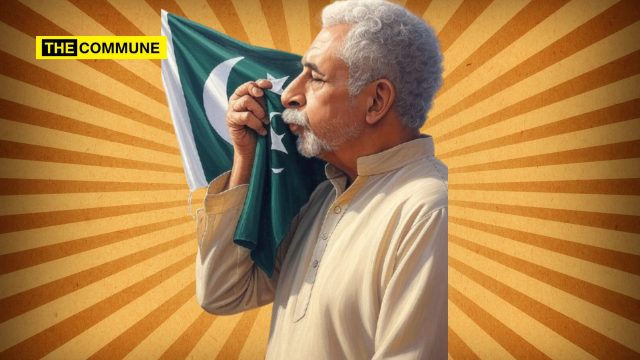
About a week ago, Naseeruddin Shah shared an opinion piece that he wrote for The Indian Express about “the country he misses” and how he does not feel the need to wear his patriotism on his sleeve.
Naseeruddin Shah’s recent “lament” for a supposedly lost India sounds less like nostalgia and more like a cleverly disguised indictment of a country that has given him everything – fame, freedom, and the platform to speak his mind. And yet, his heart seems to beat louder for the idea of Pakistan than for the India that embraced him.
Shah waxes poetic about a bygone era of interfaith harmony, painting modern India as a dystopia of “jingoism” and “war fever.” His essay is dripping with selective memory. He claims he never felt like a “Muslim” growing up, as if India was some secular utopia. But today, the same country where millions of Muslims live, work, worship, and lead successful lives is suddenly painted as unrecognizable and oppressive. Why? Because the public no longer applauds films that mock their faith or twist real tragedies for artistic license? But his nostalgia is tellingly selective. He mourns the supposed loss of India’s pluralism while ignoring the relentless radicalism within his own community – the same radicalism that fuels attacks on Hindu festivals, cow slaughter as provocation, and the glorification of Pakistani flags in Indian mosques and protests.
Naseeruddin Shah’s Pakistan Obsession
Shah’s concern for Pakistani artists, lamenting their exclusion from India, reeks of misplaced priorities. Does he forget why this ban exists? Pakistan remains a terror-exporting state, harbouring the architects of 26/11 and Pulwama. Yet, Shah frets over Nusrat Fateh Ali Khan’s music being played in India, not the fact that Pakistan’s ISI funds jihad against Indians.
His anguish over “Islamophobia” after the IC-814 hijacking is particularly revealing. While 190 Indians were held hostage by Pakistani terrorists, Shah’s primary worry was not their safety, but the backlash against Muslims. Contrast this with his indifference to the actual victims of Islamist terror. Where was his lament when Hindu pilgrims were murdered by terrorists in Jammu and Kashmir (more recently)? When temples were vandalized in every part of the country? When Kashmiri Pandits were ethnically cleansed from their homeland? None of this merits a paragraph in his ode to the “India I miss”? Really?
Here’s a video of him speaking in Pakistan and one in India and the difference is … check out how his tone and language changes in each of these places.
In the video in Pakistan, he says, “I do not have words to describe the love I receive here (Pakistan). I feel like I have returned home when I see the love and affection I receive here.”
Whereas, when he is in India, he says, “I am worried for my children in today’s India. What if a mob surrounds them and asks if they are Hindu or Muslim, my children will have no answer. I worry because I don’t see the situation getting any better soon.”
🚨Why their loyalty to Bharat is questioned
🚨Dr. B.R. Ambedkar was right about them – These people can never be loyal to India !
🚨 That’s A Reality !!
Deal with that Uncomfortable Reality ! 👇 pic.twitter.com/yYKWCDeuDT— Mona Patel 🇮🇳🐅🌳 (@MonaPatelT) July 9, 2025
‘Secular’ Outrage
Shah claims he doesn’t need to “wear patriotism on his sleeve,” yet he has no qualms flaunting his disdain for India’s cultural resurgence. Films like The Kashmir Files and The Kerala Story unsettle him not because they are poorly made, but because they expose uncomfortable truths about Islamic radicalism. His discomfort with Gadar 2 – a celebration of Indian resilience, while remaining silent on Bollywood’s long history of whitewashing Islamic tyranny exposes his double standards.
Naseeruddin Shah has no problem with free speech, as long as it toes his line. He says he doesn’t wear his patriotism on his sleeve. Fair. But what he does wear loudly and often is his disdain for anything remotely critical of Islamic radicalism or Pakistan.
Shah proudly mentions his father’s decision to stay in India while his brothers migrated to Pakistan. But he omits the crucial question: Why did they leave? The answer lies in the same two-nation theory that Shah’s rhetoric subtly endorses. His father may have stayed, but the ideological roots remained – a discomfort with Hindu civilizational pride, a disdain for India’s majority culture, and an instinctive defense of Pakistan’s grievances.
Shah is not just mourning a lost India. He’s bitter that the India of today refuses to mirror his ideological leanings. And instead of acknowledging the resilience of the nation or the progress we’ve made, he paints it all black, all bleak.
Whenever he opens his mouth to speak about Pakistan, it feels like Shah never came out of his Gulfam Hassan role in Sarfarosh.
If he truly believes artists are being silenced, he should undo his forefathers’ mistake, move to Pakistan, and publish a column like this there. Then we will know what he “misses”.
Subscribe to our channels on Telegram, WhatsApp, and Instagram and get the best stories of the day delivered to you personally.