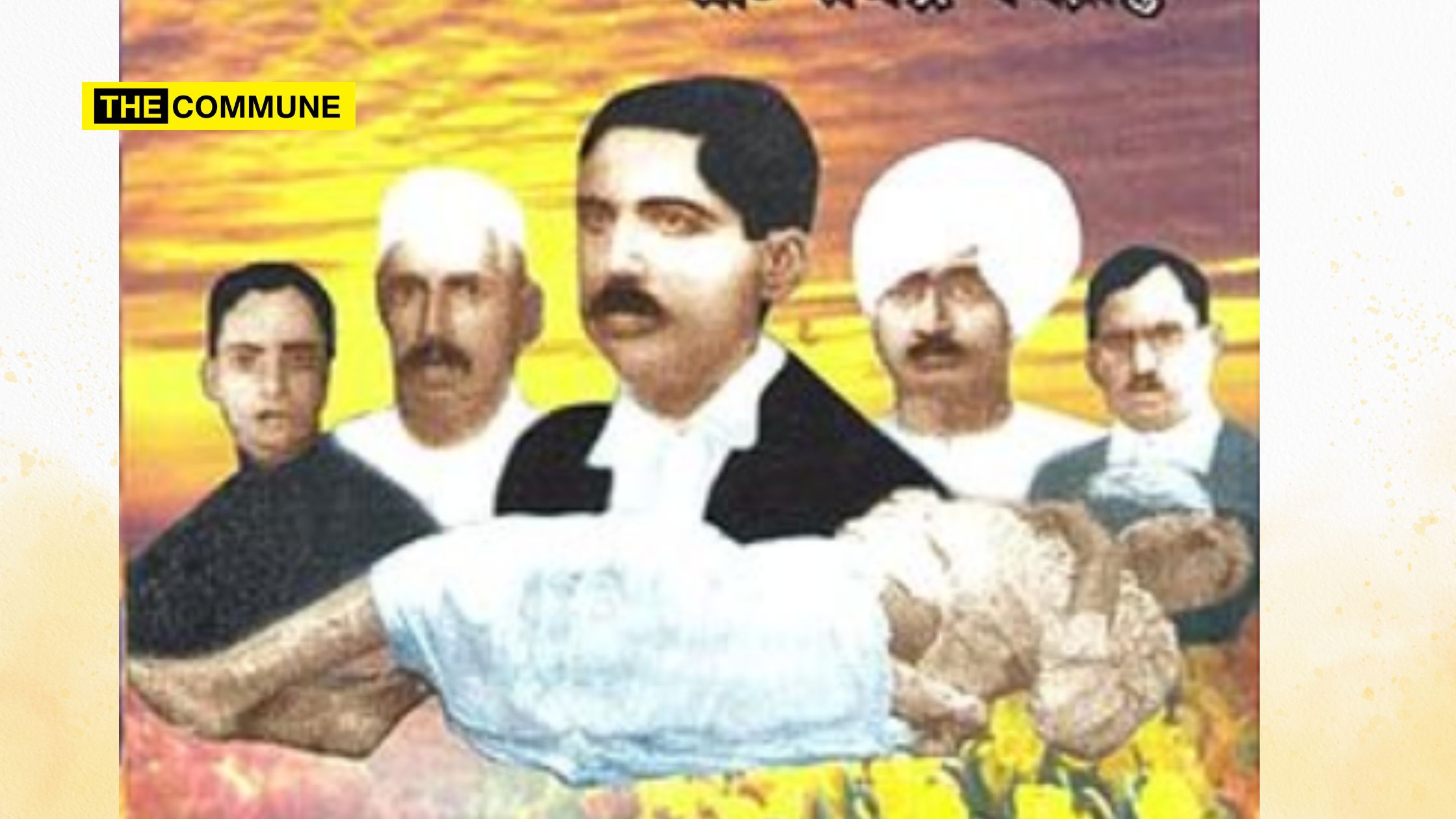
During the oppressive rule of the Nizam in Hyderabad, Hindus faced severe restrictions on their religious freedom. Practicing the Hindu faith often came with harassment or the pressure to convert to Islam. Under the shadow of the Razakars, a brutal fundamentalist militia loyal to the Nizam religious persecution became routine. Yet, amidst this dark period, a few brave individuals stood firm, resisting tyranny with unwavering courage. One such unsung hero was Radha Kishan Modani, also known as Radha Krishna Modani.
Born on 14 December 1886 in Hyderabad, Modani came from a family originally hailing from Sanju village in Nagaur district, Rajasthan. His parents, Shri Jeetmal Modani and Smt. Rambai, had settled in Hyderabad nearly two decades prior. The family lived in Esamia Bazaar, where they also ran a kiryana (grocery) shop. Educated in Hindi and Urdu, Radha Kishan married Mohini, the daughter of Jayanarayanji Gilda of Nizamabad.
While the early rule of Osman Ali Khan was relatively stable, the situation worsened under his successors. The Nizam’s administration began clamping down on Hindu religious activities, banning public rituals like Arya Samaj gatherings during festivals. Celebrating religious events became dangerous, with arrests and beatings becoming common. Outrages like cow slaughter further deepened the unrest among the Hindu population.
Radha Kishan Modani, disturbed by these violations, took an active role in the Satyagraha movement against the Nizam, which ran from 31 January to 20 July 1939. He became a vocal critic of the regime’s authoritarianism. In open defiance of the Nizam’s prohibition on Hindu rituals, Radha Kishan Modani is said to have conducted a yagna publicly in the Nizamabad market—a powerful act of spiritual resistance. This courageous stand against the ban provoked the anger of the Razakars.
On 2 August 1939, as the Satyagraha reached its final phase, Modani was brutally assaulted in front of the Nizamabad town police station while conducting the yagna. He succumbed to his injuries, becoming a martyr for the cause of religious freedom and resistance to tyranny.
His death triggered widespread grief and anger. Nizamabad’s entire market shut down for three consecutive days as a mark of protest. His sacrifice was later honored in several ways, in 1943, a session of the Arya Samaj conference named the location ‘Shaheed Radhakishan Modani Nagar’, and in 1961, the Nizamabad Municipal Council renamed a major street ‘Shaheed Radhakishan Modani Road‘.
Today, he is remembered as a valiant but lesser-known freedom fighter who laid down his life to uphold the right to practice one’s faith freely under oppressive rule.
Atrocities by Razakars In Hyderabad At the Dawn of Indian Independence
In the period surrounding India’s independence in 1947, while widespread communal violence primarily characterized the partition, another brutal conflict unfolded in the princely state of Hyderabad a year later. This involved the Razakar militia, an armed group supporting the Nizam of Hyderabad’s desire for independence, and their actions against the backdrop of the Indian Army’s intervention.
The Nizam’s Stance and the Rise of the Razakars
Hyderabad, one of over 500 princely states, initially enjoyed autonomy under British rule. Unlike most other states that acceded to India after independence in 1947, Hyderabad’s Muslim Nizam sought to remain independent. This refusal to join the Indian Union sparked a tense standoff with the Indian government in Delhi. During this period, the Razakar militia, the armed wing of Hyderabad’s dominant Muslim political party, emerged as a significant force. Comprised largely of Muslims, with some Dalit Hindus also noted among them, the Razakars were vehemently opposed to Hyderabad’s integration into India. They actively terrorized villages, targeting those perceived as Indian partisans, who were predominantly Hindu due to the state’s demographic makeup. While the primary victims were Hindus, some Muslims also suffered from their actions.
Instances of Razakar Violence
Reports indicate numerous acts of brutality by the Razakars. K.M. Munshi, India’s Agent-General in Hyderabad post-1947, documented 260 incidents of violence committed by the Razakars against civilians, mainly in the rural areas. Estimates vary, but some analyses suggest fewer than 1,000 people were killed by the Razakars.
A stark example of their atrocities is the Gorta B village massacre on May 10, 1948. According to accounts from survivors and their descendants, after a Muslim official in Gorta was reportedly killed by members of the Arya Samaj, the Razakars retaliated violently. Approximately 200 Hindus were reportedly lined up and killed in cold blood, women were raped, and widespread looting occurred. A chilling slogan attributed to the Razakars at the time was: “Loot the Brahmin, kill the trader, and share in the pillage.” Despite the presence of around 40 Muslim households in Gorta B, some of whom attempted to protect their Hindu neighbors, they were unable to withstand the external Razakar forces.
Indian “Police Action” and Aftermath
In September 1948, the Indian Army launched a “police action” to integrate Hyderabad. While the Nizam’s forces were swiftly defeated with minimal civilian casualties during the initial invasion, reports soon emerged of widespread violence in its aftermath. The Pandit Sundarlal Committee, commissioned by Prime Minister Jawaharlal Nehru to investigate these reports, concluded that the violence against Muslims was an “inevitable repercussions of the atrocities committed on Hindus only a few days before by the Razakars.”
The committee’s “conservative estimate” indicated that at least 27,000 to 40,000 people lost their lives during and after the police action, with some later scholarship suggesting figures as high as 200,000 deaths. The four worst-affected districts, identified as Razakar strongholds and areas that suffered heavily at their hands, were Osmanabad, Gulbarga, Bidar, and Nanded. The report further detailed: “Almost everywhere in the affected areas communal frenzy did not exhaust itself in murder alone in which at some places even women and children were not spared. Rape, abduction of women… loot, arson, desecration of mosques, forcible conversions, seizure of houses and lands, followed or accompanied the killing.” It also noted that “tens of crores worth of property was looted or destroyed.” The primary victims of these atrocities were Muslims, particularly in rural areas.
While the Razakars committed violence and their leader, Kasim Rizvi, was eventually tried and jailed, later departing for Pakistan, the subsequent large-scale violence against Muslims after the Indian Army’s intervention went largely unpunished. The Pandit Sundarlal Committee report, which also pointed to the involvement of “Hindu communal organisations” from outside Hyderabad in the violence against Muslims, was not published until 1988, contributing to a lack of public awareness about the full extent of the post-invasion massacres.
Subscribe to our channels on Telegram, WhatsApp, and Instagram and get the best stories of the day delivered to you personally.