Disclaimer: This article isn’t a debate over whether Shaivism or Vaishnavism is superior. It is a critique aimed at exposing the hypocrisy and sectarian bias of political fraud Kamal Haasan, who masks his divisive agenda behind the façade of cinema and rationalism.
Kamal Haasan, often celebrated as a “progressive” and “rationalist” icon in Tamil cinema, has long portrayed himself as an atheist who stands above religious divisions. Yet, a closer examination of his films reveals a disturbing pattern—a deliberate and systematic effort to demean Shaivite traditions while glorifying Vaishnavism, the sect of his own Iyengar Brahmin caste. This hypocrisy exposes not just personal bias but a calculated attempt to distort Hindu religious history and deepen sectarian divides.
The Historical Context: Shaivism Vs. Vaishnavism
Before the onset of foreign rule, Hinduism in India was never a rigid, monolithic structure—it thrived as a rich tapestry of diverse sects and spiritual paths. Among them were the Shaivites (worshippers of Shiva), Vaishnavites (worshippers of Vishnu), Shaaktas (devotees of Devi/Shakti), Kaumaras (followers of Murugan/Skanda), Ganapatyas (worshippers of Ganesha), and Sauryas (devotees of Surya, the Sun God). Rather than being fragmented or conflicting, these traditions were brought under a unifying philosophical umbrella known as the Shanmata, or the “Six-Fold Path.”
The Shanmata system, formalized by Adi Shankaracharya, was not merely a theological innovation but a visionary civilizational effort to maintain religious cohesion. It was founded on the profound Vedantic principle that all deities are expressions of the same supreme, formless reality—Para Brahman. Shankara’s goal was clear: to dissolve sectarian ego and foster unity among Hindus by emphasizing that these six deities were not rivals, but reflections of one divine source.
However, history records that theological rivalries did exist—particularly between Shaivites and Vaishnavites, each asserting the supremacy of their chosen deity. These doctrinal debates, though often philosophical, sometimes spilled into political patronage.
While many Hindu kings supported a wide array of temples and traditions, certain Chola monarchs, particularly those of the imperial period, were ardent Shaivites and commissioned grand temples dedicated to Lord Shiva. For instance, Raja Raja Chola I built the majestic Brihadeeswarar Temple in Thanjavur, consecrated to Lord Shiva as ‘Rajarajeswaram’. His son, Rajendra Chola I, furthered this Shaivite legacy with the construction of the Gangaikonda Cholapuram temple, another architectural marvel dedicated to Shiva.
However, the Cholas were not entirely sectarian in their religious patronage. Inscriptions show that they also contributed generously to Vaishnavite temples. Raja Raja Chola I and his queens donated lands and gold to the Srirangam Ranganathaswamy Temple, one of the most sacred Vaishnavite shrines. Kulothunga Chola I is noted for making extensive renovations to the same temple and for endowing the Tirumala Venkateswara Temple in Tirupati. Additionally, Rajadhiraja Chola II supported the construction and maintenance of Vishnu temples in and around Kanchipuram.
These examples indicate that while Shaivism was the state-supported religion under many Chola rulers, there was also significant royal patronage for Vaishnavism.
Parthasarathy Srinivasan Iyengar’s Venom
Kamal Haasan, born as Parthasarathy Srinivasan Iyengar, has repeatedly used his films to subtly—and at times blatantly—indulge in sectarian division to create confusion amongst the Hindu fold. While cloaked in intellectualism and rationalism, his scripts often betray an unmistakable bias: elevating his own Vaishnavite background while mocking or vilifying Shaivism and its associated symbols, rituals, and devotees.
Kamal’s films, particularly those where he had creative control, consistently follow a troubling trend. Let’s take a look at some of his films.
‘Anbe Sivam‘ (2003): The Villain As A Shiva Devotee
The antagonist, Kandasamy Padayatchi (played by Nasser), is depicted as a fanatical Shiva devotee, repeatedly chanting “தென்னாடுடைய சிவனே போற்றி“ (“Praise to the Shiva of the Southern Land”).
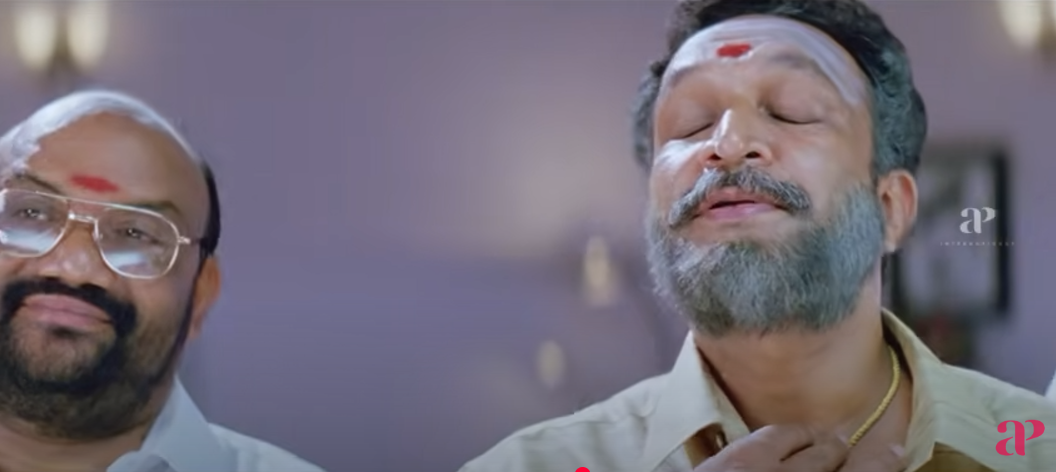
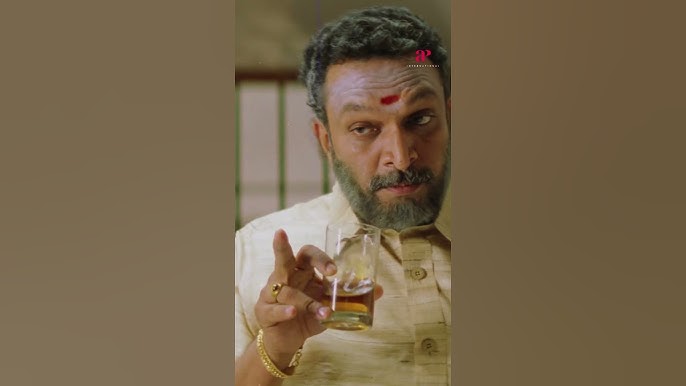
Why was the villain specifically written as a Shiva worshipper? There is no narrative necessity—unless the intent was to associate Shaivism with villainy. Contrast this with Kamal’s own roles: When he plays a believer, it’s always as a devotee of Vishnu, Rama, or Hanuman (Vaishnavite deities).
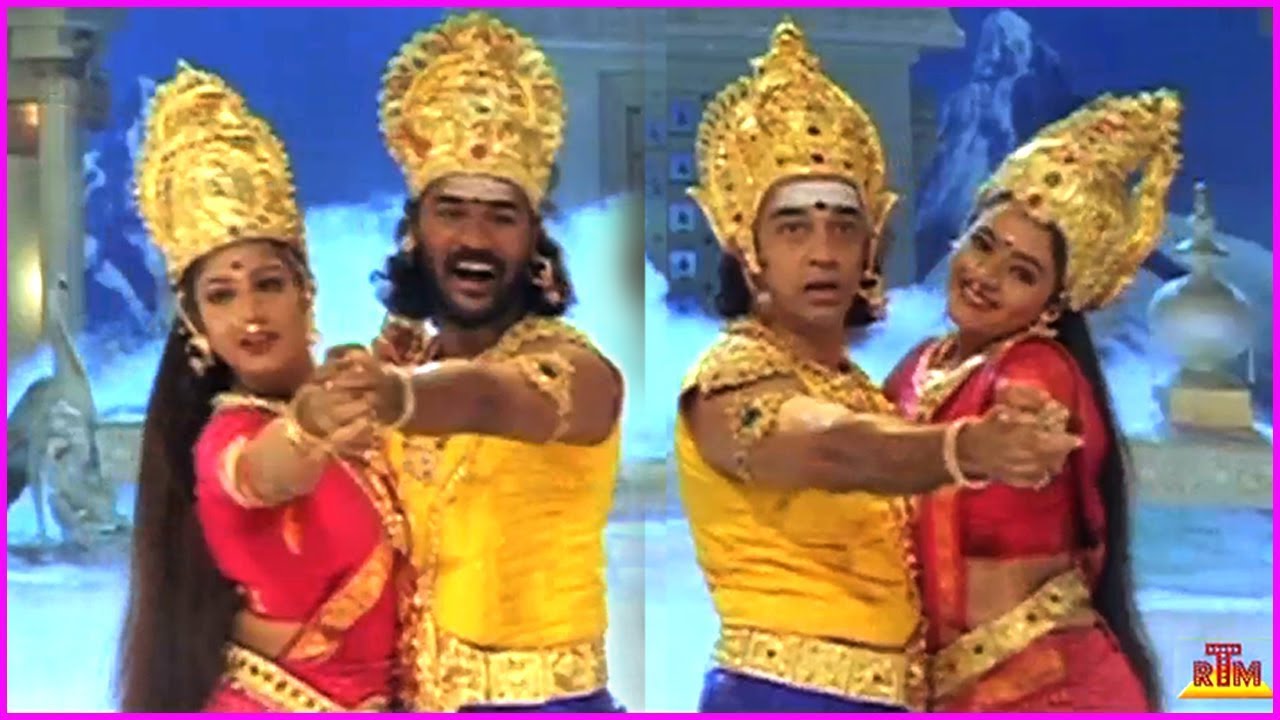
‘Kaadhala Kaadhala‘ (1998): Mocking Lord Murugan
The film ridicules Lord Murugan through dream sequences where Kamal and Prabhudeva dress as the god for comedic effect. The script mocks Murugan’s two consorts (Valli and Deivanai), turning a sacred aspect of Shaivite theology into a cheap joke. In no film of his, Kamal had mocked Vishnu’s three consorts (Lakshmi, Bhudevi, Niladevi)? Never.
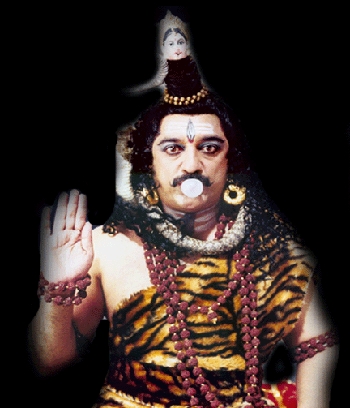
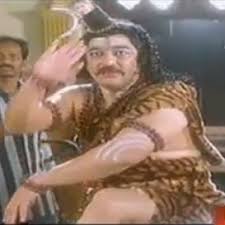
‘Pammal K. Sambandam‘ (2002): Portraying Lord Shiva As A Comic Character
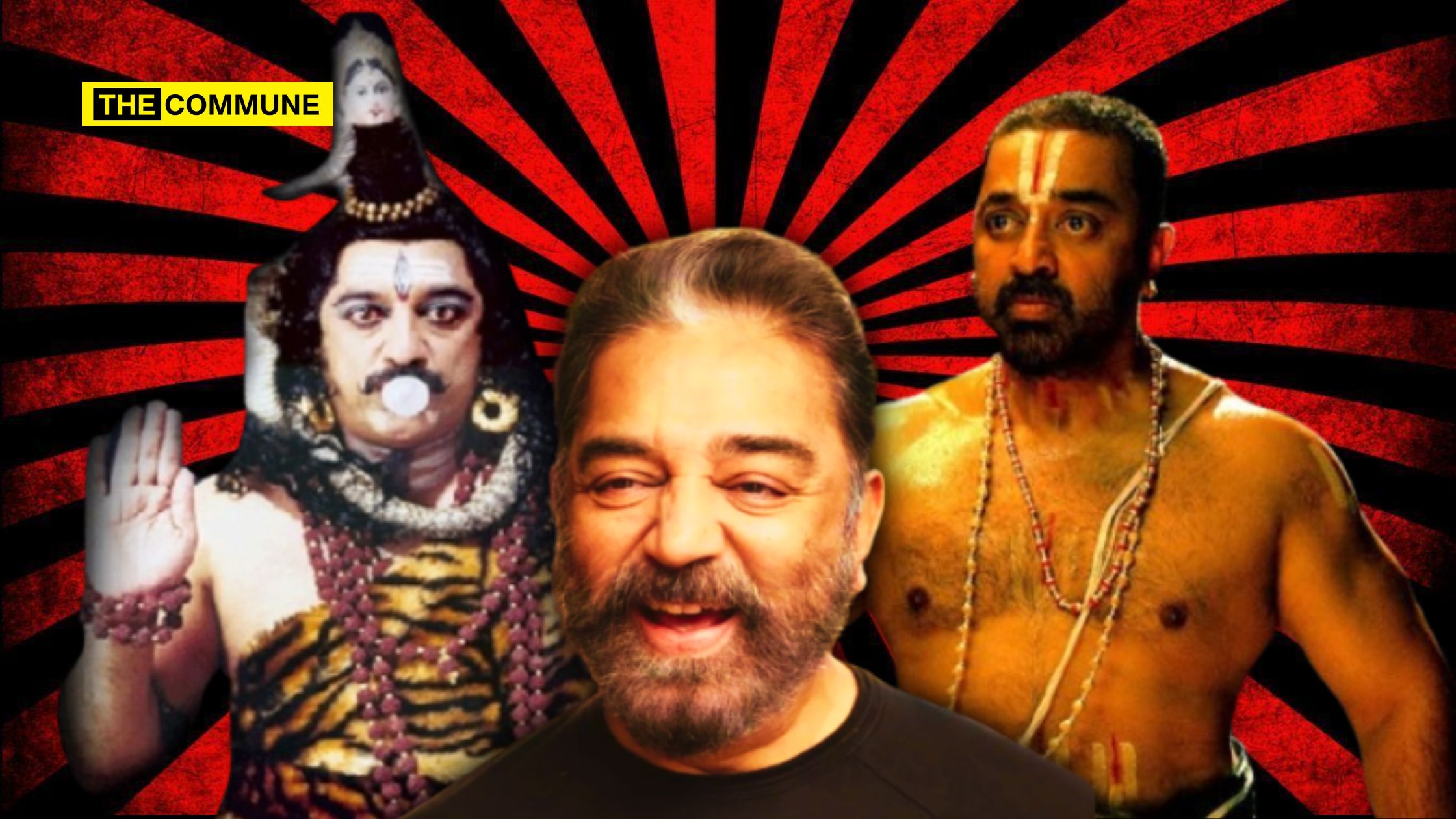
Kamal’s character in this movie is a Hanuman devotee (associated with Vaishnavism), while his family members are shown as Shiva worshippers with Vibhuti marks. In one scene, Kamal dresses as Lord Shiva for a comedy scene in a film, ridiculing the deity – where he is seen blowing bubbles with his bubblegum, ridiculing and caricaturing Lord Shiva as if he was as a joke.
‘Dasavathaaram‘ (2008): Rewriting History To Vilify Shaivites
The film’s opening depicts King Kulothunga Chola II (a Shaivite), played by actor Napoleon, as a tyrant who orders the removal of a Vishnu idol from the Chidambaram temple. Kamal’s character, Rangarajan Nambi, a hardcore Vaishnavite, is tied to the idol and thrown into the sea—a fabricated, melodramatic scene.
Earlier in the film, there’s a prolonged exchange between Rangarajan Nambi and Kulothunga Chola II, during which Kamal Haasan’s dialogues are carefully constructed to subtly—but unmistakably—promote the theological superiority of Vaishnavism over Shaivism. But the narrative doesn’t stop at philosophical one-upmanship. Kamal’s contempt for Shaivism becomes glaringly evident in a disturbing scene where a young Shaivite child throws a stone at Rangarajan Nambi. It strikes his forehead, and the blood that trickles down forms a red vertical line.

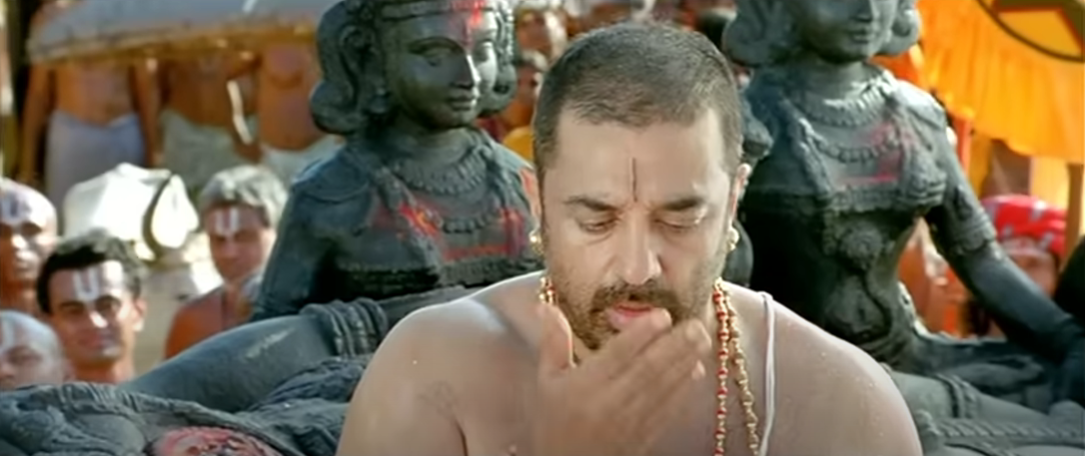
The symbolism is chillingly deliberate: the message being that even a child raised in a Shaivite household is indoctrinated with hatred. It’s not just a cinematic choice—it’s a sectarian statement disguised as storytelling.
But what’s the historical truth? Inscriptions confirm that the Chidambaram Nataraja temple was always a Shaivite stronghold. Ramanujar (a Vaishnava saint) allegedly tried to install a Vishnu idol, leading to its removal by the Shaivite king (sometimes referred to as Kirumikanda Chola). Kamal reversed the narrative to paint Vaishnavites as victims.
‘Hey Ram’ (2000): Sober ‘Saket Ram’ Becomes Bigoted ‘Bhairav’ To Kill Gandhi
Saket Ram Iyengar, an archaeologist, suffers a devastating personal loss during the Calcutta Riots triggered by Mohammed Ali Jinnah’s call for Direct Action Day. Overwhelmed by grief and rage, he is drawn into the ideology of Hindutva, coming to believe that Mahatma Gandhi’s policy of Muslim appeasement is the root cause of India’s communal strife. Abandoning his second wife and family, he renounces worldly life and takes sannyasa in Kashi—notably, through Shaivite rituals, conducted by Shaivite priests and a guru, despite being an Iyengar, a staunch Vaishnavite by birth.


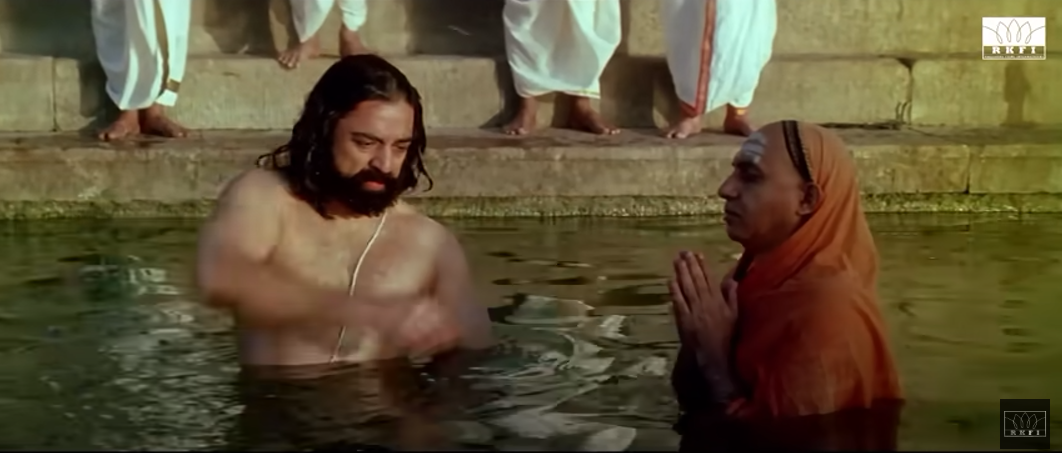
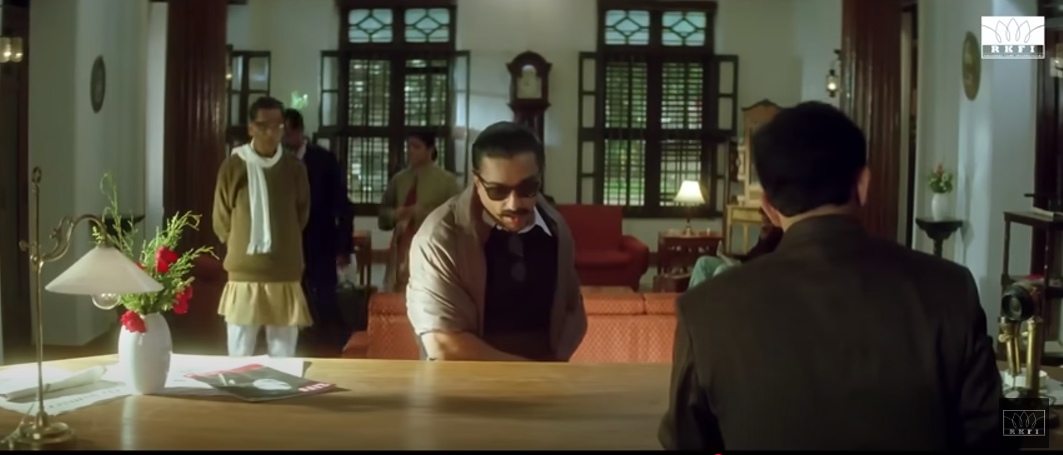
Assuming the alias ‘Bhairav’—a fierce aspect of Lord Shiva—he roams Delhi with the intention of assassinating Gandhi. In a moment of clarity, Saket attempts to confess his change of heart, only to witness Gandhi being assassinated by Nathuram Godse.
‘Panchathanthiram’ (2002): Naming The Negative Lady Character ‘Maragadhavalli‘
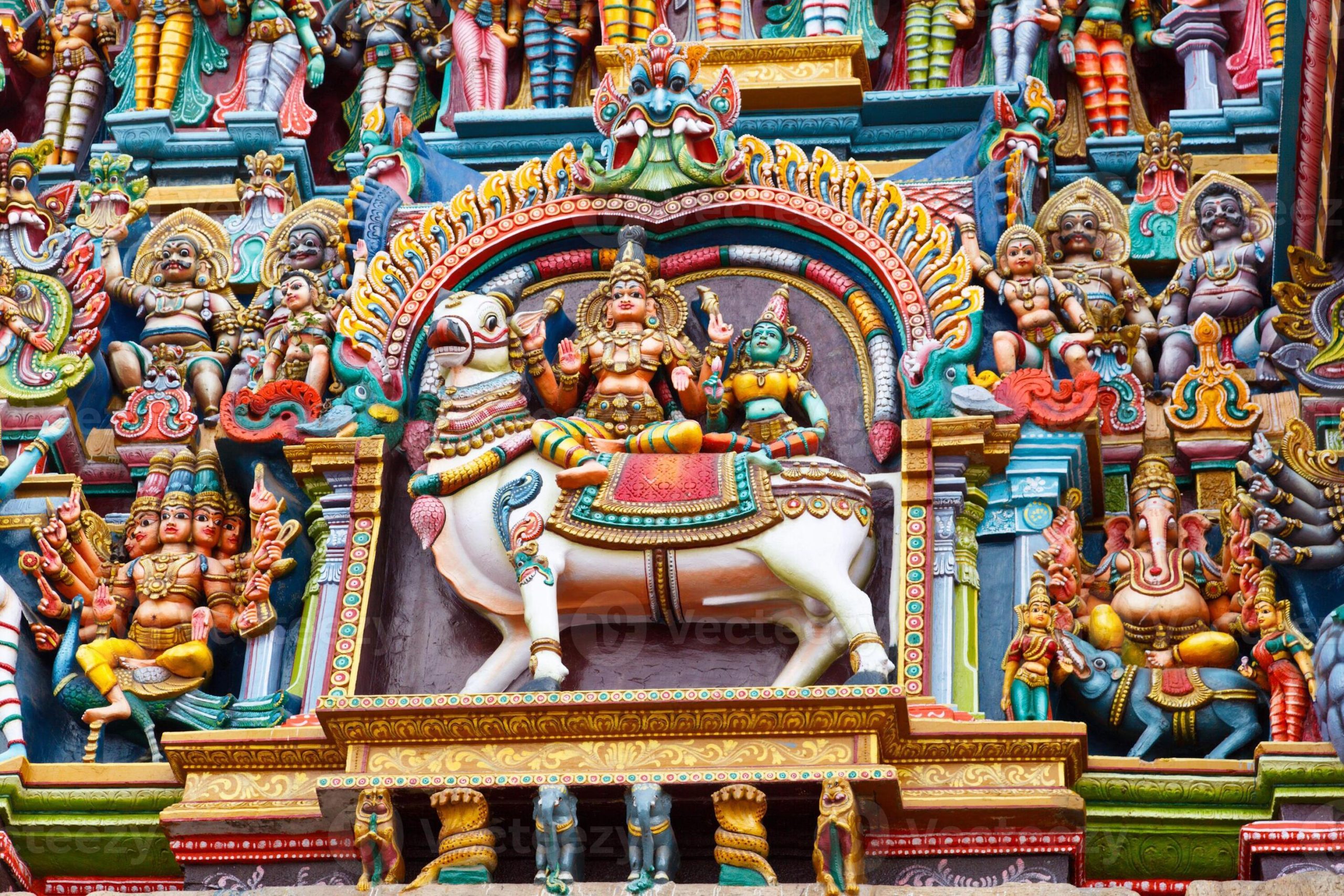
In this comedy film, Ramya Krishnan’s character—a morally grey, gold-digging woman—is named “Maragadhavalli“, a traditional name associated with Goddess Parvati (a Shaivite deity). “Maragathavalli” in Tamil means “emerald vine” or “green vine”. In the Tamil Hindu iconography, Goddess Parvati is depicted in green colour.
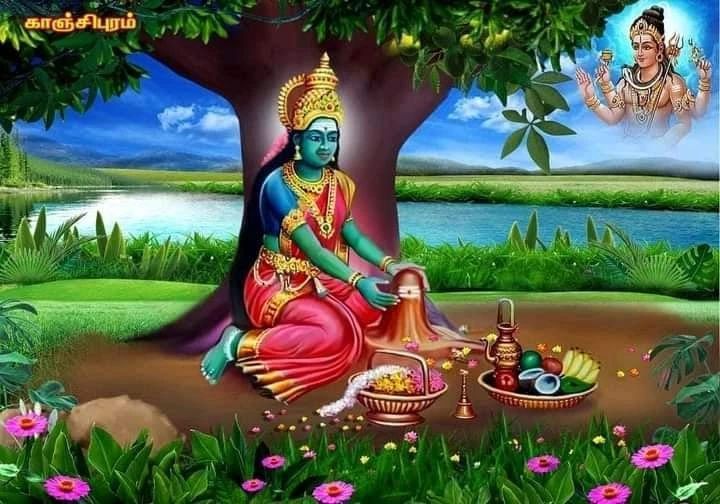

Meanwhile, Kamal’s character is simply “Ram“, and Simran’s character is “Mythili” as Mythili is another name for Ma Sita. Why is the negative character given a Shaivite name while the protagonists bear Vaishnava names? The symbolism is nothing but deliberate.
‘Vasool Raja MBBS’ (2004):
In a scene, Kamal’s character derisively calls his roommate “Sambu Mavan”—a nickname referencing Lord Murugan (also called Sambu). Kamal also tries to pass off a new phrase “Anbe Venkatachalam“. When the roommate corrects him, saying “Isn’t it Anbe Sivam?“, Kamal dismissively replies, “I have already told it, let this be a new one.”
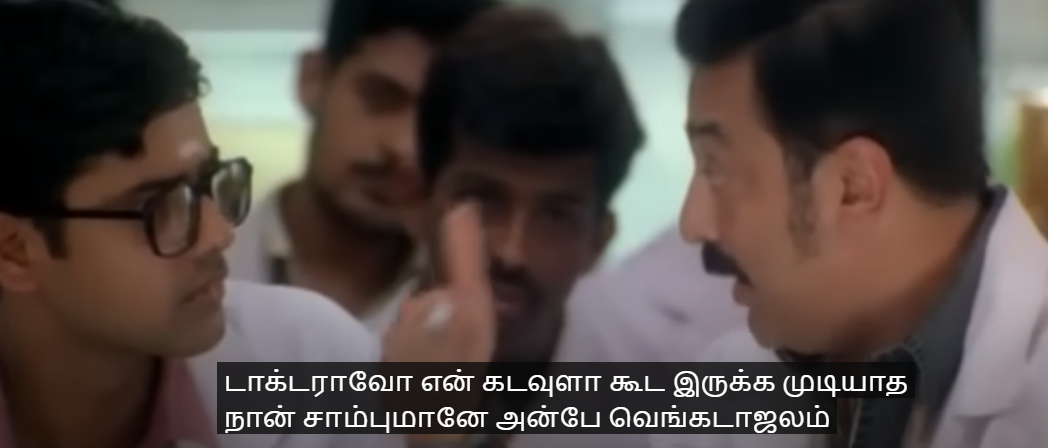
This isn’t just comedy—it’s a deliberate dig at Shaivite devotion. Kamal’s character refuses to acknowledge Anbe Sivam (a film where he himself played a role).
‘Papanasam’ (2015): ‘Suyambulingam’ Vs. ‘Perumal’—Criminal Vs. Truth-Teller
The film’s antagonist, who hides a murder and turns into a criminal, is named “Suyambulingam”—a classic Shaivite name (referring to Lord Shiva as Swayambhu Lingam). Meanwhile, the character who ultimately confesses the truth is named “Perumal”—a Vaishnava name for Lord Vishnu. The message is clear: The Shaivite-named character is deceitful, while the Vaishnava-named character upholds truth. This is not a coincidence—it’s calculated symbolism.
Vishwaroopam 2: ‘Eshwar’ Iyer Is A Traitor Helping Terrorists
Kamal who plays the role of Wisam Ahmad Kashmiri faces resistance from his superior Eshwar Iyer (Anant Mahadevan) who is revealed to be a traitor working for Omar Qureshi, the main antagonist.
The Hypocrisy Of A “Fake Atheist”
Kamal Haasan’s public persona is that of a rationalist who rejects God, yet his films betray a deep-seated religious bias:
- When mocking faith, he targets only Shaivite deities
- When portraying devotion, he exclusively elevates Vaishnava figures (Vishnu, Rama, Krishna, Hanuman).
This selective atheism proves he is not a true skeptic but a sectarian propagandist.
Kamal’s long-time collaborator, Crazy Mohan (also a Vaishnava Brahmin), contributed to scripts reinforcing this bias. Directors like Sundar C and Singeetam Srinivasa Rao acted as “yes-men,” executing Kamal’s vision without question. After gaining creative control, Kamal weaponized cinema to push his sectarian agenda.
Kamal Haasan’s films are not just entertainment—they are tools of religious manipulation. By vilifying Shaivism and glorifying Vaishnavism, he fans the flames of an ancient sectarian divide. If he were truly an atheist, he would critique all gods of all religions equally. Instead, he protects his own tradition while attacking others.
Vallavaraayan is a political writer.
Subscribe to our channels on Telegram, WhatsApp, and Instagram and get the best stories of the day delivered to you personally.