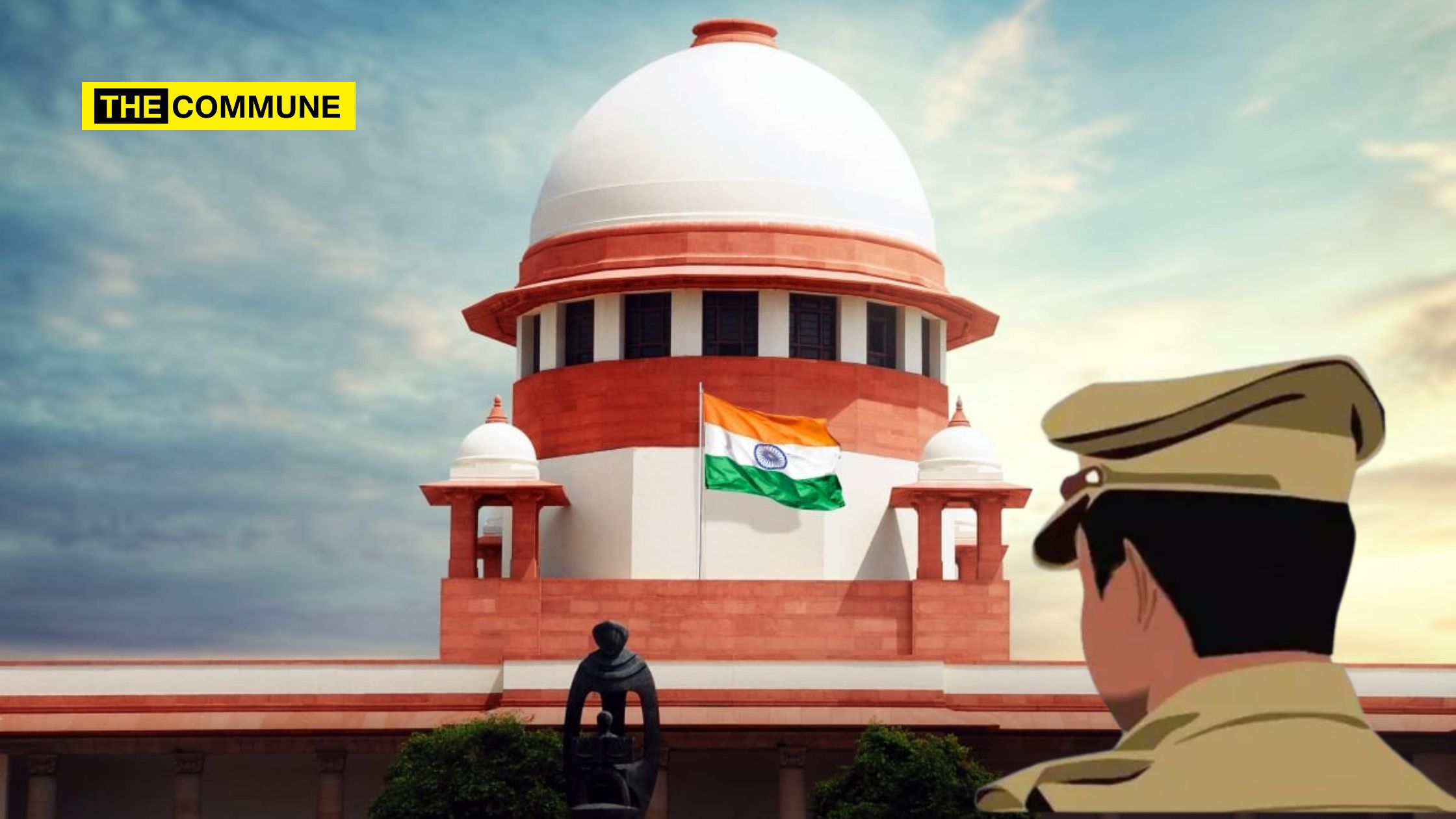
In a strong affirmation of citizens’ constitutional rights, the Supreme Court on Wednesday, 30 April 2025, upheld a compensation order against a Tamil Nadu police inspector who refused to register a First Information Report (FIR) and verbally abused the complainant’s mother. The Court called the conduct a serious violation of fundamental and human rights under Article 21 of the Constitution.
A bench of Justices Abhay S. Oka and Ujjal Bhuyan dismissed an appeal by Pavul Yesu Dhasan, then Inspector of Police at Srivilliputhur, against the Tamil Nadu State Human Rights Commission (TNSHRC)’s order, which had directed a ₹2 lakh compensation to the victim—recoverable from the officer himself. The Madras High Court had earlier upheld the SHRC’s ruling.
The case dates back to 2013, when a man approached the Srivilliputhur police station to report cheating and misappropriation of ₹13 lakh. Despite revealing a cognizable offence, the police refused to file an FIR. When the complainant returned later with his parents to insist on action, he was made to wait for hours and his mother was allegedly subjected to “filthy” abuse by Inspector Dhasan.
The Court pulled no punches in its remarks. “Every citizen of India who goes to the police station to report commission of an offence deserves to be treated with dignity. That is his fundamental right under Article 21 of the Constitution of India,” the bench declared.
Rejecting the officer’s claim that his inaction and abuse did not amount to a human rights violation, the Court said: “The facts of this case, to say the least, are shocking. All that the respondent wanted was the registration of an FIR. The law is well settled… the petitioner being a senior officer ought to have immediately registered the First Information Report.”
The bench emphasized that denial of legal remedy, especially when accompanied by humiliation, constitutes a clear violation of human rights as defined under Section 2(1)(d) of the Protection of Human Rights Act, 1993.
By upholding the SHRC’s directive to recover compensation from the officer personally, the Supreme Court reinforced the principle of individual accountability within the framework of state responsibility. The decision is likely to set a precedent for future cases of police misconduct involving denial of legal rights or verbal abuse.
(With inputs from The Law Advice)
Subscribe to our channels on Telegram, WhatsApp, and Instagram and get the best stories of the day delivered to you personally.