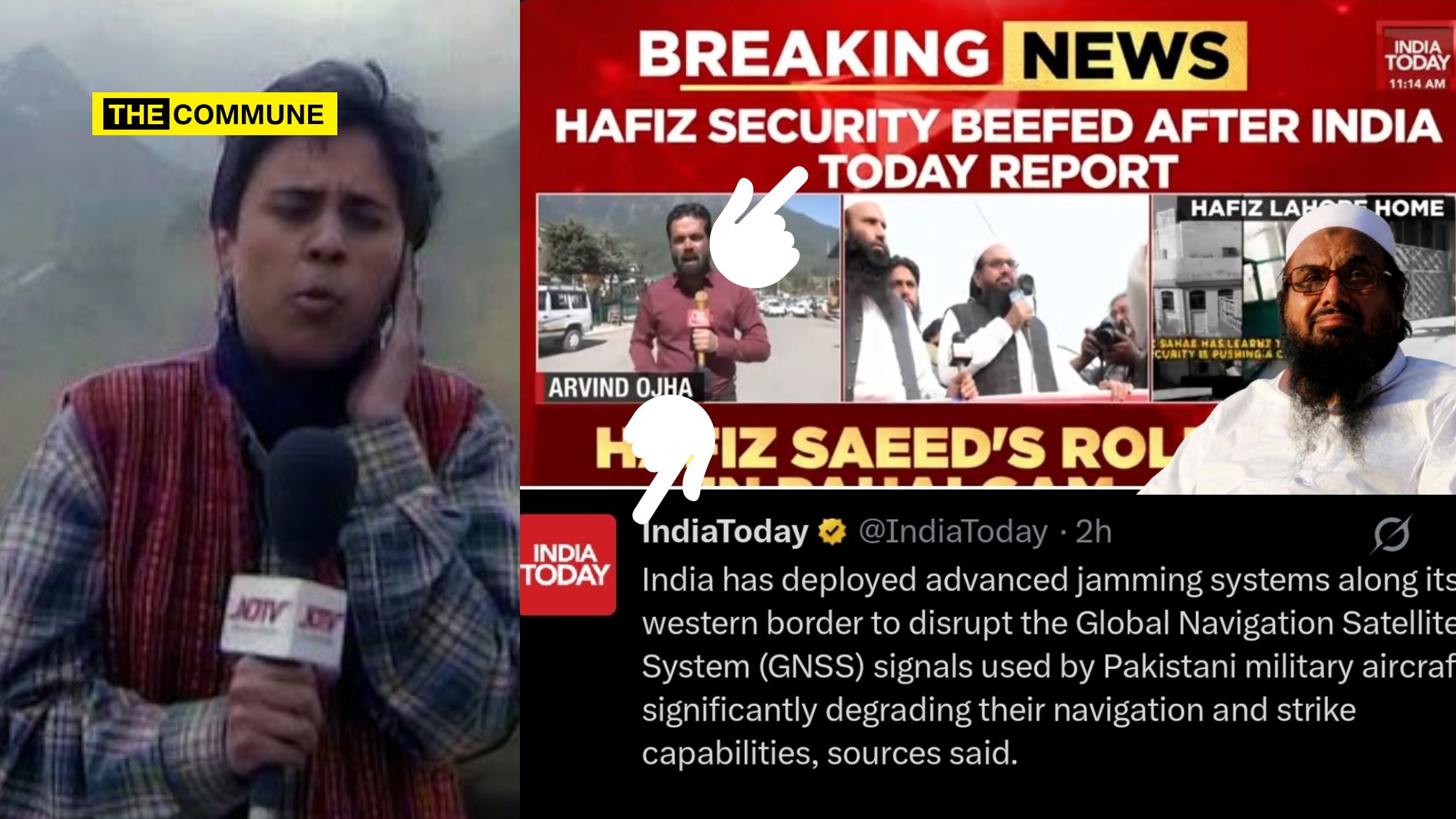
There are moments in journalism when the line between reporting and recklessness is not just crossed — it’s obliterated.
In 1999, during the Kargil War, ‘journalist’ Barkha Dutt’s live coverage from the war zone shocked everyone, particularly India’s military leadership. Her reporting from sensitive locations — even mentioning “56 Brigade HQ” on-air — raised alarm bells across the armed forces. Then Army Chief General VP Malik later wrote in his memoir that such coverage had revealed classified information and compromised operational secrecy. Officers like Lt Gen Mohinder Puri and Brigadier Umesh Singh Bawa echoed similar concerns in their own accounts. For many in the military, Dutt’s sensationalist war reporting wasn’t just unethical — it was dangerously irresponsible.
In 2008, during the 26/11 Mumbai terror attacks, Dutt’s name resurfaced in another controversy. This time, she broadcast details such as the floor on which hostages were located — information that could have been used in real-time by handlers monitoring Indian TV. Though she later admitted to journalistic lapses, the damage had been done. Even the Supreme Court criticized the media’s coverage of 26/11 for compromising operational safety.
Fast forward to 2025 — and it appears India Today is following the same disastrous playbook.
In a recent “exclusive,” India Today boasted that it had discovered the current location of wanted terrorist Hafiz Saeed in Lahore, citing unnamed “sources.” The story didn’t stop there. The channel followed up by reporting that Saeed’s security had been “beefed up” after their own broadcast — as though jeopardizing an intelligence operation was a badge of honor. The irony was inescapable: in its rush to break a story, India Today may have broken the element of surprise for Indian security agencies possibly planning to target Saeed.
But the recklessness didn’t end there.
#BREAKING | Day after India Today traced LeT chief's hideout, Hafiz Saeed's security beefed #ITVideo #PahalgamTerrorAttack #Pakistan #Lahore #HafizSaeed | @arvindojha pic.twitter.com/j4SrZBAVrX
— IndiaToday (@IndiaToday) May 1, 2025
In another headline-grabbing report, India Today claimed — again citing “sources” — that India had deployed GPS jamming systems along the Pakistan border. The supposed goal was to disrupt Global Navigation Satellite System (GNSS) signals used by Pakistani military aircraft. If true, this is not just another defense scoop — it’s a serious operational detail that should never have reached the public domain. Revealing it plays directly into the hands of the enemy by exposing tactical capabilities and limitations.
India has deployed advanced jamming systems along its western border to disrupt the Global Navigation Satellite System (GNSS) signals used by Pakistani military aircraft, significantly degrading their navigation and strike capabilities, sources said.
The move comes after India… pic.twitter.com/1liDzt5bN7
— IndiaToday (@IndiaToday) May 1, 2025
This kind of “scoop journalism” doesn’t serve national interest. It endangers it.
One is left wondering: has nothing been learned since the Kargil War? Are TRPs and clickbait headlines now more important than strategic discretion and national security? India Today’s willingness to jeopardize sensitive operations for a moment in the spotlight is eerily reminiscent of NDTV’s worst moment. We may well be witnessing the birth of a new NDTV — one that’s even bolder, brasher, and more reckless.
If India’s security agencies were indeed closing in on high-value targets like Hafiz Saeed, that operation might now be in jeopardy — not because of poor planning, but because a news outlet couldn’t keep its mouth shut. Worse, celebrating the fact that Saeed’s security increased because of their own reporting shows a disturbing lack of self-awareness.
Before India’s armed forces can eliminate those responsible for terrorism, perhaps they need to first plug the leaks — and hold media outlets accountable for sabotaging operations under the guise of journalism.
If Barkha Dutt’s Kargil blunder was the wake-up call, India Today’s 2025 repeat might be the final alarm. The nation cannot afford to hit snooze again.
(With inputs from News Bharati)
Subscribe to our channels on Telegram, WhatsApp, and Instagram and get the best stories of the day delivered to you personally.