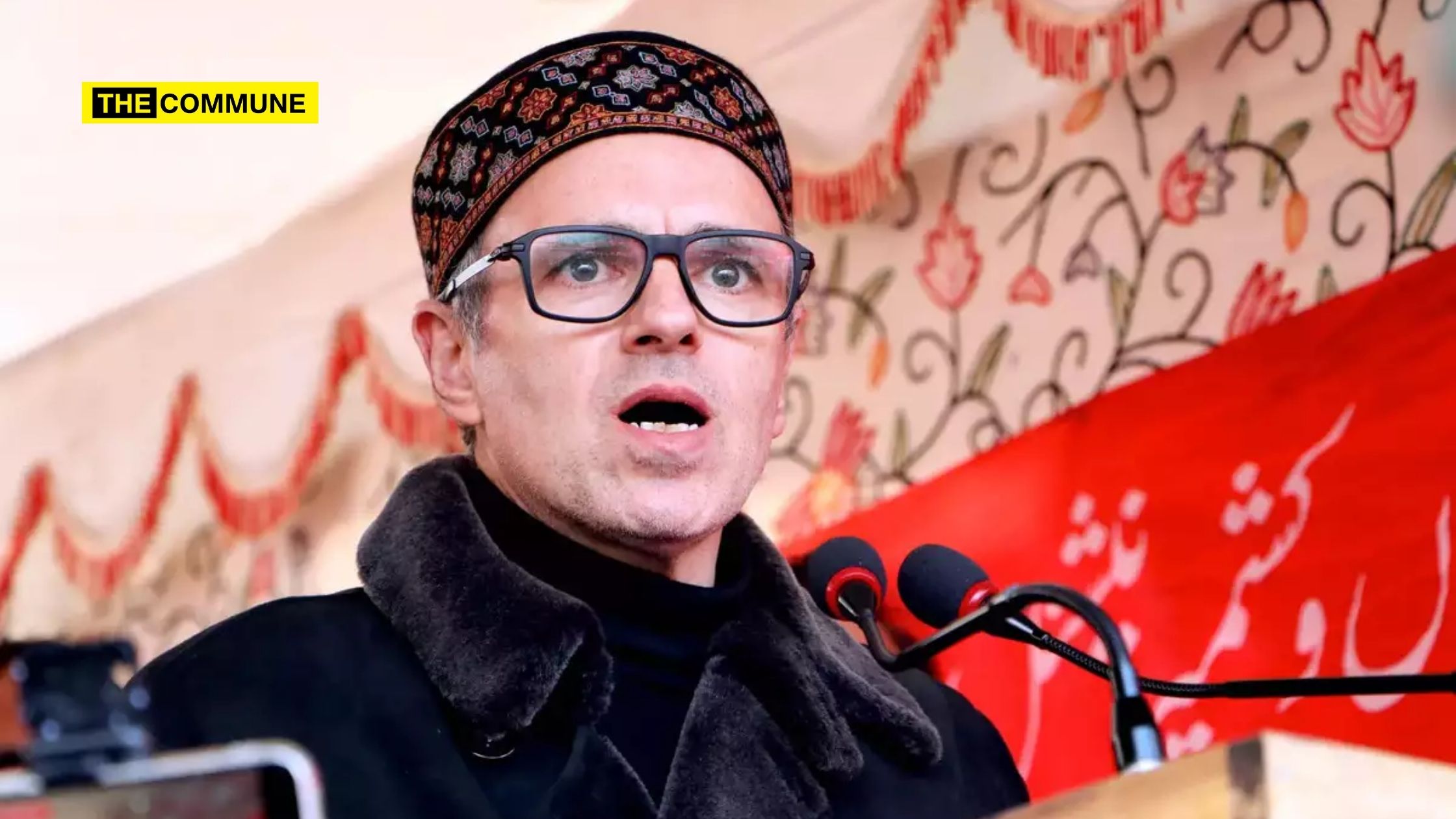
In the aftermath of the tragic Pahalgam terror attack that claimed 26 innocent lives, J&K Chief Minister Omar Abdullah delivered what many have called a “powerful” speech in the Assembly. However, to understand the real message behind Abdullah’s words requires careful parsing of his rhetoric and placing it within the context of his established communication patterns. This analysis attempts to decode what was truly being conveyed beneath the emotional appeals and apparent restraint.
The Artful Construction Of Victimhood
Abdullah begins by establishing a shared trauma narrative: “Neither the Parliament nor any other assembly of this country understands the pain of those 26 people of Pahalgam as much as this assembly of Jammu and Kashmir.” Reading between the lines, this statement does more than express solidarity—it creates separation between J&K and the rest of India, positioning the region’s political class as unique authorities on terrorism.
By meticulously listing assembly members who have lost family members to terrorism, Abdullah subtly shifts the narrative from one of governance accountability to one of universal victimhood. This framing cleverly transforms political leaders from potential subjects of scrutiny into fellow sufferers, deserving of sympathy rather than questioning.
The Disclaimer That Speaks Volumes
The most revealing sentence in Abdullah’s entire speech may be this seemingly innocent disclaimer: “I did not have words to say what to apologize to their families, knowing that the security of Jammu and Kashmir is not the responsibility of the government elected by the people of Jammu and Kashmir.”
Decode this statement and its true message emerges: while appearing to take moral responsibility, Abdullah is actually pointing a finger at the central government. Without naming names, he has effectively shifted the blame to New Delhi. This perfectly calibrated statement allows him to appear humble while simultaneously absolving his administration of responsibility—a masterful political maneuver hidden within an apparent admission of helplessness.
The Weaponization Of Public Sentiment
Abdullah’s focus on spontaneous public condemnation seems innocent enough: “From Kathua to Kupwara, there is hardly any city or village where people did not come out and condemn this attack.” Yet when decoded, this segment serves a sophisticated political purpose—it reframes Kashmir’s public as fundamentally anti-terrorism, while subtly suggesting that any security measures imposed by outside forces are unnecessary impositions on a population that already rejects violence.
His claim that “We made a vehicle ourselves, rode on it and took out a rally” reveals how quickly genuine public grief transforms into political capital. The message is clear: the Abdullah administration is not separate from the people but part of their organic response—a clever repositioning that blurs the distinction between government and governed, between those responsible for security and those demanding it.
The Non-Demand That Is Actually A Demand
Perhaps the most sophisticated rhetorical sleight of hand comes when Abdullah declares: “Shame on me if I go to Markaz today saying, 26 people have died, now give me statehood.”
When decoded, this ostentatious refusal to politicize tragedy accomplishes exactly what it claims to avoid. By mentioning statehood at all—even to declare he won’t demand it—Abdullah ensures the issue remains in the conversation. The message to his constituents is clear: I haven’t forgotten about statehood; I’m just being strategic about when to press for it. Meanwhile, to the broader Indian audience, he presents himself as refreshingly principled.
This single statement accomplishes four political objectives simultaneously:
- It portrays Abdullah as morally superior to opportunistic politicians
- It signals to his base that statehood remains a priority
- It implicitly criticizes the central government’s handling of J&K’s status
- It establishes moral high ground for more aggressive statehood demands in the future
The Unnamed Culprit
Reading between the lines reveals the most significant aspect of Abdullah’s speech: what remains unsaid. Neither Abdullah nor the Assembly resolution names any terrorist group or external state actor responsible for the attack. This conspicuous silence speaks volumes.
Instead, Abdullah notes this was the “biggest attack” in 21 years. The time reference is not accidental—it takes listeners back to a period before the current central government came to power. Without explicitly stating it, Abdullah has planted the suggestion that current central government policies have led to deteriorated security conditions.
Throughout the speech, Abdullah refers to nebulous forces behind the attack: “They say that they did it for our good” and “whoever you did this for, you did not do it for me.” This vague attribution avoids naming specific terrorist organizations or addressing their ideologies, motivations, or support networks.
This ambiguity allows various interpretations depending on the audience. Some might interpret it as referring to Pakistan-backed terrorists, while others might read it as criticizing heavy-handed security policies. This calculated ambiguity enables Abdullah to appear tough on terrorism while avoiding alienating any constituency.
The Master Of Dual Messaging
To fully decode Abdullah’s Pahalgam speech requires understanding his established pattern of delivering different messages to different audiences. His most famous precedent came during the Amarnath agitation in Parliament in 2008, where he spoke in both English and Urdu.
In English—aimed at mainstream India’s liberal intelligentsia—he delivered the reassuring message: “I am an Indian and I am a Muslim and I see no contradiction between the two.” This statement earned widespread acclaim across India.
However, in Urdu—targeted at his Kashmiri constituents but largely untranslated for national audiences—he declared: “Woh hamari zameen ka mudda tha, apne zameen ke liye lade, aur marte dum tak apne zameen ke liye ladenge, pilgrim camp nahin banne denge” (It is our land, we will fight till our last breath, we will not allow pilgrim camps to be built). This directly opposed the central government’s plan to improve accommodations for Hindu pilgrims.
Omar is expert at making such speeches. His most famous speech made in parliament during Amarnath agitation- he spoke in English and Urdu- in English he said everything that liberal intelligentsia in the country wanted to hear – ‘I am an Indian and I am a Muslim and I see no…
— Sunanda Vashisht (@sunandavashisht) April 28, 2025
What mainstream commentators praised as a speech about national unity was simultaneously a speech about territorial resistance for his local audience. This sophisticated dual-messaging strategy—what one observer called “English for the useful idiots, Urdu for his people in Kashmir”—reveals Abdullah’s political sophistication.
The Pahalgam speech follows this established pattern. What appears as an apolitical expression of grief to casual listeners contains carefully encoded political messages for those who know how to decode them.
Reading between the lines reveals Abdullah’s true message: the central government has failed in its security responsibilities, J&K deserves statehood, and the Abdullah administration shares the people’s pain rather than responsibility for their protection. All this is communicated without a single explicit political demand or accusation.
The breathless commentary praising the speech’s “powerful” and “apolitical” nature demonstrates precisely how effective this strategy is. What appears as emotional authenticity to casual observers contains layers of political positioning visible only to those who parse each sentence carefully.
Subscribe to our channels on Telegram, WhatsApp, and Instagram and get the best stories of the day delivered to you personally.