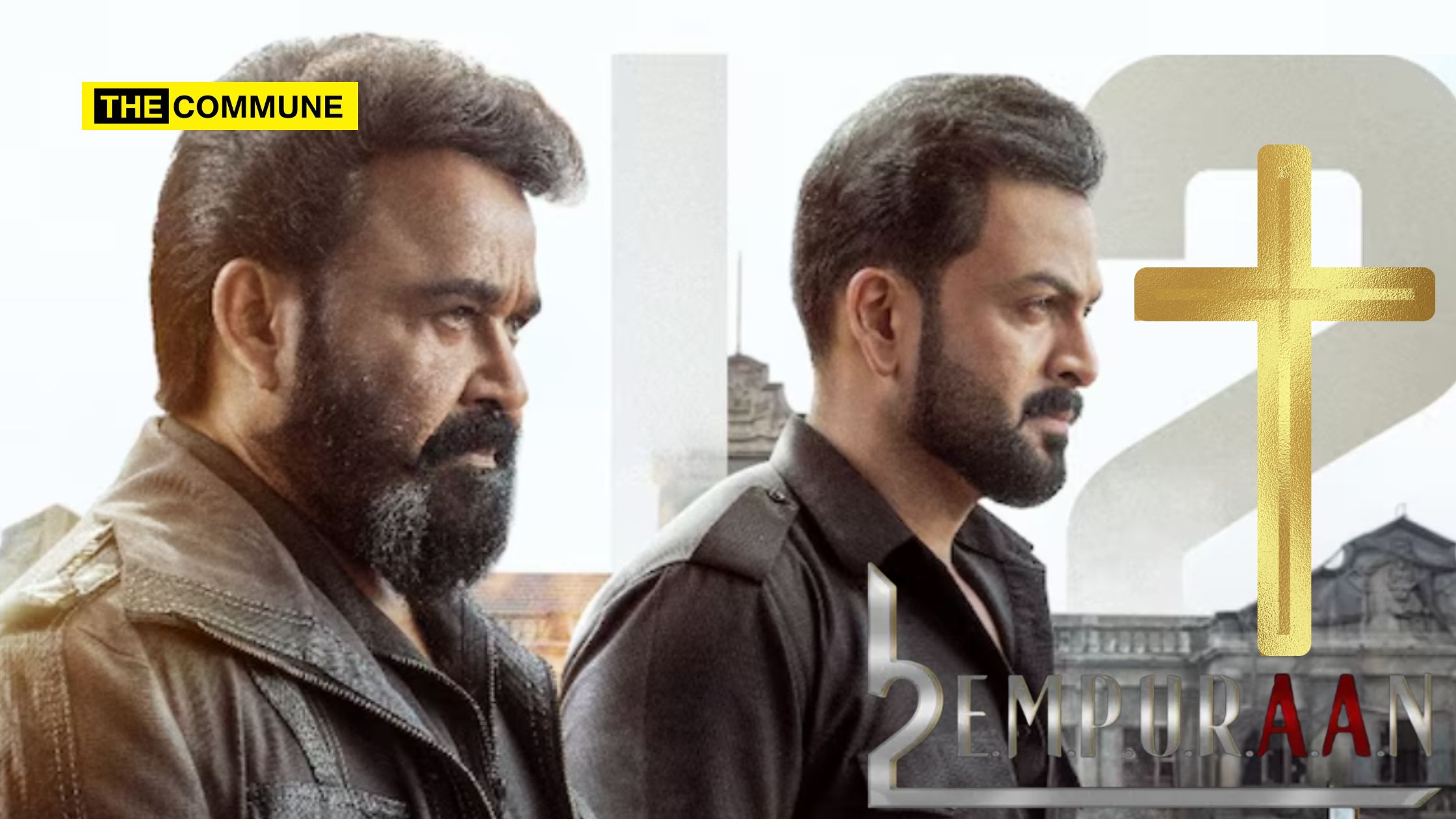
The Christian community in Kerala has raised serious concerns about the movie Empuraan, claiming that it promotes disturbing propaganda. Writer Murali Gopi and actor Prithviraj are facing criticism for their roles in what many see as a misrepresentation of Christian values and beliefs deliberately undermining their faith.
The Underlined Controversy
A particular line from the film has become the center of the controversy, “When the Son of God sins, God sends a black angel.” In Christian doctrine, the “Son of God” refers to Jesus Christ, who bore the sins of humanity to redeem the world. Critics are raising concerns about what “sin” Christ is said to commit in Empuraan, and questioning the identity of the “black angel” that God allegedly sends. They are also asking where this concept originates in Christian scripture, as it seems to diverge from traditional teachings.
Even if this line is simply a fictional plot device, its implications are troubling. The film seems to not only cast shadows on Christ but also diminish the power of God Himself. By introducing characters like Lucifer and other dark entities, the movie risks distorting the core tenets of Christianity. One key moment in the film involves Lucifer claiming that God resurrected him due to the Son of God’s sin. This runs counter to Christian belief, which holds that Jesus’ resurrection was a triumph over death, not the resurrection of Satan. If God were to raise Lucifer, it would undermine the entire foundation of Christian faith, challenging the omnipotence of God.
Experimenting on Religious Tolerance
What if such audacious claims had been made about Islam? A film that fabricated similar concepts about the Quran, Allah, or the Prophet would likely cause an uproar. Protests would undoubtedly follow. Yet, when it comes to Christianity, the silence from the community is conspicuous and unsettling. Why does this double standard exist? Is it apathy or a misplaced sense of tolerance that allows such portrayals of Christianity to go unchallenged?
A Troubling Location
Another significant point of concern in Empuraan is its depiction of Qaragosh, the only Christian town in Iraq, which was ravaged by ISIS. The town witnessed horrific massacres, where innocent Christians were murdered in the name of jihad, and churches were destroyed. Yet, in a particularly troubling sequence, Empuraan stages a pivotal scene inside a ruined church in Qaragosh. Lucifer uses the church as a backdrop for a meeting to strike a deal with an African drug lord. Why choose this location—one that has become a symbol of Christian suffering under Islamic extremism?
Inside the church, a character named Sayyid Masood, whose name has Islamic connotations, helps Lucifer bring about “justice.” At the climax of the scene, a crucifix from the shattered church falls, breaking into pieces, with the letter “L” remaining intact—a clear reference to Lucifer. The camera pans out to show the ruined church, leaving viewers with a chilling image and an ominous message.
Is this all just artistic freedom, or is there a more deliberate agenda behind these choices? When filmmakers have countless locations and storylines at their disposal, why choose one so charged with historical and religious significance? This specific sequence raises the question: if other religions were targeted in a similar manner, would it be allowed to pass without challenge?
The fact that Christianity seems to be portrayed as an easy target is troubling, especially when its followers are often passive in their response.
Mohanlal’s Response
Recently, superstar Mohanlal addressed concerns over the political and social themes in Empuraan in a Facebook post dated 30 March. He acknowledged that some elements of the film had caused distress among his fans and assured them that the team had decided to remove those references.
“As an artist, it is my duty to ensure that none of my films promote hatred towards any political movement, ideology, or religious group,” Mohanlal wrote. He further expressed his regret for any distress caused and promised that the problematic content would be removed from the film.
In conclusion, the controversy surrounding Empuraan highlights the delicate balance between artistic freedom and respect for religious beliefs. While filmmakers have the right to explore various themes, they must also be mindful of the potential harm caused when sacred beliefs are misrepresented or distorted for the sake of entertainment.
(With Inputs From Organiser)
Subscribe to our channels on Telegram, WhatsApp, and Instagram and get the best stories of the day delivered to you personally.