Just as the myth of Jains have been impaled at Madurai, a similar pattern of slander is being spread about Thirumangai Azhwar. A certain group persistently claims that he looted a Buddhist monastery in Nagapattinam, melted down a Buddha statue, and had it restored in Srirangam. They portray this as a wrongdoing. However, these same individuals dismiss all Puranas as myths yet conveniently pick and choose from them to fit their agenda. If questioned whether they accept everything written in the Puranas, they have no answer. Let us, then, examine the historical and scriptural basis of this claim.
Was There Ever A Buddhist Monastery In Ancient Nagapattinam?
There is no historical evidence of a Buddhist monastery in Nagapattinam during ancient times. The renowned Chinese traveler Xuanzang (Hiuen Tsang), who visited Tamil Nadu during the reign of Narasimhavarman I (Pallava), did mention Nagapattinam, but he made no reference to any Buddhist monastery there—despite meticulously documenting Buddhist sites elsewhere in India.
Later Chinese records mention that the Pallava king Rajasimha constructed a Buddhist monastery in Tamil Nadu as a gesture of goodwill towards the Chinese emperors. These records also state that a Chinese inscription, bearing the words Ko-Ho-Se, was placed in front of the monastery. However, Pallava inscriptions do not confirm that Rajasimha built such a structure, nor do they specify its location. It could have been built anywhere, including Mamallapuram, a major Pallava port.
Thirumangai Azhwar’s Era And The Lack Of Evidence
Thirumangai Azhwar lived during the reign of Nandivarman II (Pallava). His original name was Neelan, and he ruled the region of Ali. He fought several wars in support of the Cholas. However, neither his own verses nor any Chola or Pallava inscriptions suggest the existence of a Buddhist monastery in Nagapattinam, let alone any mention of him looting one. Despite the lack of evidence, so-called intellectuals continue to repeat this baseless claim.
What Does Guru Paramparai Say?
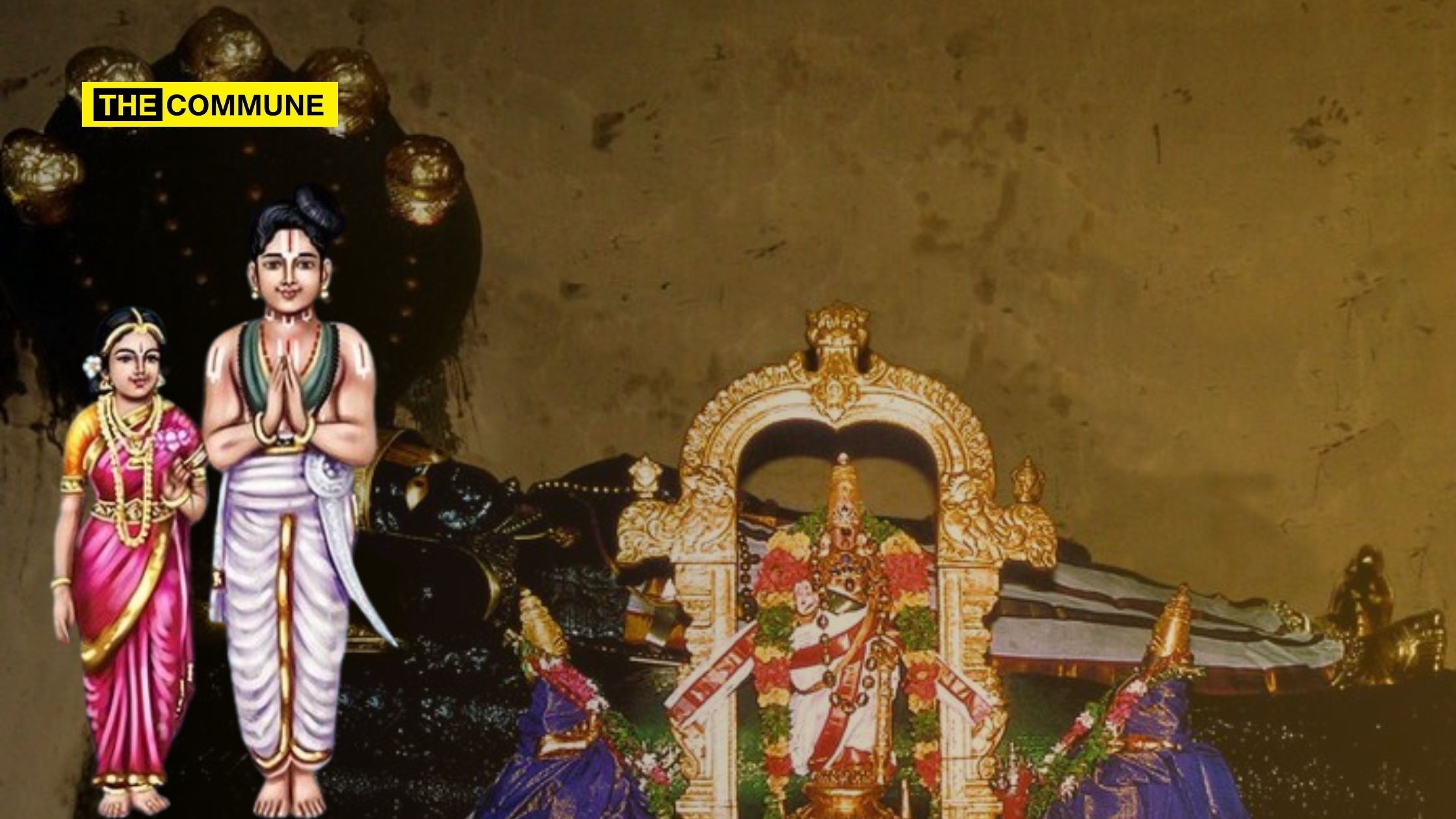
According to Guru Paramparai tradition, Thirumangai Azhwar married a deeply pious woman named Kumudhavalli, whose influence transformed him into a devout follower of Vishnu. As part of her conditions for marriage, he pledged to feed 1,008 Vaishnavites daily. He spent his wealth fulfilling this vow and undertaking temple renovations.
When his resources were exhausted, he resorted to robbery—but not for personal gain. The money he acquired was used solely for temple renovations, and the so-called “Nagapattinam robbery” was one such incident. Eventually, Lord Vishnu Himself, disguised as a couple, confronted him. When Thirumangai Azhwar attempted to rob them, the divine encounter led him to receive the sacred Ashtakshara Mantra, which transformed his life.

Thirumangai Azhwar later reflected on his past misdeeds in his own verses:
“I killed many without purpose, I spoke no sweet words,
Yet, O Lord of Venkatam, conquer me as I surrender to You.”
These words clearly show his repentance and ultimate surrender to Lord Vishnu. Even if one were to argue that he looted the Nagapattinam Vihara, the timeline is critical—it would have been before his spiritual transformation. Thus, portraying him as a looter with malicious intent is both misleading and absurd.
The Truth About Choodamani Vihara
If a Buddhist monastery ever existed in Nagapattinam, it would have been Choodamani Vihara, which was built centuries later during the reign of Rajaraja Chola. Yet, those who spread misinformation about Thirumangai Azhwar conveniently ignore the real history of this monastery—especially how it was demolished in later years. In fact, it was Jesuit missionaries who had the Choodamani Vihara demolished by the East India Company! That is a topic that warrants a separate discussion.
No matter how one examines this issue—historically, scripturally, or logically—the accusations against Thirumangai Azhwar are unfounded. His life’s journey was one of transformation, devotion, and service, not plunder. The attempt to tarnish his legacy with baseless claims is not only inaccurate but also a deliberate distortion of history.
TS Krishnan is a Tamil scholar and author.
Subscribe to our channels on Telegram, WhatsApp, and Instagram and get the best stories of the day delivered to you personally.