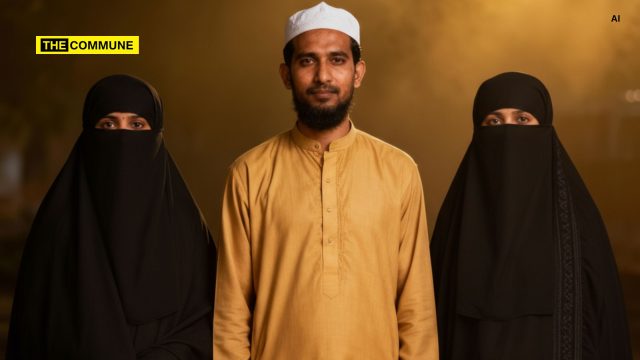
Between 2015 and 2025, several Indian courts delivered landmark judgments questioning the misuse of polygamy in Islam and affirming the rights of Muslim women against unjust practices.
From the Supreme Court to multiple High Courts, judges ruled that polygamy cannot be exploited for selfish reasons, and that equality, consent, and financial responsibility are key conditions under both law and faith. These rulings, spread across a decade, mark an important evolution in India’s judicial approach toward gender justice in Muslim personal law.
#1 Kerala High Court: First Wife’s Consent Mandatory for Second Marriage – 30 October 2025
Justice P.B. Kunhihannan ruled that no Muslim man can register a second marriage without the opinion and consent of his first wife. The court clarified that though Muslim personal law allows multiple marriages under specific conditions, registration requires transparency and notice to the first wife. The petition to register a second marriage was dismissed, and the court affirmed that bypassing the first wife’s consent renders the second marriage legally invalid.
#2 Allahabad High Court: Polygamy Cannot Be Misused for Selfish Reasons – 15 May 2025
Justice Deshwal stated that Islam allows polygamy for welfare, not for self-gratification, and that equality between wives is a sacred condition. The judgment came while hearing the case of Furkan, who secretly remarried despite being unable to support his first wife. The court cited earlier rulings from 2020 to stress that polygamy’s misuse violates both Islamic and civil law, emphasizing that personal liberty cannot override women’s rights or fairness.
#3 Kerala High Court: Polygamy No Excuse to Avoid Maintenance – 22 September 2025
In the case filed by Jubairiya, the first wife, the court ruled that a financially incapable husband cannot evade maintenance obligations by remarrying. Justice Kunhihannan held that polygamy does not nullify a man’s duty under Section 125 CrPC to provide for his wife and children. The husband’s plea to reduce alimony after his second marriage was rejected, and the court reaffirmed the ₹10,000 monthly maintenance order.
#4 Madras High Court: Second Marriage Amounts to Cruelty to First Wife – 6 November 2024
Justice Swaminathan ruled that marrying a second wife without the consent or knowledge of the first wife causes mental cruelty. The court said such actions lead to social humiliation and emotional trauma, qualifying as grounds for divorce under family law. Referring to a similar 2018 case, the judge observed that polygamy practiced without empathy or equality violates the dignity of women and constitutes legal cruelty.
#5 Patna High Court: Valid Second Marriage Still Causes Distress to First Wife – 8 May 2024
The Patna High Court held that even a valid second marriage under Muslim law can inflict mental cruelty on the first wife. Justice Singh observed that a husband’s remarriage, though technically permissible, violates the spirit of equality and fairness central to Islam. The court stated that a woman perceives her husband’s second marriage as social and emotional betrayal, reaffirming that legality cannot override moral responsibility.
#6 Madras High Court: Unequal Treatment Makes Polygamy Cruelty – 22 December 2023
The bench ruled that failure to treat both wives equally constitutes cruelty, even if polygamy is permitted under personal law. In a petition filed by Anfone Banu, the court upheld her divorce, noting her husband’s neglect and emotional abuse after his second marriage. The judges stated that Islam demands fairness between spouses; otherwise, polygamy becomes unlawful and abusive.
#7 Allahabad High Court: Financially Weak Men Cannot Marry Again – 3 November 2022
Citing the Quran (Surah 4: Ayat 3), the court ruled that men lacking financial capacity to support their existing families have no right to remarry. The case involved Hamidunissa, whose husband remarried without providing for her or their children. The court held that economic and moral obligations must come before the privilege of multiple marriages.
#8 Karnataka High Court: No Relief for Husband Who Abandons First Wife – 13 September 2020
The Karnataka High Court denied relief to Rasheed Patel, who abandoned his first wife and remarried. The bench said that although personal law permits polygamy, abandonment and neglect make it unlawful in the eyes of statutory law. The court upheld the wife’s right to maintenance, stressing that religious permission cannot justify cruelty or desertion.
#9 Supreme Court: Polygamy Not a Fundamental Right – 10 February 2015
In a landmark decision, the Supreme Court ruled that the right to polygamy is not protected under Article 25 of the Constitution. The court upheld the dismissal of a government employee who remarried while his first wife was alive, stating that personal laws cannot override service conduct rules or public morality.
Subscribe to our channels on WhatsApp, Telegram, Instagram and YouTube to get the best stories of the day delivered to you personally.