On 15 December 2025, NDTV published an article quoting the mother of a Sydney terror attack accused, prompting renewed scrutiny of media narratives that foreground the personal lives, family reactions, or emotional backgrounds of terrorists.
In this report, we look at 15 documented instances between 2015 and 2025, across India and abroad, in which journalists or media organisations framed terrorists or accused attackers through a humanised or sympathetic lens.
These instances span major terror attacks and militant encounters, where coverage shifted attention from the act of violence and its victims to family statements, upbringing, personal traits, or emotional framing of the perpetrators.
Part 1 Bondi Beach Terror Attack
#1 NDTV Quotes Sydney Shooter’s Mother After Bondi Beach Attack – 15 December 2025
Following the 14 December 2025 terror attack at a Hanukkah event on Sydney’s Bondi Beach, NDTV published an article titled “‘He’s A Good Boy’: Sydney Shooter’s Mother In Denial Over His Terror Act.”
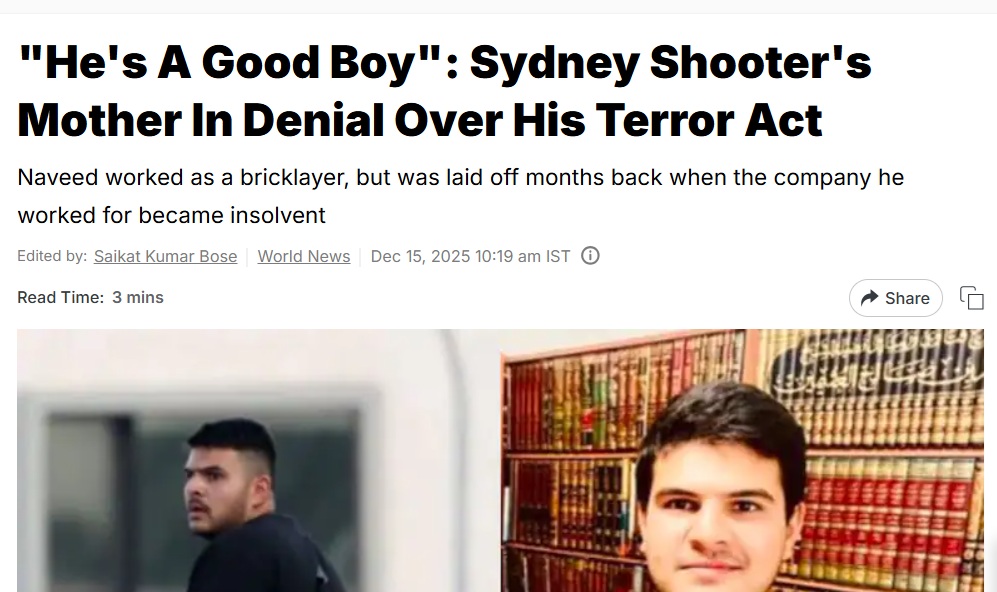
The attack, carried out by father-son duo Sajid Akram (50) and Naveed Akram (24), killed 15 people and injured 27 others. The NDTV report prominently quoted Naveed Akram’s mother saying, “Anyone would wish to have a son like my son… he’s a good boy.” The article focused on her denial of her son’s involvement, foregrounding parental emotion rather than the scale or victims of the terror attack.
#2 Moneycontrol Carries Mother’s Defence of Bondi Beach Shooter – 15 December 2025
Moneycontrol published an article titled “‘Anyone would wish to have a son like my son’: Bondi Beach shooter’s mother says he spoke to her hours before attack.”
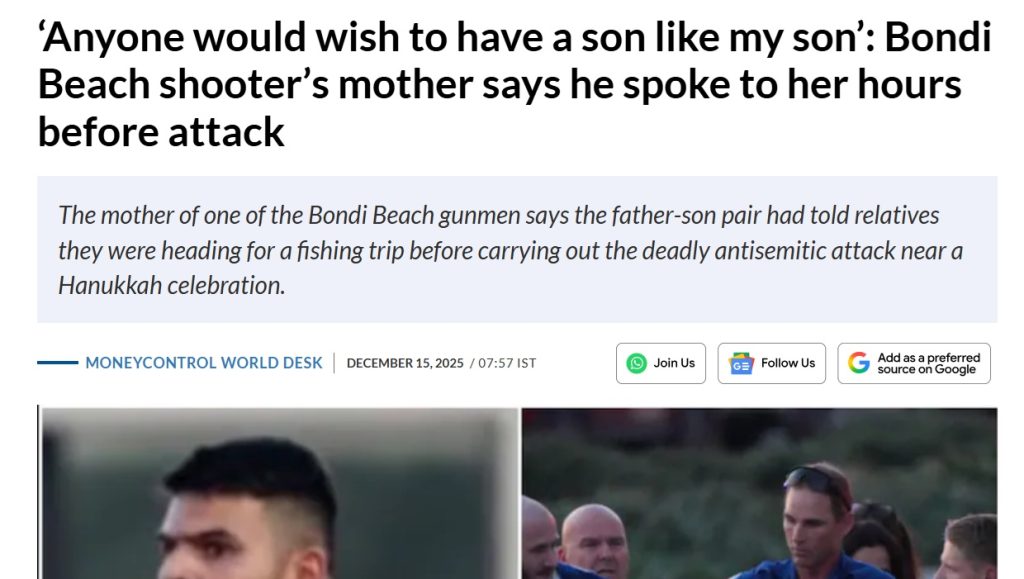
The report quoted Naveed Akram’s mother, Verena, stating that she did not believe her son was involved in extremism and claimed he did not possess a firearm. The article centred on her emotional statements and last conversation with her son, following the 14 December 2025 terror attack in Sydney that killed 15 people. The focus remained on family denial and personal background rather than investigative findings or victims.
#3 GBN News Highlights Shooter’s Mother Calling Him a ‘Good Boy’ – 15 December 2025
GBN News published an article titled “Mother of Bondi Beach gunman insists son is a ‘good boy’,” following the Sydney terror attack.
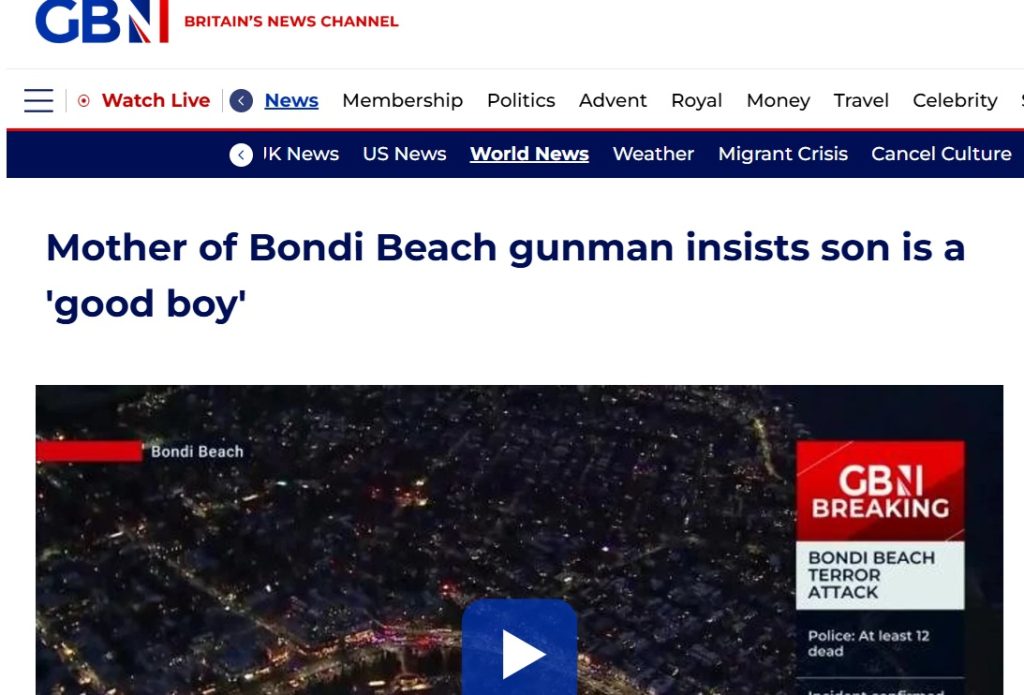
The report quoted Naveed Akram’s mother saying, “Anyone would wish to have a son like my son.” The article referenced the December 14, 2025 shooting at a Hanukkah event in which 15 people were killed. While acknowledging the attack, the article placed emphasis on the mother’s personal defence of her son, repeating her characterisation of him as non-violent and well-behaved.
#4 LBC News Reports Mother’s Detailed Defence of Sydney Shooter – 15 December 2025
LBC News published an article titled “Mother of Bondi Beach gunman says her son is ‘a good boy’.”
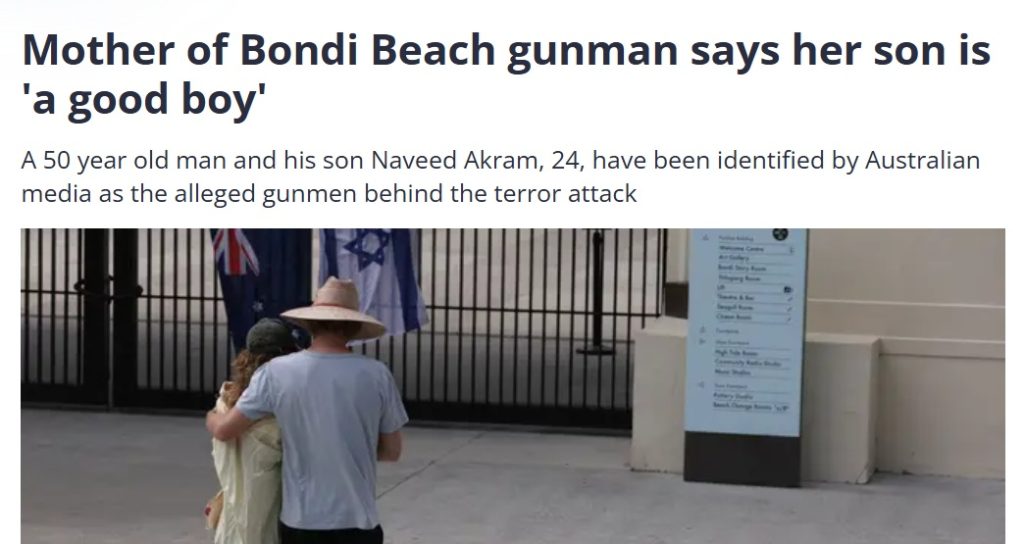
The report quoted extensive statements from Naveed Akram’s mother, claiming he did not own a gun, avoided socialising, and lived a disciplined life. The article referred to the December 14, 2025 attack in Sydney involving Sajid and Naveed Akram but largely focused on the mother’s account, including lifestyle details, rather than the terror act itself or its victims.
Part 2 – Other Terror Attacks
#5 The Wire Portrays Delhi Red Fort Metro Station Blast Accused as Compassionate Doctor – 12 November 2025
Following the Red Fort car blast in Delhi that killed more than a dozen people, The Wire published an article portraying prime accused Dr. Umar Un Nabi through a sympathetic lens. The report described his family’s poverty, his medical skills, and quoted people calling him a “role model.”
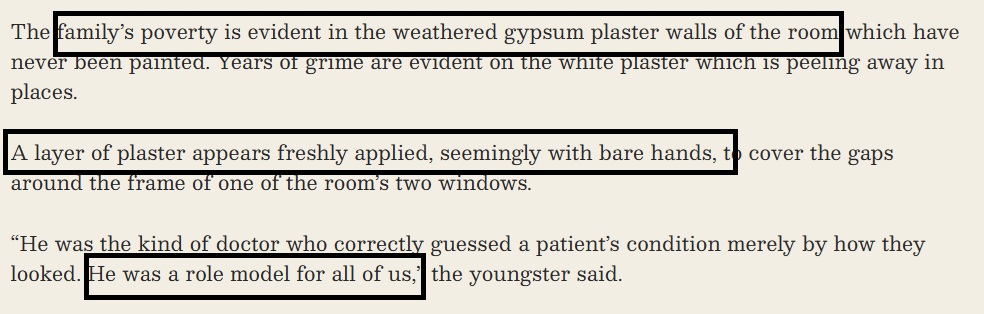
The narrative focused on his background and character traits, presenting him as soft-spoken and compassionate, while downplaying his alleged role in a deadly terror attack.
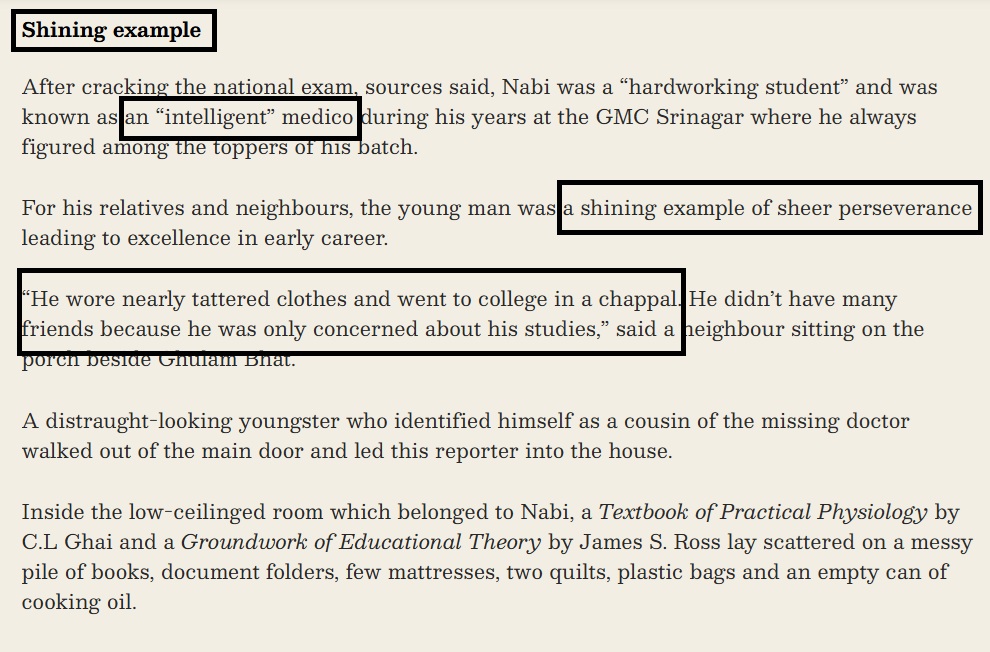
#6 Indian Express Notes Militant Riyaz Naikoo’s Past as Teacher – 6 May 2020
After Hizbul Mujahideen commander Riyaz Ahmad Naikoo was killed in an encounter in Jammu and Kashmir, The Indian Express published a report noting his former profession as a mathematics teacher. While reporting on the encounter, the article highlighted his background as an educator before joining militancy in 2012.
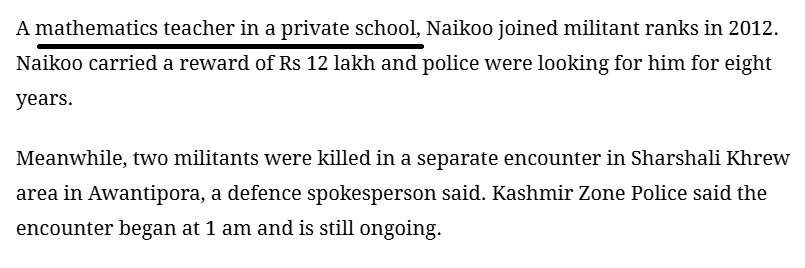
Naikoo was among the most wanted militants in Kashmir, yet the article foregrounded his civilian past alongside his militant identity.
#7 Washington Post Calls ISIS Chief an ‘Austere Religious Scholar’ – 27 October 2019
Following the killing of ISIS chief Abu Bakr al-Baghdadi by US forces, The Washington Post published an obituary-style article referring to him as an “austere religious scholar.” The report described his appearance, scholarly background, and leadership journey, noting his wire-frame glasses and religious education. WaPo first carried a headline that looked more like an obituary which read, “Islamic State’s terrorist-in-Chief” to “austere religious scholar at helm of Islamic State.”
In fact, the article in WaPo carried a description of Baghdadi that practically made him seem like a saint. The journalist who wrote this article had written that Baghdadi was an “austere religious scholar with wire-frame glasses” who previously had “no known aptitude for fighting and killing”. Warrick wrote that Baghdadi’s acquaintances remembered him as a “shy, nearsighted youth who liked soccer but preferred to spend his free time at the local mosque”.
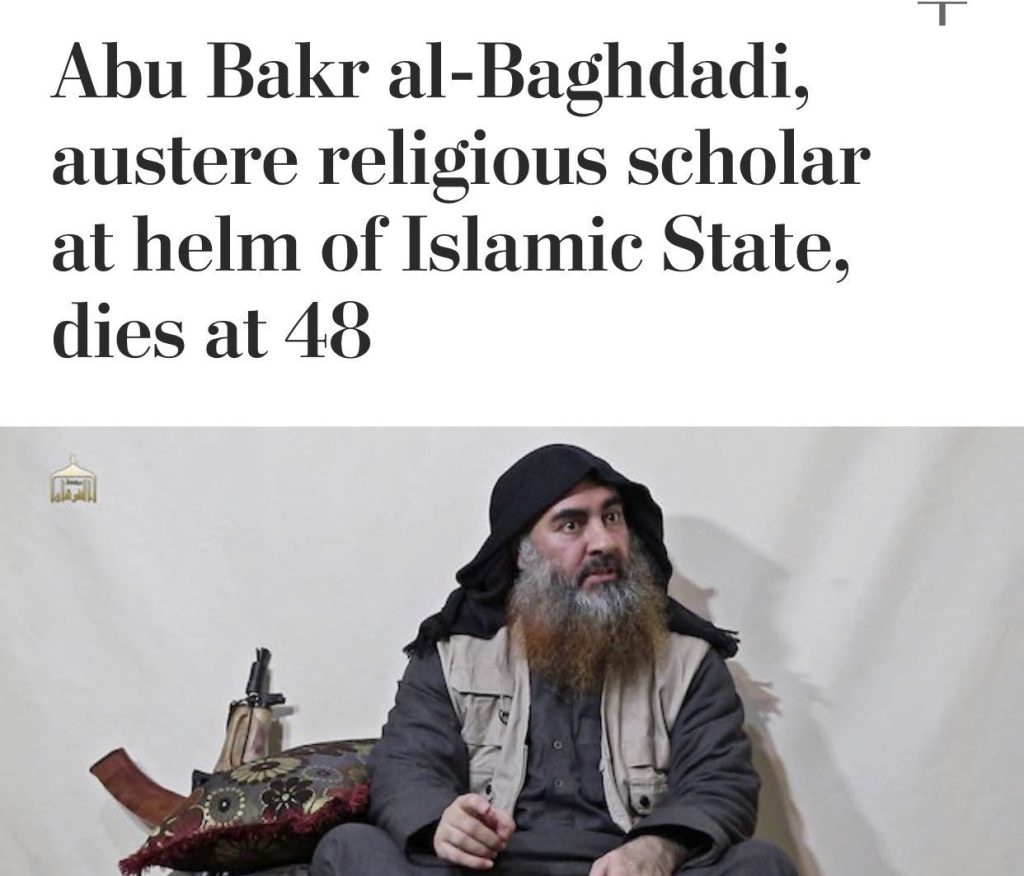
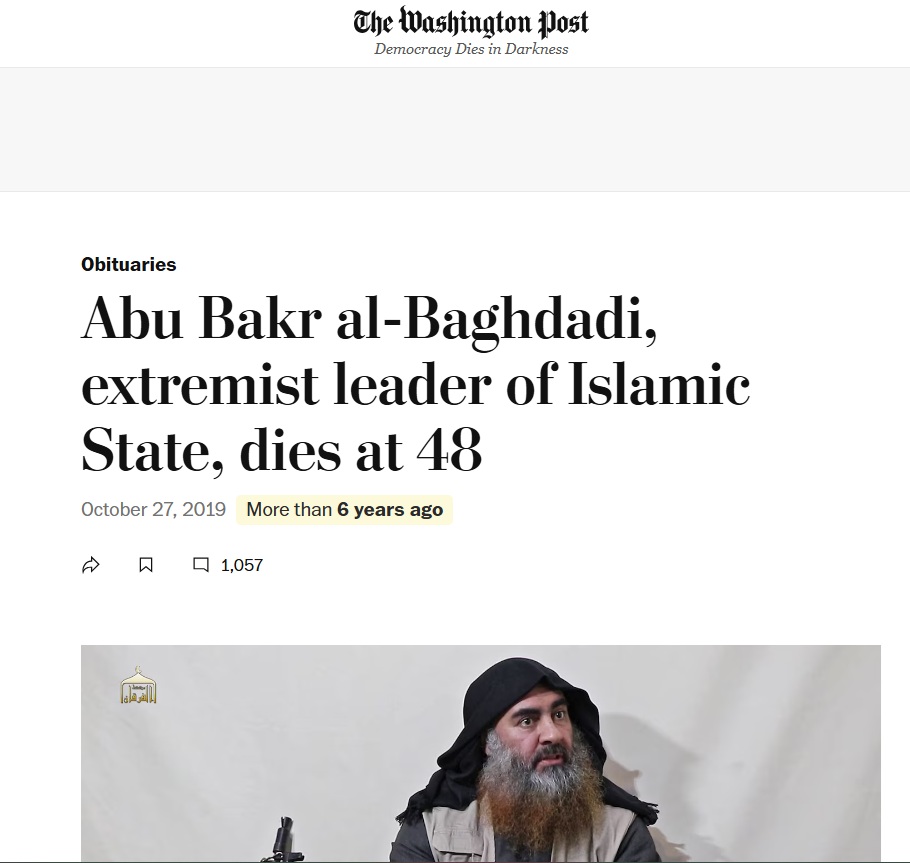
Later WaPo changed the headline to “Abu Bakr al-Baghdadi, extremist leader of Islamic State, dies at 48” after receiving flak.
Just because Al-Baghdadi was a Muslim, the Wapo and NYT have consistently carried out a headline so as to no come across as ‘offensive’ to the liberal cabal and Islamo-fascists.
#8 Hindustan Times Humanises Pulwama Link Sajad Ahmad Bhat – 19 June 2019
Hindustan Times published a report on Pulwama-linked JeM militant Sajad Ahmad Bhat describing him as a Quran teacher, sports enthusiast, and respected village youth.
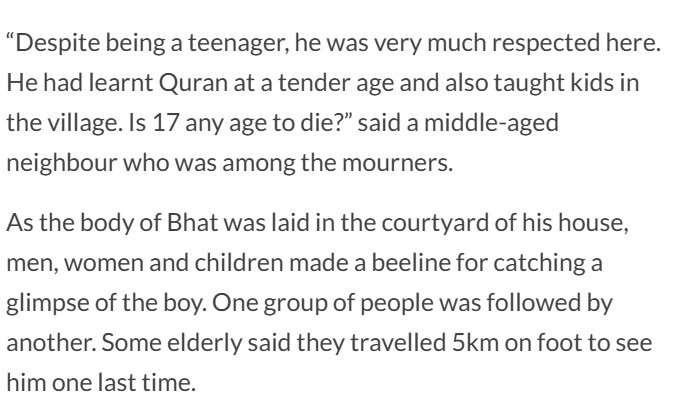
The article detailed funeral scenes and family claims while giving limited emphasis to his ownership of the explosive-laden vehicle used in the Pulwama attack that killed 40 CRPF personnel. The focus on his background and hardships drew criticism for humanising a key terror link.
#9 CNN News18 Describes Zakir Musa as Award-Winning Youth – 30 May 2019
CNN News18 published a feature on Zakir Musa and Burhan Wani emphasising their teenage habits, sports skills, fashion choices, and family struggles. Musa, the head of Al-Qaeda-linked Ansar Ghazwat-ul-Hind, was described as an “award-winning” and “fun-loving” youth.
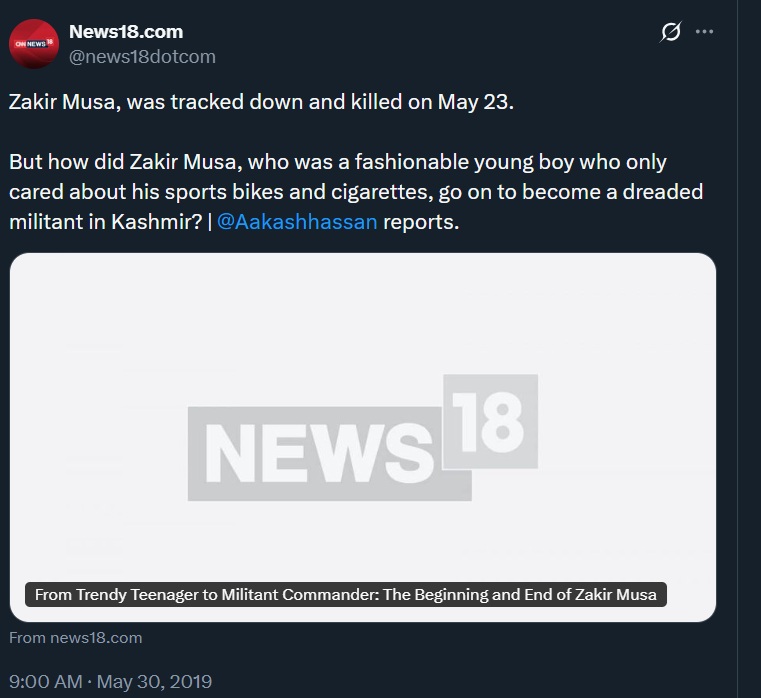
The article gave secondary attention to his leadership role in terrorism, focusing instead on personal narratives and emotional framing.
#10 India Today Frames Pulwama Bomber as ‘Misguided Teen’ – 16 February 2019
India Today reported on Pulwama suicide bomber Adil Ahmad Dar by highlighting his age, family grief, and alleged mistreatment by security forces.
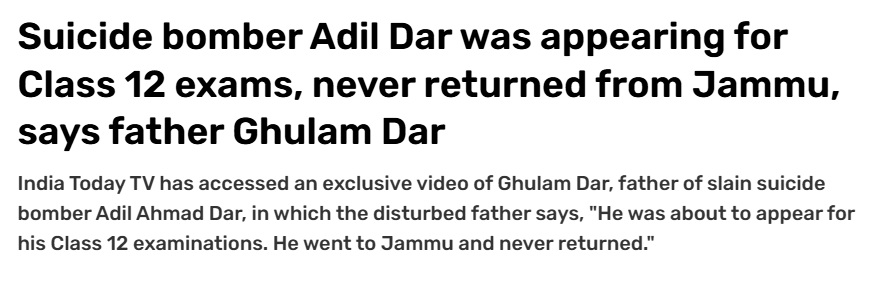
Another article from 15 February 2019 quoted his parents claiming harassment led to radicalisation.
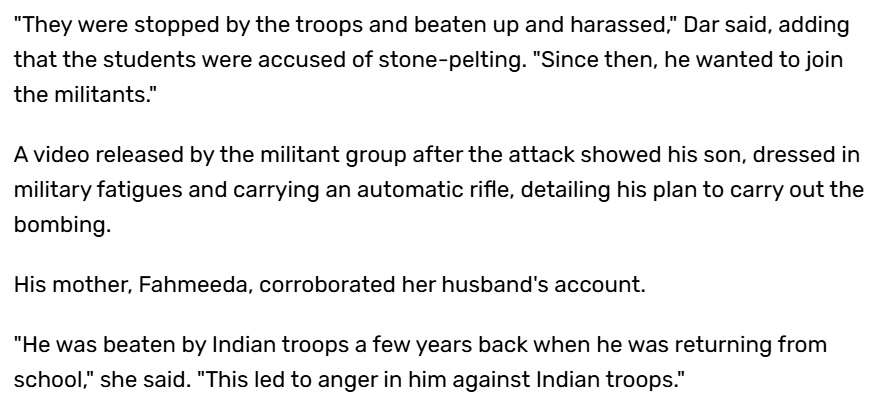
While the report acknowledged the bombing that killed 40 CRPF jawans, it framed Dar primarily as a misguided teenager rather than focusing on his role as a JeM terrorist.
#11 Hindustan Times Publishes Pulwama Bomber’s Family Statements – 16 February 2019
Hindustan Times published an article titled “‘Desperately wanted him to quit’: Pulwama suicide bomber Adil Dar’s mother.” The report featured statements from Dar’s parents describing humiliation and distress.
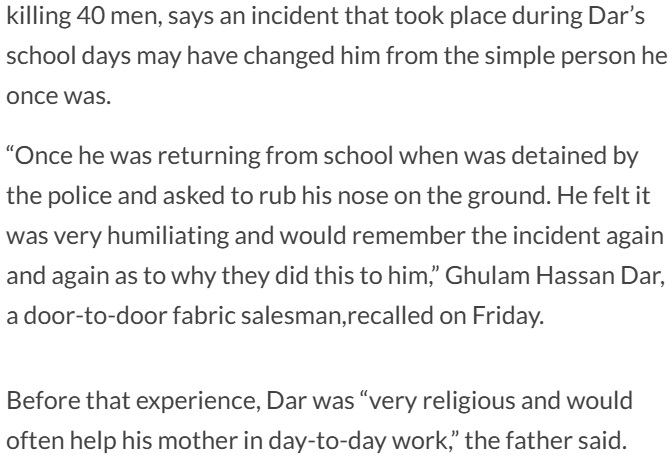
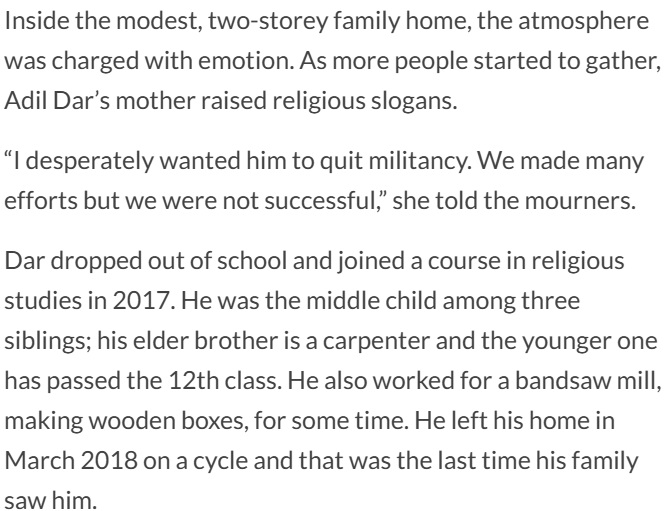
The article focused on family emotions following the 14 February 2019 attack, foregrounding parental grief while recounting the bomber’s background.
#12 HuffPost Describes Riyaz Naikoo as Artist and Math Teacher – 2 October 2018
HuffPost published a profile titled “How Riyaz Naikoo Went From Being A Math Teacher To Hizbul Mujahideen’s Chief.”
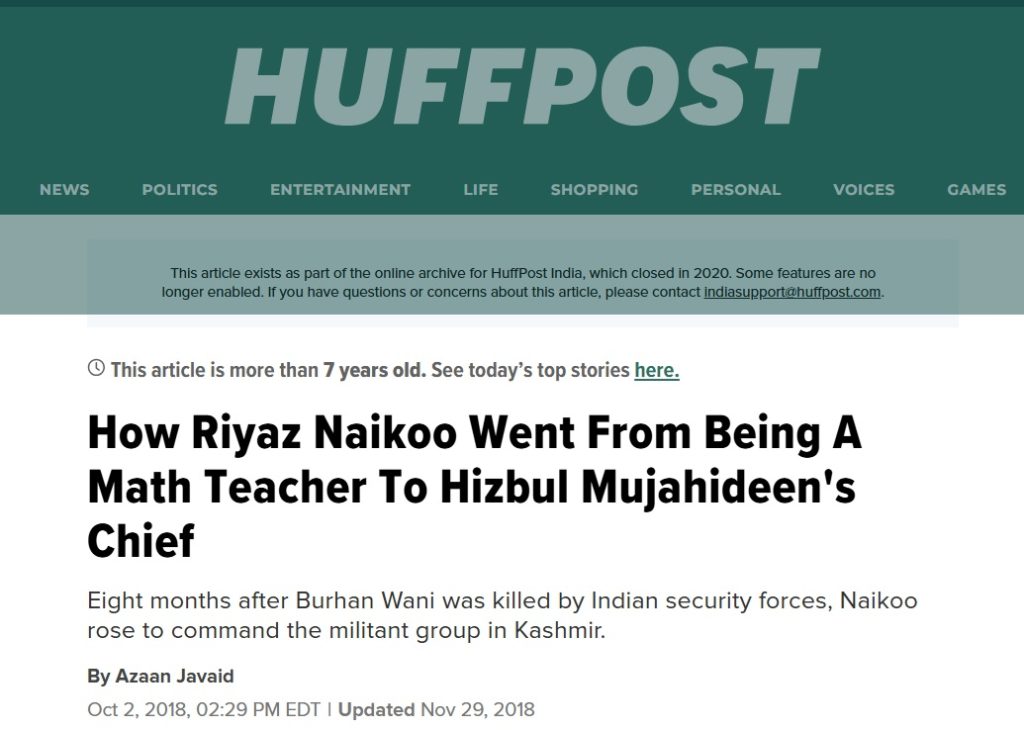
The article described Naikoo as a former mathematics teacher with an interest in painting roses, before detailing his rise within Hizbul Mujahideen.
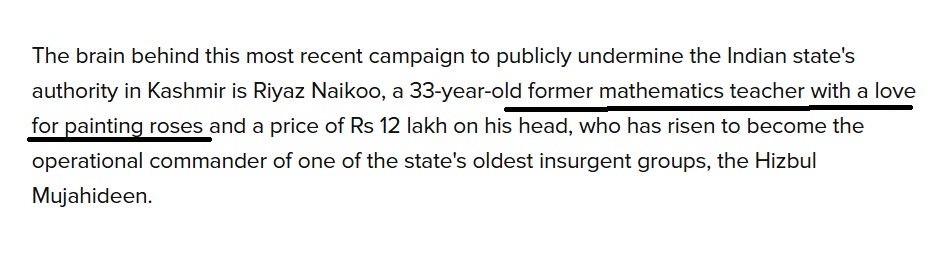
The narrative balanced his militant role with personal interests and background, lending a humanised portrayal.
#13 Rahul Kanwal Links Burhan Wani’s Death to Youth Frustration – 8 July 2016
After Hizbul Mujahideen terrorist Burhan Wani was killed, journalist Rahul Kanwal tweeted that lack of economic opportunity was creating a generation of angry and frustrated Kashmiri youth.
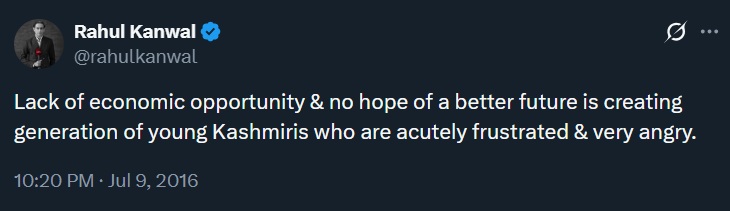
The comment contextualised Wani’s militancy within socio-economic grievances, shifting focus from his terror activities to broader structural explanations.
#14 Barkha Dutt Calls Burhan Wani ‘Son of School Headmaster’ – 8 July 2016
Journalist Barkha Dutt tweeted about Burhan Wani’s killing, describing him as the “son of a school headmaster” who used social media as a weapon of war.
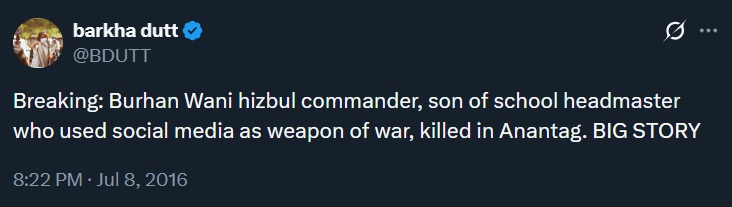
The tweet highlighted his family background alongside his militant role, blending personal identifiers with reporting on his death.
#15 Indian Express Focuses on Yakub Memon’s Final Hours – 30 July 2015
Following the execution of Yakub Memon, mastermind of the 1993 Mumbai serial blasts, The Indian Express published an article titled “And they hanged Yakub Memon.”
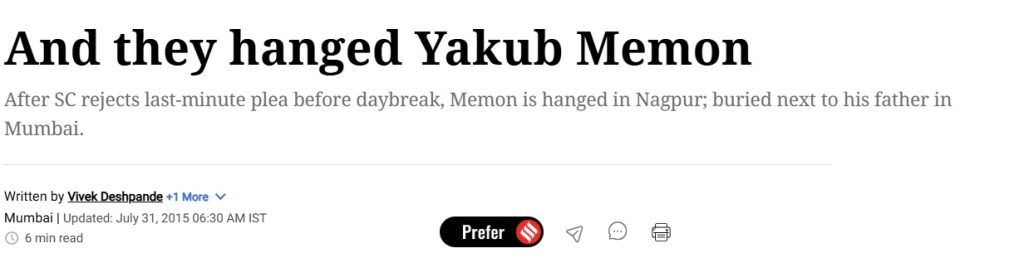
The report detailed his final hours, emotions, and hopes for clemency. While recounting the execution, the article focused extensively on his mental state and personal moments before death, rather than the victims of the blasts.
#16 NYT Calls Osama bin Laden a “Rich Young Millionaire” – August 2021
The New York Times described Osama Bin Laden as a “rich young millionaire” and focused on him being “a tall and handsome man“.
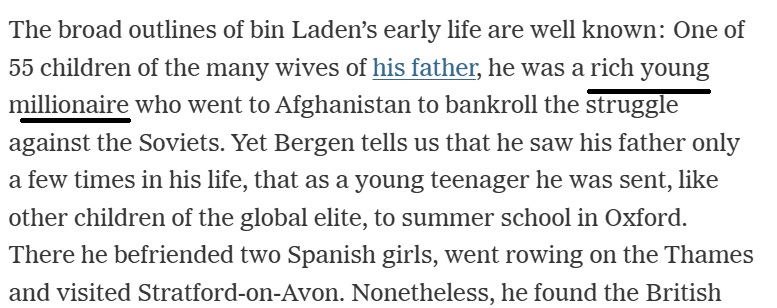
They even published an elaborate obituary humanizing a terrorist.
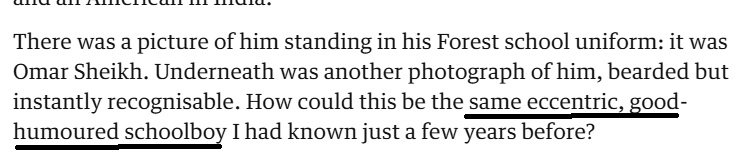
#17 The Guardian calls Omar Sheikh who Beheaded Daniel Pearl, “eccentric, good-humoured” – February 2005
The Guardian reported terrorist Omar Sheikh being an “eccentric, good-humoured schoolboy” of Forest School and a member of the British arm-wrestling squad.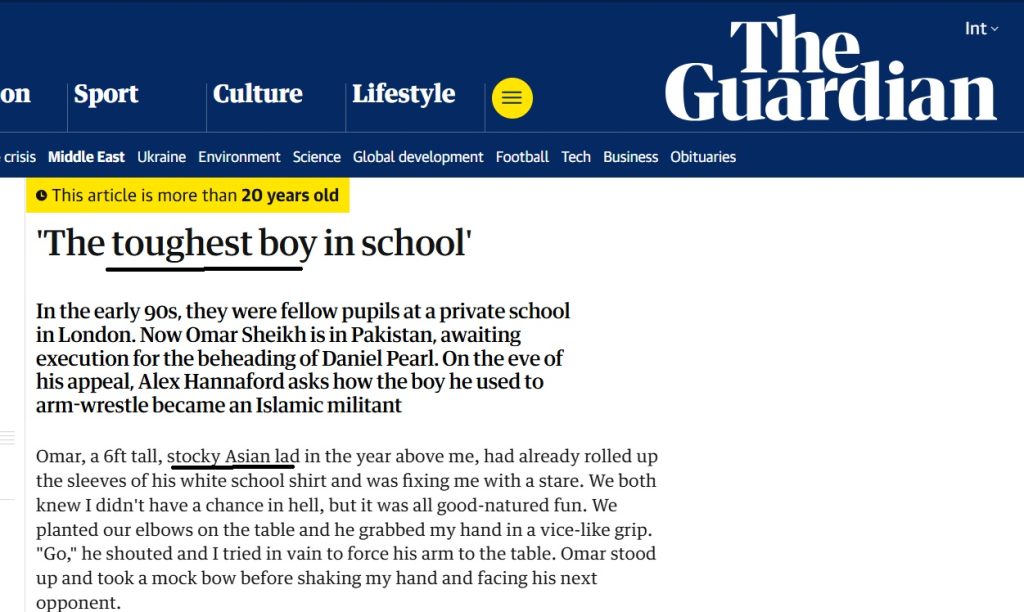
#18 BBC Portrays 26/11 Terrorist Ajmal Kasab As ‘Village Boy’ – November 2018
BBC portrayed 26/11 Mumbai attack terrorist Ajmal Kasab as a village boy by publishing a video report after visiting his village.
During the trial of Ajmal Kasab, the lone surviving terrorist of the 2008 Mumbai attacks, some media outlets focused on his youth and background.
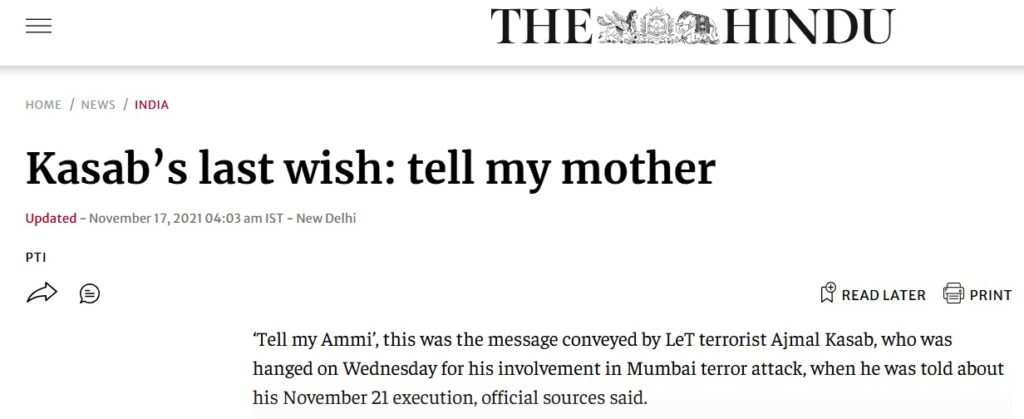
#19 The Hindu Humanizes Ajmal Kasab – November 2021
The Hindu published articles with headlines like “Kasab’s Last Wish” which humanized a mass murderer.
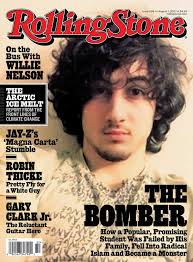
#20 Rolling Stone Describe Boston Bomber As “Handsome, Young, Promising” Student – July 2013
Multiple media outlets such as Rolling Stone described the Boston Marathon bomber (2013) as a “handsome young man” and “promising student“.
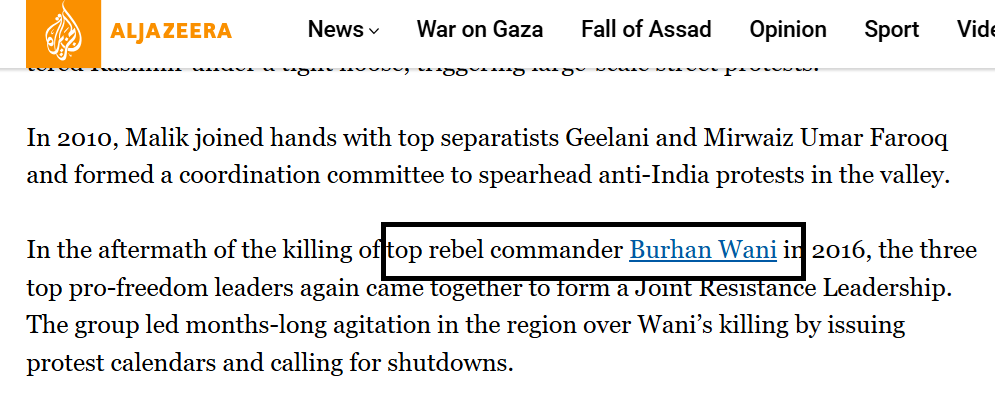
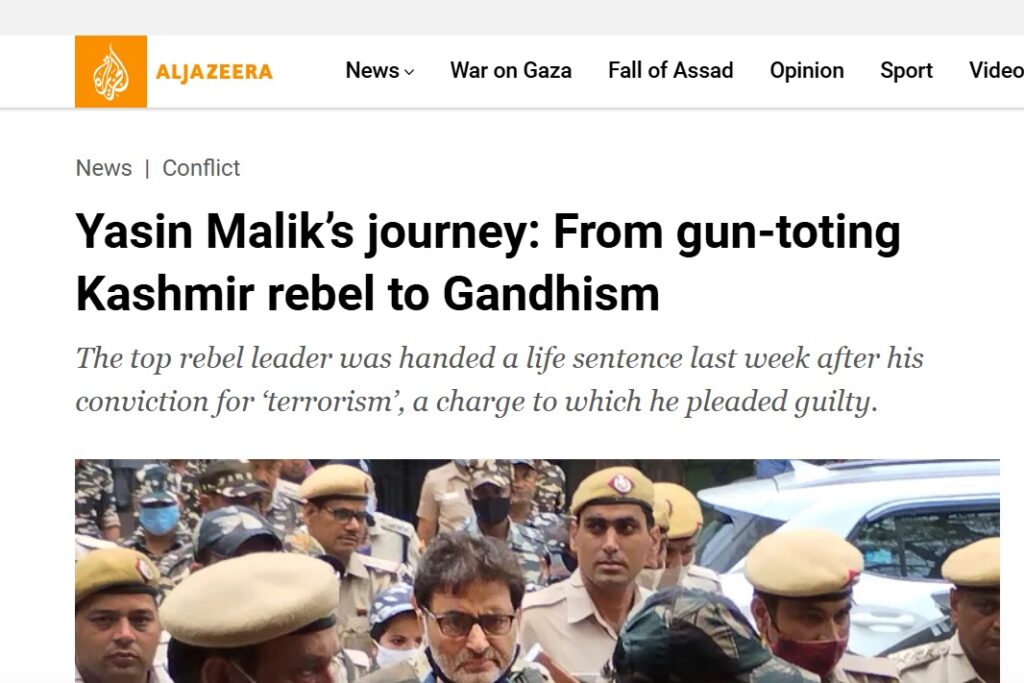
#21 Al Jazeera Called Burhan Wani “Top Rebel Commander” – May 2022
Al Jazeera published an article on Yasin Malik where they referred to terrorist Burhan Wani as “top rebel commander”.
#22 Al Jazeera Called Afzal Guru A “Former Fruit Seller” – February 2013
Afzal Guru, convicted for his role in the 2001 Parliament attack, was referred to as a “former fruit seller“, sometimes as a “family man” or “victim of systemic injustice” by certain sections of the media, downplaying his involvement in the attack.
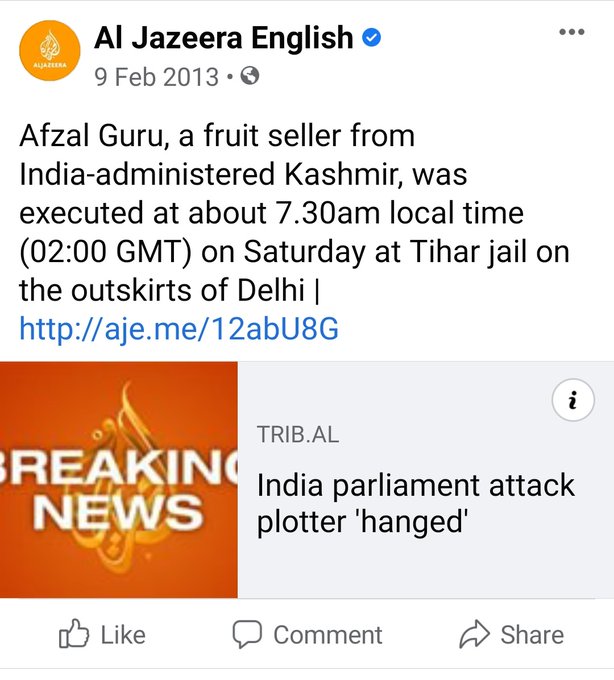
#23 Al Jazeera Calls Terrorist Yasin Malik A Gandhian – May 2022
Yasin Malik, a terrorist who murdered four Indian Air Force officers in broad daylight at point-blank range, has often been described as a “rebel leader” by certain media outlets, despite his involvement in violence and terrorism. Al Jazeera even wrote gloriously about how he “gave up arms and became a Gandhian“.
Part 3 – Other Extremists
#24 Indian Express Humanizes 2020 Delhi Riots Accused Umar Khalid When He Got Interim Bail – January 2025
In January 2025, The Indian Express article published an article titled “When Umar Khalid came home” which humanised an accused individual by foregrounding personal and emotional details while downplaying the seriousness of the charges he faces. The piece dwelt on Khalid’s interim bail period through lyrical descriptions of confinement, freedom, food preferences, and family sentiments, using imagery such as “staying in a cage” and “savouring every ray of sunlight,” which cast him as a victim of circumstance rather than an undertrial accused in a case linked to the 2020 Delhi riots.
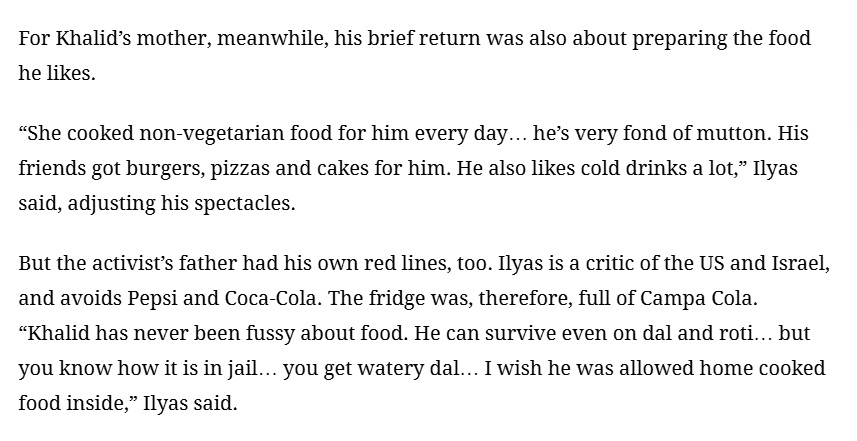
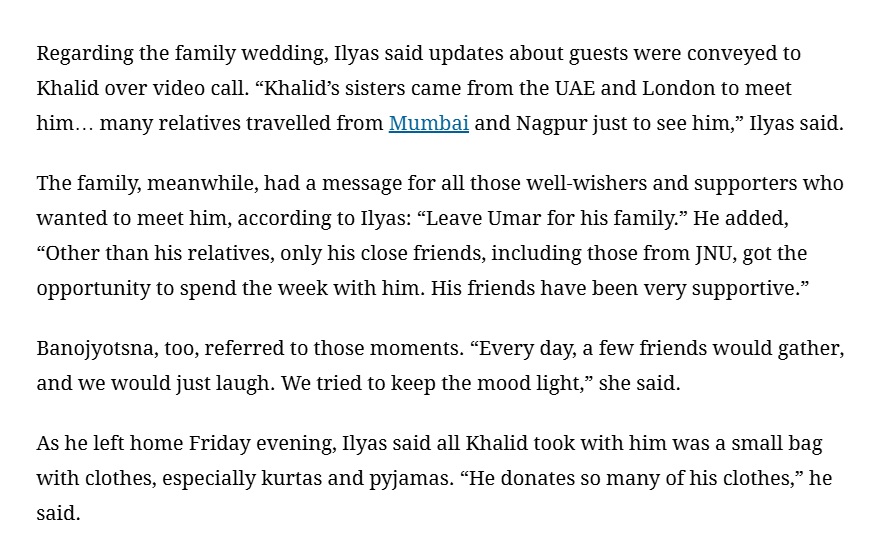
By highlighting everyday comforts, parental anguish, and perceived social stigma, the article shifts attention away from the allegations of conspiracy and violence, and instead constructs a sympathetic narrative that risks softening public perception of the gravity of the charges and the suffering of riot victims.
#25 Times of India, Deccan Herald Romanticise Maoist Leader Chalapathi – January 2025
Obituaries published by the Times of India and Deccan Herald on Maoist leader Chalapathi portrayed him in a sympathetic and romanticised manner. Both outlets described him as a “military strategist,” an intellectual, and an inspirational figure, while highlighting his reading habits, linguistic skills, and organisational abilities. The reports focused on his rise within Maoist ranks but largely omitted the violence attributed to him, including deadly attacks such as the 2008 Nayagarh police armoury raid and the 2018 Araku killings. The coverage downplayed the human cost of Maoist violence and failed to adequately condemn his role in prolonged insurgency.
Subscribe to our channels on WhatsApp, Telegram, Instagram and YouTube to get the best stories of the day delivered to you personally.