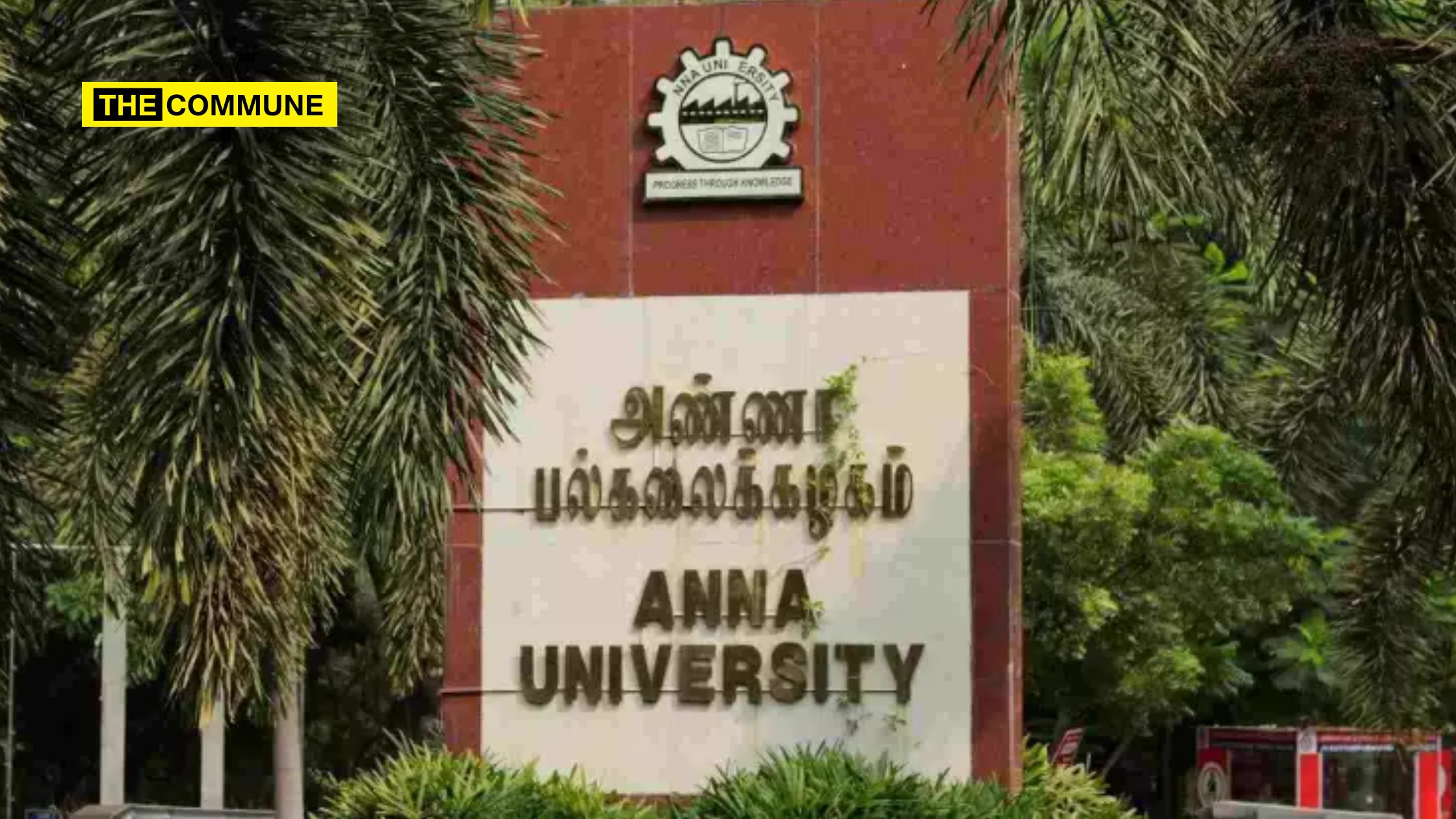
Tamil Nadu’s higher education sector has come under scrutiny after a new analysis showed that engineering colleges affiliated with Anna University recorded the highest number of research paper retractions in 2025.
According to data cited by India Research Watch from the Retraction Watch Database, as many as 161 research articles published between 2019 and 2024 by Anna University-affiliated engineering colleges were withdrawn by journals in 2025. Nearly half of these retracted papers were from the computer science and information technology domains.
The development comes even as Anna University topped the global list of institutions with the highest number of retractions – an “honour” observers say reflects deeper systemic concerns rather than academic achievement.
Reasons Behind the Retractions
Research journals cited multiple grounds for withdrawing the papers, including unreliable results, concerns over references and attribution, the use of computer-generated content, third-party investigations and compromised peer review processes.
Nationally, 887 research articles were retracted in 2025, while China continued to lead globally with 1,701 retractions, according to the data highlighted in the report.
Experts noted that AI-generated content is emerging as a significant challenge for academic publishing. Achal Agrawal, founder of India Research Watch, said many retractions linked to computer-generated material occur because authors fail to disclose AI usage or because AI tools produce fabricated references that are later detected by journals.
Wider Institutional Impact
The issue is not limited to Anna University’s affiliated colleges. The analysis showed that several prominent deemed universities from Tamil Nadu also featured among institutions with high retraction counts in 2025.
These include:
- Saveetha Institute of Medical and Technical Sciences (SIMATS) – 159 retractions
- Vellore Institute of Technology (VIT) – 48 retractions
- SRM Institute of Science and Technology (SRMIST) – 38 retractions
Concerns Over Research Quality
Former Anna University vice-chancellor M. K. Surappa described the data as “very shocking” and said the university should establish a research integrity office to monitor publication quality. He warned that research misconduct in India had reached “epidemic proportions.”
Policy researchers also flagged structural issues. Moumita Koley of the DST-Centre for Policy Research at IISc, Bengaluru, said the pressure to publish has led to questionable practices, including instances where even undergraduate and postgraduate students were producing papers with unreliable data. She added that weaknesses in journal peer-review systems were also contributing to the problem.
Agrawal argued that the current National Institutional Ranking Framework (NIRF) places heavy emphasis on publication volume, which may be incentivising quantity over quality. Although a retraction penalty was introduced last year, he said the deterrent effect remains weak and evaluation metrics need urgent reform.
Institutions Respond
Anna University officials indicated that university departments and constituent colleges were not directly involved in the specific retractions but said new regulations would be framed.
SIMATS, in an official statement, said it already has a designated research integrity officer and robust governance policies. The institution maintained that most retractions linked to it were procedural actions by journals rather than cases of data manipulation. It also argued that given its high publication volume, absolute retraction numbers without proportional context could be misleading and that its retraction rate remains within global norms when measured as a percentage.
VIT vice-chancellor SB Kanchana Bhaskaran said many of the affected papers came from special journal editions that were later withdrawn in full and had not undergone standard peer review. She added that the percentage of retracted papers was very small compared with the university’s overall research output.
Experts warned that the rise of AI-assisted writing, inconsistent disclosure norms and uneven peer-review standards are creating new risks for academic integrity. Without stronger oversight and revised evaluation metrics, they cautioned, the credibility of institutional research output could face increasing scrutiny.
161 research papers from Anna University retracted in 2025. Computer science alone accounting for nearly half. Unreliable results, AI-generated content, compromised peer review
Serious credibility crisis for TN’s premier state-run institution already reeling from reputational… pic.twitter.com/53TEuNvMnJ
— Prasanna Viswanathan (@prasannavishy) February 21, 2026
Anna University and its affiliated institutions have always been in one controversy or the other. In 2024, an investigation exposed widespread “ghost faculty” malpractice in private engineering colleges across Tamil Nadu. The probe found hundreds of teachers simultaneously listed as full-time staff in multiple institutions, with some appearing in up to 11–22 colleges. University analysis of 52,500 faculty records identified 676 such cases in 2023–24 and 686 in 2022–23. Show-cause notices were issued to nearly 295 colleges, and repeat offenders face blacklisting.
Back in 2017-18, the Anna University “paper chasing” scandal involved alleged manipulation of revaluation marks for bribes, not question paper leaks. Uncovered in 2018, the fraud centred on April-May 2017 engineering exam revaluations. Of 3.02 lakh applicants, 73,733 passed and 16,636 saw suspicious mark jumps, with students allegedly paying about ₹10,000 per paper to agents who altered answer sheets or signalled evaluators. Former Controller of Examinations G.V. Uma was the prime accused, and DVAC booked several professors and staff. The scam, believed to have run for nearly a decade, led to suspensions, firings, and lasting damage to the university’s credibility.
Subscribe to our channels on Telegram, WhatsApp, and Instagram and get the best stories of the day delivered to you personally.