
Photos of a printed floor mat featuring the face of Lord Jagannath on Chinese-owned e-commerce platform AliExpress went viral on 29 July 2025, triggering widespread outrage. The product, described as a “non-slip soft water uptake carpet” and priced at around ₹787, prompted strong backlash on Twitter, where users demanded the removal of all Hindu deity images from such products.
This incident is the latest in a series of offensive depictions – this report compiles 13 documented cases between 2005 and 2025 where images of Hindu gods appeared on inappropriate or disrespectful products sold online.
#1 AliExpress Sells Lord Jagannath Doormat
A major controversy erupted in Odisha after Chinese e-commerce platform AliExpress listed a doormat featuring the sacred image of Lord Jagannath.
What is this, @AliExpress_EN ?
You are selling doormats featuring Lord Jagannath, a deeply revered deity worshipped by Hindus across the world.
Take it down immediately. This is a shameful act of disrespect by AliExpress. pic.twitter.com/AtAMV58uDl
— Anshul Saxena (@AskAnshul) July 29, 2025
BJP MP Baijayant Panda condemned it as deeply offensive and alleged a larger conspiracy to demean Sanatan Dharma. Rajya Sabha MP Sujeet Kumar and Congress MLA Sofia Firdous also slammed the act, demanding an apology and removal of the product. Renowned sand artist Sudarsan Pattnaik called for stringent laws to prevent such depictions.
#2 Walmart Sells Lord Ganesha-Themed Underwear and Footwear
On 6 December 2024, Walmart sparked global outrage among Hindus for selling slippers, underwear, and swimsuits featuring images of Lord Ganesha. The products, sold under the “Celestial Ganesh Blessings Collection,” were criticized as deeply disrespectful.
Depiction of Shri Ganesh, a highly revered Hindu deity, on underwear, boxers, socks, slippers etc. is deeply offensive & disrespectful to Hindus worldwide.
We strongly urge @Walmart to immediately withdraw Celestial Ganesh Blessings collection & issue a formal apology to Hindus. pic.twitter.com/yXHntWIN06
— HinduJagrutiOrg (@HinduJagrutiOrg) December 5, 2024
Social media users and Hindu advocacy groups, including Insight UK, Hindu Jagruti, and the Hindu American Foundation, condemned the move and demanded a public apology. Activist Rajan Zed also urged Walmart to stop misusing religious symbols. Following widespread backlash, Walmart removed several items from its website, but some swimsuits with Ganesha imagery reportedly remained available.
#3 Amazon Pulls Controversial ‘Deadly Bhagavat Geeta’ After Protests in Nagpur
On 23 August 2023, Amazon quietly removed the book Deadly Bhagavat Geeta after Hindu groups protested outside its Nagpur office. Written by Dr. Achariyar and published via Amazon’s self-publishing service in 2018, the book was accused of distorting Hindu scripture and promoting anti-Hindu views. Protesters, linked to MNS, also demanded removal of Pakistani flags sold on the site.
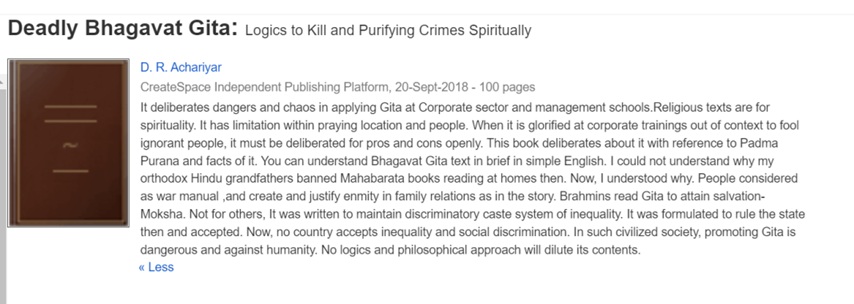
Hindu activists and organizations condemned the book’s content, calling it offensive and sacrilegious. Amazon later delisted the book, but criticism also fell on media outlets like PTI and IANS for allegedly downplaying the protest’s religious context.
#4 Sahara Ray Swimwear Uses Hindu Deities On Bikinis
On 24 April 2022, Australian swimwear brand Sahara Ray Swim, owned by influencer and model Sahara Ray, triggered controversy for printing images of Hindu deities on bikinis and micro string tops in its “Aura Collection 2022.” Social media users condemned the move as disrespectful, accusing the brand of misusing sacred symbols for profit and aesthetic appeal. Images from the collection went viral, sparking global outrage among Hindus. Critics questioned the selective targeting of Hinduism for such fashion choices and demanded accountability, urging brands to treat all faiths with equal sensitivity and avoid commodifying religious icons.
This is sahara Ray’s swim wear company..
So now in the name of asethetics they using Hindu gods as fashion design on their bikini tops and bottoms .What was thier motive behind it ? Why dont they try to put jesus as thier asethetics design😏😏😏😏 pic.twitter.com/o2fFAQ1ziK
— Shobna Raman (@shob3101) April 24, 2022
#5 Amazon Faces Backlash for Offensive Depictions of Hindu Deities
On 3 December 2020, Amazon came under fire in India for selling products like doormats and underwear featuring sacred Hindu symbols and deities, including Lord Ganesha. The Hindu Mahasangh protested and submitted a memorandum to the Prime Minister and Chief Minister, demanding action against the company and its CEO. The hashtag #BoycottAmazon trended widely as public outrage grew. Amazon responded by stating that it had removed the offensive listings and reiterated that all sellers must comply with its guidelines. This was not the first incident – similar controversies erupted in 2017 and 2019 over products disrespecting Indian sentiments.
#6 Amazon Removes Products Featuring Hindu Symbols After India Outrage
On 10 November 2020, Amazon faced intense backlash in India for listing products like doormats, briefs, and toilet seat covers featuring sacred Hindu symbols, including Lord Ganesha, on its U.S. website. The incident triggered the #BoycottAmazon trend on Twitter, forcing the company to remove the items. Amazon clarified that third-party sellers had posted the listings and that violators would face action.
#7 Wayfair Sells Bathmats with Hindu Deities
On 19 May 2019, U.S.-based e-tailer Wayfair came under fire for selling bathmats featuring sacred Hindu deities Lord Ganesha and Lord Shiva, priced between $38 and $41.99. The listings sparked outrage from Hindu activists, who called the products deeply offensive.
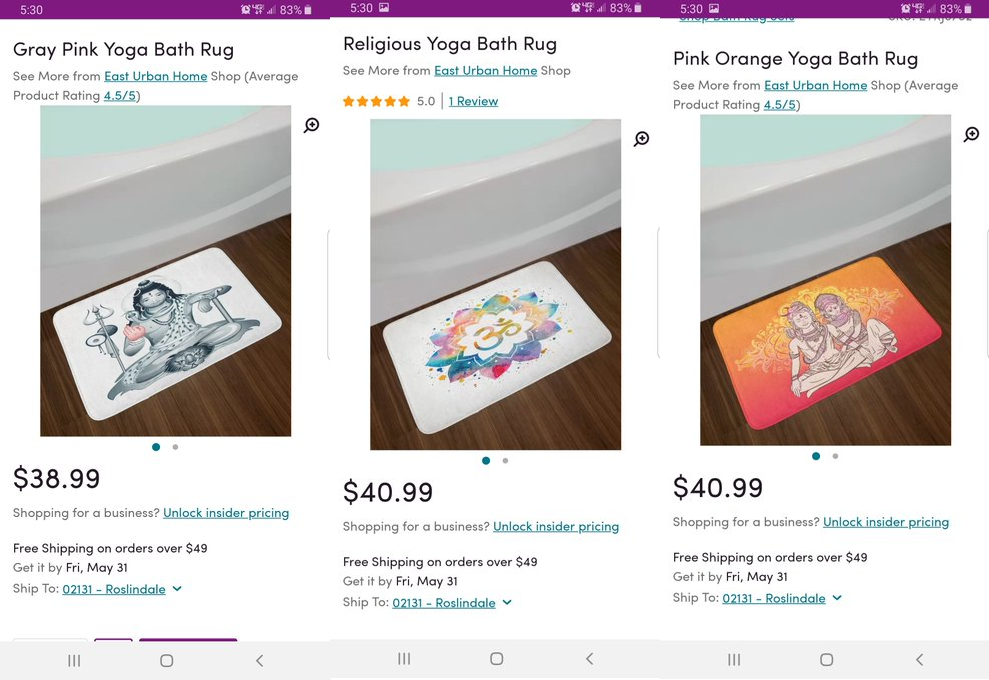
This wasn’t Wayfair’s first controversy; earlier, it faced protests for selling a cutting board with Ganesha’s image, which was later removed with an apology. The latest backlash comes amid ongoing global protests against e-commerce platforms like Amazon for similar offenses. Activists continue to demand apologies and removals of disrespectful depictions of Hindu religious icons.
#8 Amazon Sells Shoes and Toilet Stickers Featuring Hindu Gods
On 17 May 2019, outrage erupted after shoes, slippers, and toilet seat stickers featuring images of Hindu deities were found on global e-commerce platforms, including Amazon. The products were condemned for hurting religious sentiments, with many accusing the platforms of repeated disrespect towards Hindu beliefs. Twitter user Anshul Saxena amplified the issue, leading to a widespread #BoycottAmazon campaign. Though the items were not listed for sale in India, the backlash was global. Amazon has faced similar criticism before, notably in 2016, for selling doormats featuring Hindu gods, prompting calls for accountability and removal of offensive listings.
#9 Amazon Removes Ganesha Socks, Om Flip-Flops After Hindu Outrage
On March 6, 2018, Amazon withdrew socks bearing Lord Ganesha’s image and flip-flops featuring the sacred Hindu symbol Om following protests from Hindu communities. Rajan Zed, president of the Universal Society of Hinduism, led the campaign, calling the items disrespectful and demanding a formal apology from Amazon CEO Jeff Bezos. Zed emphasized that Lord Ganesha is revered and should not be used on items worn on the feet. While the products were removed, Zed urged Amazon to train executives in cultural sensitivity to prevent future offenses. Hindus have previously protested similar depictions on Amazon’s platform.
#10 Amazon Removes Ganesha-Themed Pants After Hindu Protests
On 21 January 2014, Amazon removed a controversial item titled “Ganesha’s Hot Dream Pant” from its catalogue following protests by the Hindu community in the U.S. The yoga pants, priced between $66–$79 and made by California-based brand Teeki, featured Lord Ganesha’s image. The incident echoes past controversies, such as Urban Outfitters’ socks featuring Ganesha and Jesus, which were also withdrawn after backlash. Similar protests targeted beer companies in the U.S. and Australia for using Hindu deities Shiva and Lakshmi on alcoholic beverage labels.
#11 Malaysia Slippers With Hindu Deity Spark Outrage
On 12 February 2011, several Malaysian Hindu groups, including the Malaysia Hindu Sangam (MHS), condemned the sale of slippers featuring images of a Hindu deity in Kuala Lumpur’s Chow Kit area. MHS President R.S. Mohan Shan called it a blatant act of disrespect toward Hinduism and urged authorities to take immediate action against the importers and distributors. The president of the Sri Maha Mariamman Temple also demanded the product be withdrawn. This incident follows past controversies involving religious imagery on T-shirts, CDs, and playing cards, sparking concerns over recurring disrespect toward Hindu symbols in consumer products.
#12 Odisha Seeks Action Against US Site for Selling Lingerie With Hindu Deities
On 21 December 2007, the Odisha government strongly objected to US-based website CafePress.com for selling lingerie featuring images of Hindu gods, calling it an affront to religious sentiments. State Law Minister B.B. Harichandan wrote to the Centre and the US Embassy, urging immediate action against the platform. Letters were sent to External Affairs Minister Pranab Mukherjee and Home Minister Shivraj Patil, requesting intervention to prevent such offensive depictions. The state demanded that the website refrain from using sacred Hindu imagery on intimate apparel, citing deep hurt caused to the religious beliefs of millions of devotees.
#13 CafePress Withdraws Offensive Hindu Deity Underwear After Protests
On 7 February 2005, US-based online store CafePress faced backlash for selling women’s undergarments featuring Hindu deities like Lord Shiva and sacred symbols such as Om. Products like the “Hindu God Shiva Classic Thong” and “iGod Shiva Classic Thong” angered the Hindu community, with the American Hindus Against Defamation (AHAD) condemning the items as deeply disrespectful. Sikh groups also protested similar products displaying their religious symbols. Following public outcry and formal complaints from Hindu and Sikh organisations, CafePress withdrew the offensive product lines from its site, acknowledging the religious sensitivities of both communities.
Subscribe to our channels on Telegram, WhatsApp, and Instagram and get the best stories of the day delivered to you personally.