


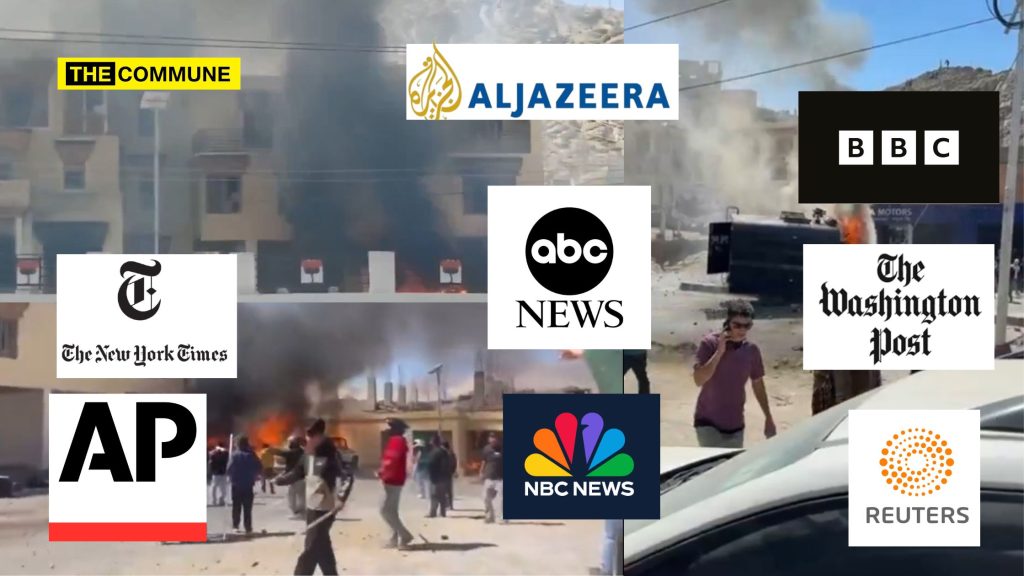
A review of international media coverage following the violent protests in Leh, Ladakh, on 24 September 2025, has identified a pattern of reporting that appears to justify the unrest. The protests, which resulted in four fatalities and numerous injuries after clashes between demonstrators and police, were covered by numerous global outlets.
In this report, we take a look at ten international media articles published on 24 and 25 September 2025 that consistently framed the events with a bias against the Indian government, portrayed protesters sympathetically, and included contextual details critics deem irrelevant or inflammatory.
#1 Al Jazeera Article Casts Police as ‘Culprits’
On 24 September 2025, an Al Jazeera article was accused of explicitly casting police as the main aggressors, detailing their use of tear gas and batons. It highlighted accusations that the government had not addressed local concerns. By reiterating the region’s religious demographics and direct rule from New Delhi, the report wove together themes of political neglect and state violence. This framing placed the onus for the clash on the authorities, thereby justifying the protesters’ stance and actions as a response to provocation.
#2 DW Highlights ‘Loss of Autonomy’
On 24 September 2025, DW’s coverage described the 2019 reorganization of Ladakh primarily as a “loss of autonomy,” a framing critics argue overlooks the constitutional and legal context. The article included demographic breakdowns of the region’s Muslim and Buddhist populations, details questioned as irrelevant to the immediate report on the violence. By defining the event as a “clash” and anchoring it to the perceived loss of political status, the report was accused of establishing a pretext that implicitly justified the protesters’ actions as an inevitable response to governmental overreach.
#3 Washington Post Blames Environmental, Political Factors
On 25 September 2025, The Washington Post article attempted to portray the violence as a “natural outcome” of local frustrations, both political and environmental. It mentioned protester stone-pelting only after describing police intervention. The report highlighted the region’s religious demographics and introduced claims that militarization since the 2020 China standoff worsened pollution and glacier melt. By blending these issues with the political discontent, the article was accused of constructing a multi-faceted justification for the unrest, framing it as an ecological and political rebellion rather than a violent clash.
#4 Reuters Emphasizes ‘Direct Rule’ from Delhi
On 25 September 2025, Reuters reported that the “Buddhist-Muslim enclave… lost its autonomy in 2019,” to be placed under “direct administration of New Delhi.” It prominently featured a quote from a protest leader stating that past demonstrations had been peaceful and questioning “who gave the orders to shoot.” This framing was seen as portraying the central government as an oppressive force and the protesters as historically reasonable, thereby suggesting that the government’s actions were the primary catalyst for the escalation into violence.
#5 ABC News Echoes WaPo’s Narrative
On 25 September 2025, ABC News published an article identical to The Washington Post’s, replicating its framing of the events. It described the fatalities as “killings” and reported on strike calls in Kargil “against Wednesday’s killings.” This duplication amplified a narrative that presented the violence as a direct and understandable reaction to state actions, with language (“killings”) that implied culpability on the part of authorities, thereby justifying the protestors’ anger and subsequent actions in the eyes of the reader.
#6 BBC Focuses on Job Quotas and ‘Imposed’ Rule
On 25 September 2025, the BBC’s coverage used the term “imposing direct rule” to describe the 2019 changes. It framed the protestors’ demands around pragmatic concerns like “job and land quotas,” suggesting economic disenfranchisement as the core issue. By focusing on these socio-economic grievances and the top-down nature of governance, the report implicitly argued that the violence was a desperate measure by communities fighting for their economic future under a system they perceive as unfairly imposed, providing a rationale for the escalation.
#7 NBC News Sympathizes with Activists, Accuses Police Force
On 25 September 2025, NBC News reported that protesters threw stones only after police tried to stop their march. It sympathetically described activist Sonam Wangchuk as a “top climate activist” and detailed police use of bullets, tear gas, and batons. This portrayal was accused of minimizing protester violence while emphasizing state aggression, creating a narrative of a peaceful movement met with disproportionate force. This framing serves to justify the protesters’ actions as a defensive response to state-initiated violence.
#8 The New York Times Points to ‘Spilled Over’ Anger
On 25 September 2025, The New York Times article stated that protesters’ “anger spilled over into deadly protests after two hunger strikers were hospitalized.” This language suggests the violence was an inevitable, almost organic, outcome of escalating emotions rather than a deliberate act. The description of Ladakh being under “tight central government control” further contextualized the unrest as a pushback against an authoritarian setup, providing a political justification for the violent expression of dissent.
#9 AP News Suggests ‘Joy Gave Way to Fear’
On 24 September 2025, an AP News report stated that while Ladakh residents initially welcomed the 2019 changes, “joy soon gave way to fears of land grabs” and ecological damage. Like other reports, it mentioned stone-pelting as a reaction to police intervention and described police actions aggressively. This narrative arc of initial hope turning to betrayal was seen as a powerful literary device to rationalize the subsequent anger and violence, framing it as a deeply felt reaction to broken trust and perceived threats to the region’s future.
#10 Al Jazeera Frames Unrest as ‘Gen-Z Movement’
In a 25 September 2025 article, that Al Jazeera titled as “’Bloodiest day’: How Gen-Z protest wave hit India’s Ladakh”, they characterized the violence as a youth-led movement born from frustration over “fake promises.” This came after a 24 September 2025 article which tried to frame police as culprits. The second report emphasized the 2019 constitutional change as a “loss of statehood” leading to rule by “bureaucrats.” By quoting protest leaders calling for peace after the fact and framing the event within a global narrative of youth activism, the article was seen as providing a sympathetic rationale for the violent outburst, shifting focus from the acts of violence to the grievances prompting them.
Subscribe to our channels on Telegram, WhatsApp, and Instagram and get the best stories of the day delivered to you personally.