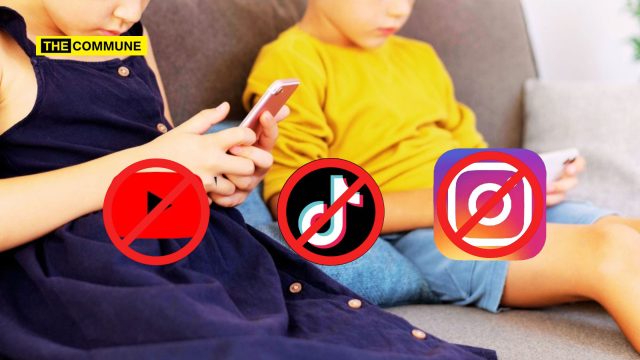
On 30 July 2025, Australian Prime Minister Anthony Albanese announced that children under the age of 16 will be banned from using social media platforms, including YouTube, starting in December 2025. Citing a government report revealing that 37% of minors had been exposed to harmful content on YouTube, he stressed the urgent need to protect children online and declared that the time had come for decisive action.
This report compiles 10 instances from 2018 to 2025 in which various countries around the world have implemented bans, strict regulations, or precautionary measures to limit social media use among teenagers.
#1 Australia to Ban YouTube for Minors Under 16
On 30 July 2025 announced that starting December 2025, Australia will ban children under 16 from accessing YouTube, adding the platform to its existing restrictions on Facebook, Instagram, Snapchat, and TikTok. The move follows a government report that found 37% of minors exposed to harmful content. Platforms that fail to comply could face fines up to $49.5 million (₹432.8 crore), according to Prime Minister Anthony Albanese.
#2 United States: State-Level Restrictions Take Hold
While the U.S. has no federal ban, states like Florida, Utah, and Texas have introduced laws requiring parental consent or setting minimum age for social media use. These laws often target TikTok, Instagram, and YouTube, with restrictions on data collection for users under 13. The fragmented approach reflects growing national concern over teen safety online.
#3 Netherlands Sets 15 as Recommended Minimum Age
On 18 June 2025, the Dutch government issued official guidelines advising that children under 15 should avoid social media altogether. While not a legal ban, the move is supported by surveys showing teens themselves are open to such restrictions with 69% of Dutch youth in favor of age limits. Recommendations also include limiting screen time to 3 hours and delaying smartphone use until the last year of primary school.
#4 Greece Launches ‘Kids Wallet’ App for Parental Control
In May 2025, Greece introduced “Kids Wallet,” a government app that lets parents verify age and monitor children’s internet use. Integrated with Greece’s digital ID and tax systems, the app supports enforcement of the legal digital consent age of 15. The measure aligns with broader EU goals for a safer internet for children.
#5 Italy Requires Parental Consent for Under-14 Users
In December 2024, Italy mandated parental permission for children under 14 to use any social media platform. Yet, enforcement remains a challenge. Reports from Italy’s Higher Health Institute reveal that many teens still use social media daily, and nearly 40% of 13-year-old girls show signs of problematic usage.
#6 UK Bans Social Media for Children Under 16
Under the Online Safety Act, the UK bars children under 16 from accessing social media. The November 2024 decision marked a major shift, with Technology Secretary Peter Kyle pledging further research into the mental health impacts of smartphones. The policy signals a national effort to prioritize online safety for youth.
#7 Norway Raises Age Limit to 15
In October 2024, Norway increased the minimum age for social media use from 13 to 15. Prime Minister Jonas Gahr Støre stressed the vulnerability of young minds to online pressure and labeled the decision a necessary, if difficult, step toward child protection.
#8 France Pushes EU-Wide Age Restrictions
Since June 2023, French law requires platforms to verify users’ age and secure parental consent for anyone under 15. Violations can result in fines up to 1% of a company’s global revenue. President Macron has called for a unified European regulation setting 15 as the minimum age for social media access with parental approval.
#9 Germany Upholds Parental Consent Law for Teens
Since November 2024, Germany mandates that users aged 13 to 16 can only access social media with parental consent, in accordance with GDPR. However, enforcement is difficult as many teenagers bypass age-verification systems, leading child protection groups to call for stronger implementation.
#10 Belgium Sets Minimum Age for Social Media at 13
Belgium enacted a minimum age limit of 13 for social media in March 2018. According to Child Focus, this reflects reality more than restriction, as 83% of 13–14-year-olds in Belgium are already online. The law, led by Philippe De Backer, aims to bring transparency and accountability to teenage online activity.
Subscribe to our channels on Telegram, WhatsApp, and Instagram and get the best stories of the day delivered to you personally.