


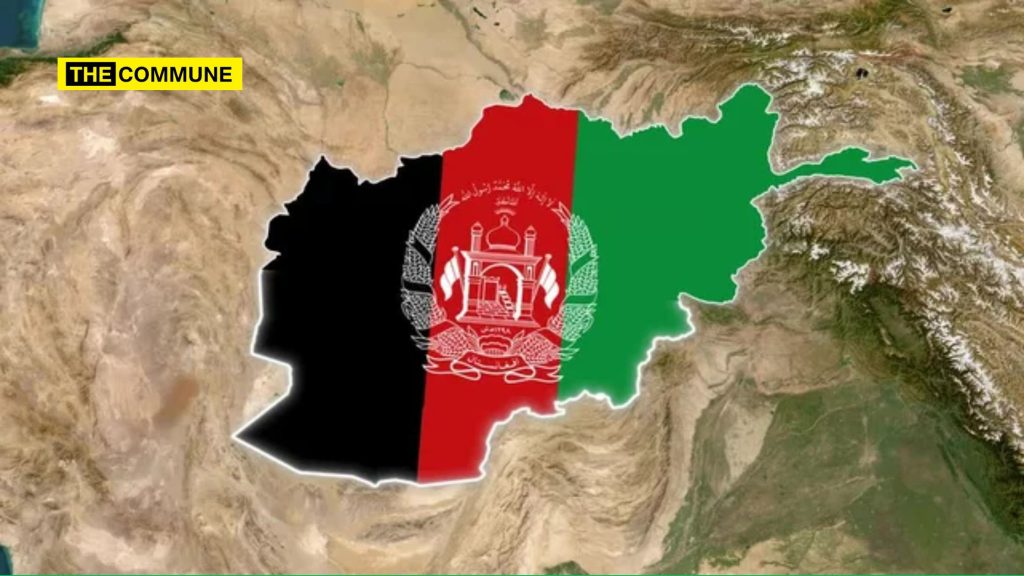
General Zia-ul-Haq’s doctrine of “strategic depth” promised Pakistan security against India through control over Afghanistan. Four decades later, it has delivered only chaos, radicalization, and a collapsing state.
When Pakistan’s military ruler General Zia-ul-Haq conceived the doctrine of strategic depth in Afghanistan during the late 1970s, it was hailed within Rawalpindi’s corridors as a stroke of genius, a long-term plan to secure Pakistan’s vulnerable western flank, expand its influence into Central Asia, and neutralize the perennial threat from India. In this vision, Afghanistan would become both Pakistan’s ideological buffer and its geopolitical backyard. But history has a brutal sense of irony. What was once imagined as Pakistan’s path to regional dominance has turned into the very instrument of its undoing. Today, Afghanistan stands not as Pakistan’s strategic depth but as its strategic death, a mirror reflecting Pakistan’s own self-destruction.
The Roots of an Illusion
Pakistan’s fixation with Afghanistan predates Zia’s military regime. The seeds of paranoia were sown in the early years after independence. From 1947 onwards, Afghanistan refused to recognize the Durand Line as a legitimate border and instead supported the concept of Pashtunistan, claiming Pakistan’s North-West Frontier Province (now Khyber Pakhtunkhwa) and parts of Balochistan as its own. These irredentist claims led to repeated diplomatic ruptures, including the severance of relations in 1955 and 1962. For a fragile new state already obsessed with the Indian threat on its eastern frontier, the specter of an unfriendly Afghanistan on its west was intolerable.
By the time the Soviet Union invaded Afghanistan in 1979, Pakistan’s military establishment saw an unprecedented opportunity. General Zia-ul-Haq, a hardline Islamist and master manipulator of Cold War geopolitics, perceived the Afghan jihad not merely as an anti-Soviet campaign but as a vehicle for Pakistan’s grand ambitions. With massive U.S. and Saudi funding, Zia sought to create a pliant, pro-Pakistan regime in Kabul that would forever silence Afghanistan’s territorial claims and extend Islamabad’s influence deep into Central Asia.
Zia’s generals rationalized this policy with strategic logic. They argued that Pakistan’s narrow geography made it vulnerable to India. In the event of a war, a friendly Afghanistan would provide the Pakistani army “space to fall back” and regroup. But beneath this military jargon lay a deeper ideological project to Islamize both Pakistan and Afghanistan under the banner of a shared jihadist identity that could serve as Pakistan’s tool for regional dominance.
The late Pakistani scholar Eqbal Ahmed warned against this dangerous delusion, calling Pakistan “a country caught in an iron web of wrong assumptions, magmatic concepts, failed policies, and increased sectarian violence.” His words now read like prophecy.
The Mirage of Strategic Depth
The entire doctrine was built on a fatal misreading of history and geography. Real security does not come from manipulating neighbors or nurturing militias; it comes from internal cohesion, economic strength, and peaceful diplomacy. Zia’s Pakistan ignored this fundamental truth and instead chose to export instability under the banner of “Islamic solidarity.”
During the 1980s, Pakistan became the primary conduit for U.S. and Saudi aid to the Afghan Mujahideen. The Inter-Services Intelligence (ISI) handpicked militant leaders like Gulbuddin Hekmatyar, funnelling weapons and money to factions that promised loyalty to Islamabad. Yet as soon as the Soviets withdrew and the Afghan factions began fighting each other, Pakistan’s dream of controlling Kabul began to unravel.
Seeking to impose order, the ISI midwifed the rise of the Taliban in the 1990s—a movement of Pashtun seminarians trained in Pakistan’s Deobandi madrassas. Initially, Islamabad viewed the Taliban as obedient protégés who would secure Pakistan’s western border and grant it leverage over India. But this illusion crumbled swiftly. Once in power, the Taliban refused to recognize the Durand Line, rejecting Pakistan’s territorial claims. They also began fostering a radical Pashtun Islamic identity that transcended borders, seeping back into Pakistan’s own Pashtun regions.
Even worse, the Taliban gave ideological and logistical sanctuary to extremist Sunni groups such as Lashkar-e-Jhangvi and Sipah-e-Sahaba, whose sectarian terrorism plunged Pakistan into internal bloodshed. What was meant to be a forward defense became an inward contagion. Instead of exporting jihad, Pakistan imported it.
ISI: A State Within a State
No institution embodies Pakistan’s Afghan misadventure more than the Inter-Services Intelligence. During the Afghan jihad, the ISI evolved from a mere intelligence agency into a parallel state apparatus. Flush with U.S. dollars and Saudi riyals, it acquired unaccountable power and ideological autonomy. Under Zia’s patronage, the ISI fused Islamist zeal with Cold War opportunism, building networks of militants and madrassas that operated outside civilian oversight.
When Zia died in a plane crash in 1988, the ISI had become a monster too large for any civilian government to control. Its Afghan policy splintered into competing fiefdoms, each pursuing its own factional agenda. Many ISI officers, themselves Pashtuns and steeped in jihadist ideology, began to identify more with the Taliban than with Pakistan’s national interest. “These officers became more Taliban than the Taliban,” one ISI veteran admitted to author Ahmed Rashid.
This ideological capture destroyed the agency’s analytical capacity. Strategy gave way to dogma. Instead of recalibrating after 9/11, Pakistan doubled down, playing a duplicitous game of supporting the U.S.-led “War on Terror” while secretly sheltering Taliban elements. The short-term tactical success of keeping Western funds flowing only deepened Pakistan’s long-term strategic disaster.
Talibanization and Internal Collapse
When the Taliban retook Kabul in 2021, Pakistan’s generals once again celebrated, claiming vindication of their decades-long pursuit of “strategic depth.” But within months, the euphoria evaporated. The Taliban refused to recognize the Durand Line, engaged in deadly clashes with Pakistani forces, and allowed the Tehreek-e-Taliban Pakistan (TTP) to operate freely from Afghan soil.
For Islamabad, the nightmare had come full circle. Afghanistan was no longer a buffer; it was a base for Pakistan’s internal enemies. The very militants Pakistan had nurtured now targeted its soldiers, schools, and civilians. The porous frontier became a revolving door for weapons, narcotics, and radical ideology.
The Talibanization of Pakistan is now an undeniable reality. In Khyber Pakhtunkhwa and parts of Balochistan, local Taliban factions openly challenge state authority. Sectarian groups act with impunity, enforcing their version of Sharia and undermining the rule of law. Public sympathy for hardline Islamists runs deep, thanks to decades of state-sponsored radicalization.
Meanwhile, Pakistan’s economy has collapsed under debt and mismanagement, its politics are paralyzed by civil-military tensions, and its once-vaunted army now faces an existential crisis of legitimacy. As inflation soars and governance crumbles, ordinary Pakistanis are left hostage to the chaos their rulers unleashed.
From Failed State to Dying State
Today, Pakistan stands perilously close to implosion, economically bankrupt, politically fractured, and ideologically consumed. The dream of “strategic depth” has degenerated into a nightmare of strategic death.
Far from expanding Pakistan’s influence, Zia’s vision has trapped the country in perpetual instability. To its west lies a hostile Taliban regime; to its east, an assertive India; to its southwest, an alienated Iran; and to its north, a disenchanted China increasingly wary of Pakistan’s internal chaos. Instead of being a regional pivot, Pakistan is now a regional liability.
This collapse is not a sudden accident but the cumulative outcome of decades of hubris. The military’s obsession with controlling Afghanistan, its cynical use of Islam as an instrument of power, and its relentless suppression of civilian politics have hollowed out the Pakistani state. Every attempt to use religious militancy as a tool of strategy has rebounded with deadly force.
As the French scholar Olivier Roy foresaw in 1997, “The de facto absorption of Afghanistan will accentuate centrifugal tendencies within Pakistan.” That centrifugal disintegration is now unfolding before the world’s eyes.
Conclusion: The Death of a Doctrine
The tragedy of Pakistan lies in its refusal to learn. The illusion of strategic depth was built on three fatal assumptions: that Afghanistan could be controlled, that religious extremism could be weaponized without consequence, and that India could be undermined through endless proxy wars. Each of these has proven disastrously false.
Afghanistan remains fiercely independent, its soil now a refuge for anti-Pakistan militants. Islamist extremism has metastasized within Pakistan, eroding the state’s coherence. And India, far from being destabilized, has emerged as a global power while Pakistan sinks deeper into isolation.
General Zia’s doctrine promised security through expansion but delivered insecurity through implosion. In the end, Afghanistan did not become Pakistan’s fortress; it became its graveyard.
The verdict of history is unforgiving: what Pakistan’s generals once hailed as strategic depth has turned out to be strategic death, a slow, self-inflicted unraveling of a nation that mistook fanaticism for foresight and illusion for strategy.
Dr. Prosenjit Nath is a techie, political analyst, and author.
Subscribe to our channels on Telegram, Instagram and YouTube to get the best stories of the day delivered to you personally.