


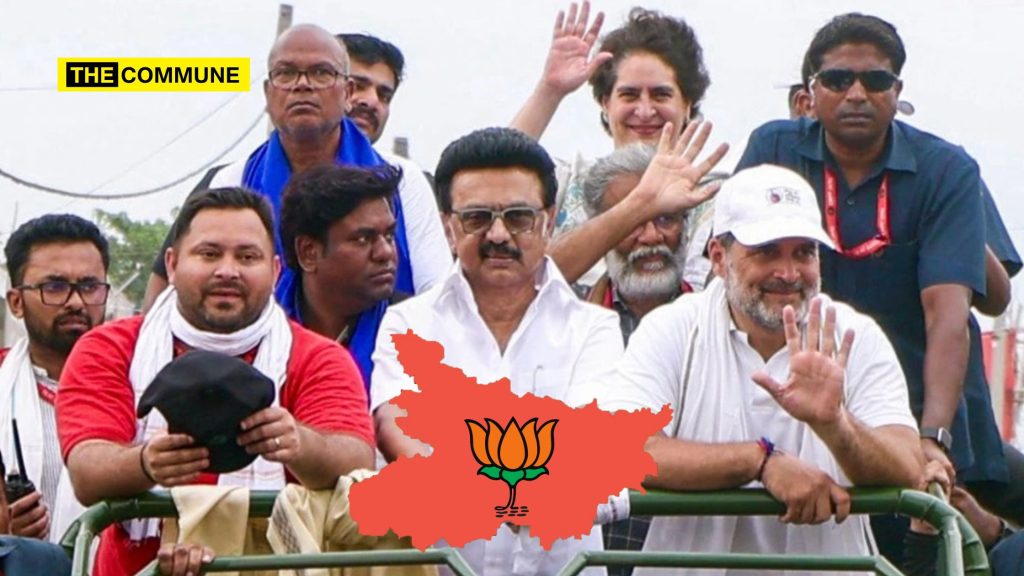
In a dramatic electoral twist, the high-profile intervention of Tamil Nadu Chief Minister MK Stalin in the Bihar assembly elections appears to have had a negative effect for the Congress and RJD.
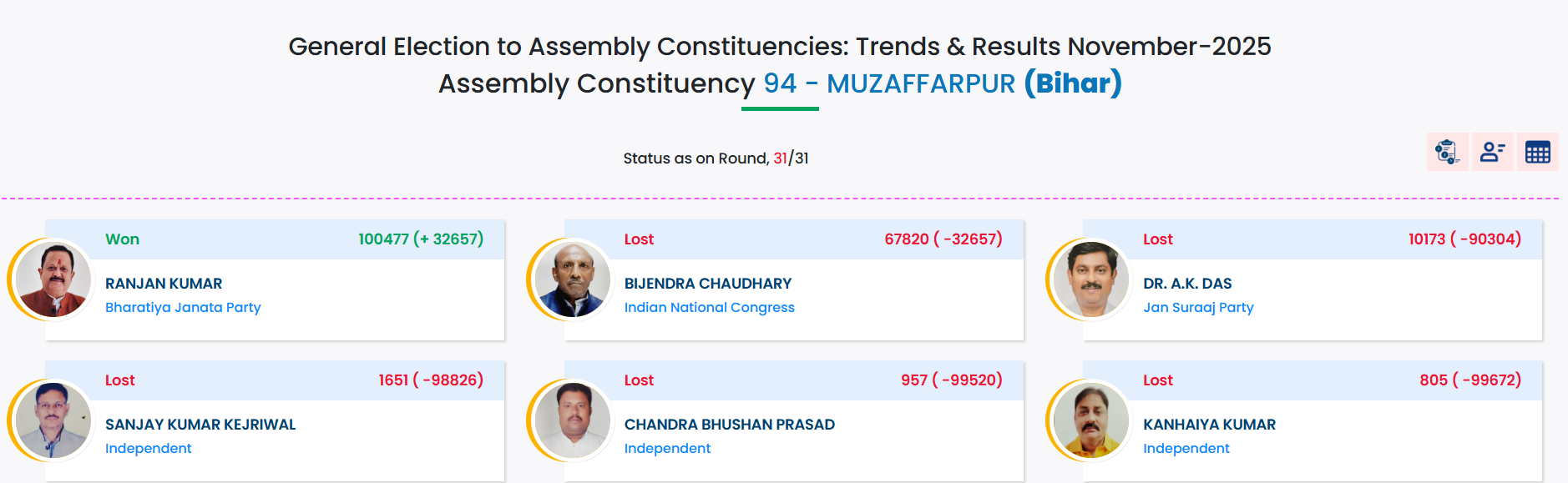
The BJP won Muzaffarpur with 1,00,477 votes with a thumping 32,657-vote margin, the very constituency where MK Stalin canvassed votes.
Just a few months ago, Stalin stood alongside Congress leader Rahul Gandhi and RJD’s Tejashwi Yadav at a massive rally in Muzaffarpur, where he sharply criticized the Election Commission’s Special Intensive Revision (SIR) exercise. His rhetoric, framing the voter list revision as an attempt to disenfranchise opposition supporters, was meant to resonate with Bihar’s voters and showcase his growing stature within the I.N.D.I. bloc.
However, as counting trends solidified, BJP candidate Rakesh Kumar established a commanding lead of over 32000 votes in the same constituency, delivering a significant blow to the opposition alliance.

Did DMK’s Anti-Hindi Politics Cost Votes For Congress-RJD?
For years, the DMK has built its politics on aggressive anti-Hindi posturing, turning language into a battlefield and Hindi speakers into convenient punching bags. Inside Tamil Nadu, this rhetoric may energise the Dravidian base. But outside the state — especially in the Hindi belt — it creates deep resentment, suspicion, and a sense that the DMK views north Indians as culturally inferior or unwelcome.
DMK leaders have repeatedly taken potshots at Hindi-speaking states, mocked Hindi speakers working in Tamil Nadu, and painted the north as intellectually backward or socially regressive. These aren’t harmless quips; they reinforce a perception that the DMK’s worldview stops at the borders of Tamil Nadu. When such remarks circulate nationally, they don’t remain “Tamil Nadu-specific politics” — they become a stain on every party that chooses to ally with the DMK.
This is where the Congress–RJD alliance walks straight into trouble. Their silence on DMK’s anti-Hindi outbursts signals tacit approval and ends up alienating the very voters they desperately need across Bihar and Uttar Pradesh. The BJP doesn’t even need to invent narratives — it simply points to DMK’s own words to claim that the opposition coalition disrespects Hindi speakers. And in the Hindi-speaking heartland, respect and recognition matter far more than clever political theories.
Even worse, the hypocrisy is obvious to voters. While loudly decrying “Hindi imposition,” several DMK leaders privately benefit from Hindi-medium education and CBSE schools. Voters see this for what it is: elitist double-speak. It weakens Congress and RJD further, making them look like partners to a party that mocks the very people whose votes they seek.
Subscribe to our channels on WhatsApp, Telegram, Instagram and YouTube to get the best stories of the day delivered to you personally.